Categories
Uncategorized

Spinal Adjustment vs Physical Therapy for Pain

A stiff neck after long hours at your desk. Low back pain that changes how you train. Headaches that keep returning despite massage, stretching, and another round of pain relievers. When your body stops moving the way it should, the question is not simply how to feel better this week. It is how to restore the function that lets you work, train, travel, and live at full capacity.

That is where the spinal adjustment vs physical therapy conversation begins. Both can play a valuable role in recovery, but they are not interchangeable. One may be more appropriate based on the source of your limitation, your current movement capacity, and whether your care plan is designed for short-term relief or durable correction.


Spinal Adjustment vs Physical Therapy: The Core Difference


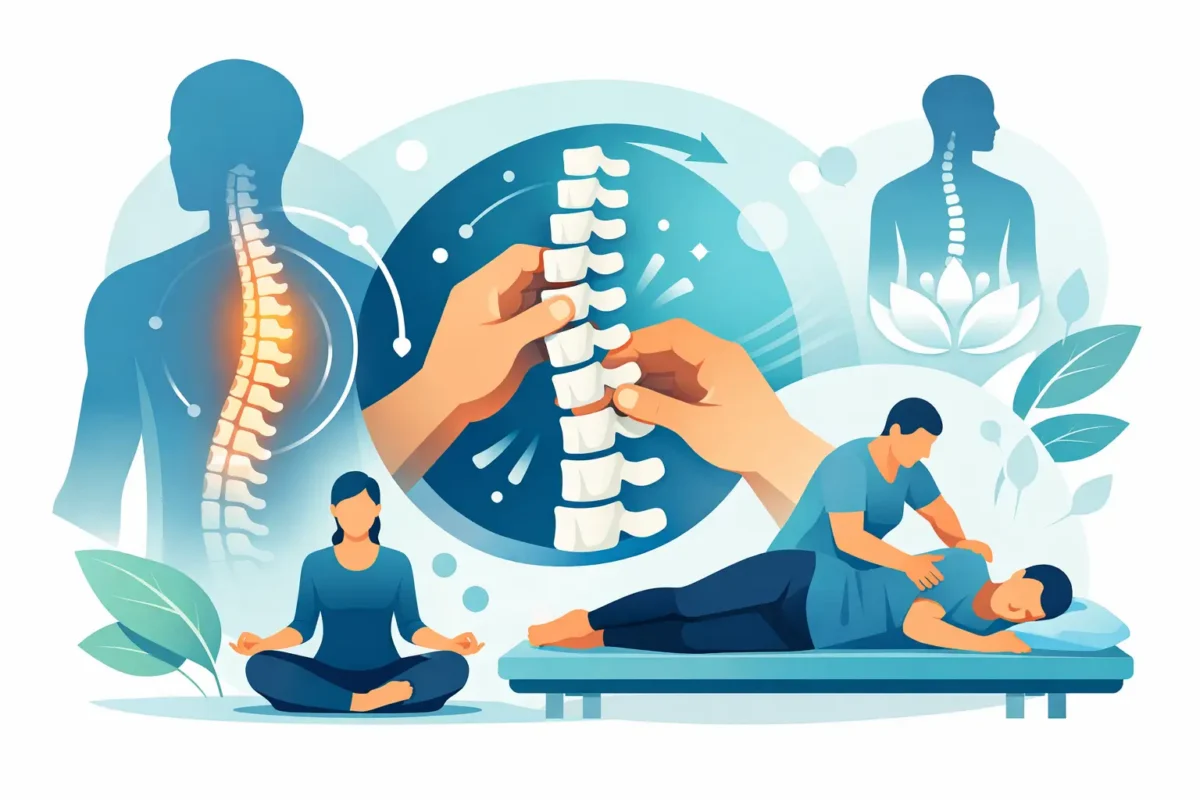
A spinal adjustment is a precise, controlled force applied to a specific spinal joint to improve joint motion and reduce restrictions. In chiropractic care, the goal is not to chase symptoms from one sore area to the next. It is to identify where spinal motion, alignment, and nervous-system communication may be compromised, then address those patterns with an individualized corrective plan.

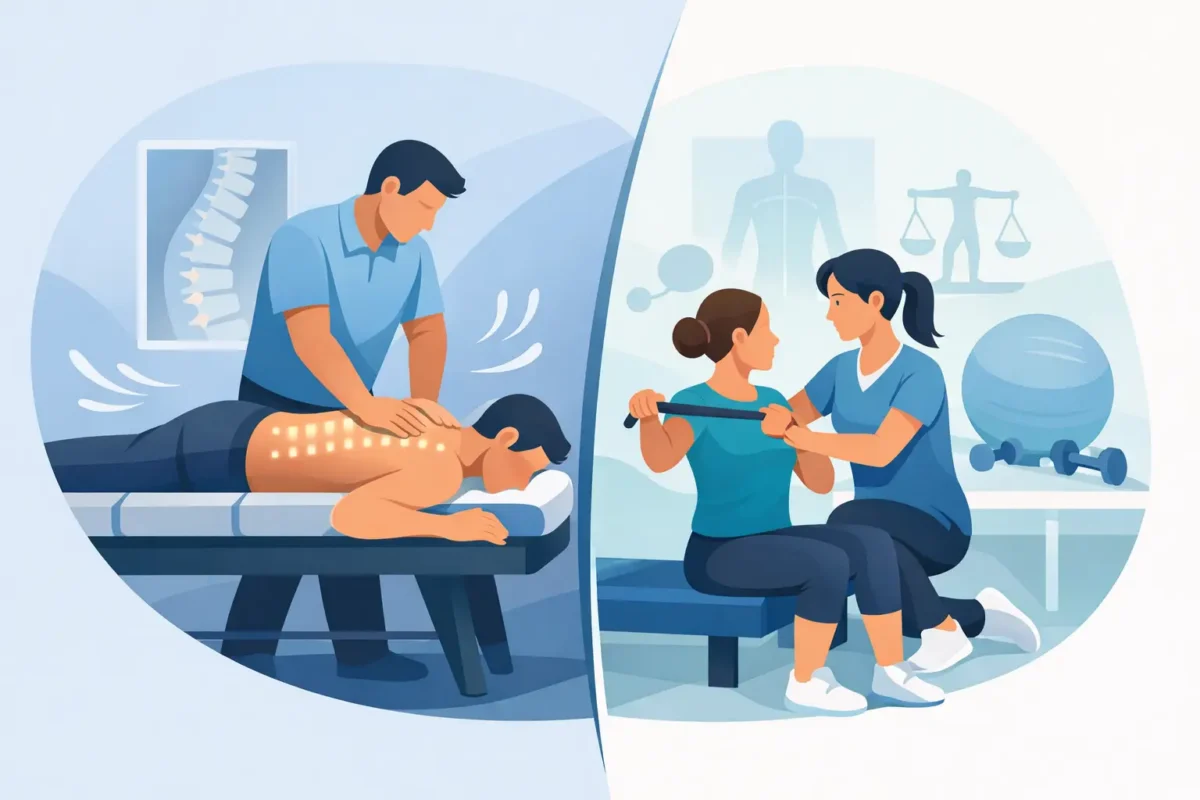
Physical therapy typically centers on rehabilitation through guided exercise, manual therapy, movement retraining, and progressive loading. A physical therapist may help restore strength, stability, balance, mobility, and confidence after an injury, surgery, or period of reduced activity.

Both approaches can involve hands-on care and both may include mobility work. The distinction is in their primary focus. Chiropractic adjustment focuses directly on spinal and joint dysfunction. Physical therapy focuses heavily on rebuilding the muscular control and movement tolerance required for daily life, sport, or post-injury recovery.

For many active adults, the real answer is not an either-or decision. A restricted spinal segment can make it harder to move well. Poor movement control can reinforce stress on the spine. Addressing only one side of that equation may leave progress on the table.


When a Spinal Adjustment May Be the Better Starting Point


An adjustment may make sense when a thorough examination points to joint restriction, altered spinal motion, postural distortion, or movement compensation that is limiting how your body functions. People often seek chiropractic care for neck pain, back pain, recurring headaches, reduced range of motion, and stiffness that never fully resolves.

The right adjustment is not a generic crack-and-go experience. A corrective approach begins with understanding the pattern. That can include a detailed health history, posture assessment, orthopedic and neurological testing, range-of-motion evaluation, and, when clinically appropriate, pre- and post-motion X-ray studies. The objective is to see what your body is doing, not guess from where it hurts.

For example, pain between the shoulder blades may not begin between the shoulder blades. It can be influenced by a forward-head posture, restricted movement in the neck or upper back, an old injury, repetitive desk positioning, or a training pattern that your body has learned to compensate around. An adjustment may help restore motion in the restricted area, but lasting change requires a plan that addresses why the restriction developed and why it keeps returning.

That is the difference between temporary relief and corrective care. If your back feels better for a few days but repeatedly tightens after a workout, commute, or workweek, stop settling for care that only quiets the alarm. Your body is asking for a deeper assessment.


When Physical Therapy May Be the Better Fit


Physical therapy can be especially valuable after surgery, a significant injury, immobilization, or a clear loss of strength and stability. If you are recovering from an ACL reconstruction, rotator cuff repair, fracture, or major tendon injury, progressive rehabilitation is often central to returning safely to activity.

It can also be the right choice when pain has caused you to avoid movement for months. In those cases, your body may need a structured path back to loading, coordination, and confidence. A strong physical therapy program does more than hand you a resistance band. It assesses how you move, identifies what you can tolerate today, and builds capacity over time.

The trade-off is that exercise alone may not fully address a specific spinal joint restriction or structural pattern contributing to the problem. You can strengthen around dysfunction for a while, but if the underlying mechanics remain unchanged, certain exercises may feel frustratingly limited or keep provoking the same area.

Physical therapy is most powerful when it is specific. The exercises should match your actual movement deficits, goals, sport demands, and recovery stage. A generic sheet of stretches is not the same thing as a rehabilitation plan.


Why Combining Care Can Be a Strategic Move


For an athlete, entrepreneur, parent, or professional who expects a lot from their body, combining chiropractic and rehabilitative exercise can be a smart strategy. Adjustments can help restore joint motion and reduce the mechanical barriers that make movement feel guarded or restricted. Targeted exercises can then reinforce better mechanics, build strength, and help your body own that improved range of motion.

Think of it this way: restoring motion matters, but retaining it matters just as much. If your hips, thoracic spine, or neck begin moving better after care but you return to the same posture, training imbalance, or sedentary work pattern without support, the old compensation can reassert itself.

A thoughtful plan may include adjustments, posture correction, mobility work, stability training, ergonomic changes, recovery habits, and progressive strengthening. The exact combination depends on the person in front of the provider. There is no serious one-size-fits-all solution for a body with your injury history, workload, training schedule, and goals.

At Mōtus Chiropractic, that principle is central: measure the dysfunction, educate the patient, create a personalized correction strategy, and reassess progress. High-level care should give you a clear answer to an essential question: Is your body actually changing, or are you simply receiving repeated symptom management?


How to Choose the Right Care for Your Situation


Start by looking beyond the location of your pain. Pain is information, but it is not always the source of the problem. A sharp pain after an acute injury needs a different response than years of recurring neck tension. A post-surgical knee has different requirements than a healthy knee that is overloaded because of poor hip control and restricted spinal movement.

A spinal adjustment may be worth prioritizing if you notice recurring stiffness, restricted turning or bending, posture changes, headaches associated with neck tension, or pain that improves temporarily but returns with predictable patterns. Physical therapy may deserve priority if you are recovering from surgery, need a progressive return-to-sport protocol, have significant weakness after injury, or require carefully monitored loading.

There are also times to seek medical evaluation before either route. New or worsening weakness, numbness, loss of coordination, bowel or bladder changes, fever, unexplained weight loss, severe trauma, or pain that is constant and unrelenting should not be treated as a routine muscle problem. The right provider knows when to treat, when to co-manage, and when to refer.


Questions That Reveal Whether Care Is Built for Results


Before committing to any care plan, ask how the provider determines the root cause of your problem. Ask what objective measures they use, how they track change, and what success will look like beyond a lower pain score. You should also understand the expected timeline, the role you need to play between visits, and how your plan will evolve as you improve.

Be cautious of two extremes: the promise that one appointment will permanently fix everything, and the vague recommendation to keep coming indefinitely without a measurable reason. Healing can take time, particularly when a problem has developed over years. But a quality plan should still have direction, benchmarks, and a rationale.

Your care should respect your ambition. Whether you want to dead lift without hesitation, finish a demanding workday without a headache, keep up with your kids, or move through Austin without planning your day around pain, your body deserves more than a temporary patch. Choose the approach that identifies what is limiting you, restores the movement you have lost, and gives you a real path to keep it. Learn more at Mōtus’ state-of-the-art facility in South Austin!

Categories
Uncategorized

Best Ways to Restore Spinal Motion and Alignment

A stiff neck after a long workday is one thing. A body that repeatedly pulls you out of training, disrupts sleep, triggers headaches, or makes simple movement feel restricted is another. The best ways to restore spinal alignment go far beyond cracking your back when it feels tight. Lasting change requires knowing what has changed in your movement, why it changed, and what your body needs to hold a healthier position under real-life demands.

For ambitious adults, alignment is not a cosmetic posture goal. It is about how well your spine moves, supports your nervous system, distributes force, and lets you show up for work, training, family, and the life you are building. Stop settling for temporary relief when your body is asking for a more complete answer.


What Spinal Alignment Actually Means


Spinal alignment does not mean forcing every curve into a perfectly straight line. A healthy spine has natural curves, and bodies vary. Functional alignment means the spine is positioned and moving in a way that supports efficient load transfer, balanced muscle activity, joint motion, and nerve function.

When that system is compromised, the symptoms do not always stay local. A forward head position may contribute to neck tension and headaches. Restricted mid-back motion can alter shoulder mechanics. Pelvic imbalance may change how your hips, knees, and feet absorb force during a run, deadlift, or walk around Austin.

Pain is useful information, but it is not a complete diagnosis. Some people have clear postural changes with little discomfort until their training volume, travel schedule, or stress load exposes the problem. Others hurt intensely because a small limitation has made surrounding muscles work overtime. That is why a meaningful plan starts with assessment, not assumptions.


The Best Ways to Restore Spinal Alignment Start With Evidence


A generic adjustment may feel good, but feeling better for a few days is not the same as changing the underlying pattern. If you want corrective results, begin with a thorough evaluation that connects symptoms to structure and movement.


Get a comprehensive movement and posture assessment


An effective assessment looks at more than the spot that hurts. It examines posture, spinal curves, range of motion, joint restrictions, muscle compensation, gait or functional movement, prior injuries, work setup, training habits, and daily stressors.

For some patients, pre- and post-motion X-ray studies can provide objective information about spinal position and how individual segments move. These studies are not necessary for everyone, and imaging should be used thoughtfully. When clinically appropriate, however, they can replace guesswork with a measurable baseline for corrective care.

The goal is not to label you as “out of alignment” and sell a standard package. The goal is to identify the specific restrictions, compensations, and structural patterns that are limiting your performance.


Use targeted corrective chiropractic care


Chiropractic adjustments can help restore motion in restricted spinal joints, reduce mechanical stress, and support better communication between the brain and body. But adjustment alone is rarely the whole strategy, particularly when a pattern has been built over months or years.

Corrective care should be personalized to your findings. The frequency, techniques, exercises, and progress markers should reflect your current capacity, injury history, goals, and how your body responds. Someone preparing for a race has different needs than someone rebuilding after years at a desk. Someone with acute irritation may need a slower approach than someone whose primary issue is long-standing postural adaptation.

At Mōtus Chiropractic, corrective care is built around objective testing, spinal motion analysis, and a plan designed to create measurable change rather than a revolving door of symptom management.


Rebuild the movement your lifestyle has taken away


You cannot sit in one position for nine hours, train around restrictions, and expect one weekly appointment to carry the entire load. Your daily movement choices either reinforce the correction or pull you back toward the old pattern.

Start by restoring the mobility your body can safely use. For many people, that includes gentle neck mobility, thoracic extension and rotation, hip rotation, and controlled breathing that allows the rib cage to move. The exact exercises matter less than whether they fit your actual restrictions. Stretching aggressively into an unstable or irritated area can make things worse.

Then build strength around the new range. Deep neck flexor endurance, upper-back strength, trunk control, glute strength, and single-leg stability often matter because they help the body maintain better mechanics when life gets demanding. Mobility gives you options. Strength helps you keep them.


Change the Inputs That Keep Pulling You Out of Position


Your spine adapts to what you do repeatedly. A corrective plan that ignores your workstation, recovery habits, and training patterns will hit a ceiling.


Make your work setup support movement, not perfection


There is no single perfect desk posture to hold all day. The better target is a setup that lets you change positions easily and reduces unnecessary strain. Keep your screen near eye level, bring frequently used items within easy reach, support your feet, and avoid craning your neck toward a laptop for hours.

More importantly, interrupt static positions. Stand up, walk, rotate your upper back, and reset your shoulders every 30 to 60 minutes. These breaks do not need to become a wellness ritual that derails your day. Two minutes of intentional movement is far more valuable than another hour locked into the same posture.


Train without feeding compensation


Hard training is not the enemy. Training through a pattern your body cannot control is. If your low back takes over every squat, your neck grips during pressing, or one hip consistently shifts, your program may be reinforcing the very compensation you are trying to correct.

This does not mean you need to stop lifting, running, cycling, or playing your sport. It means you may need to adjust load, range, tempo, exercise selection, or volume while you rebuild capacity. The right modification protects momentum. It keeps you engaged without demanding that an irritated system prove something it cannot yet do well.

A smart plan also respects recovery. Poor sleep, high stress, dehydration, and inadequate nutrition do not directly “misalign” the spine, but they can increase muscle tension, slow recovery, and make pain more persistent. Alignment is physical, but healing is whole-system work.


Track Progress Beyond Pain Levels


Pain relief matters. It is just not the only metric worth tracking. A lasting corrective plan should also measure changes such as range of motion, postural endurance, training tolerance, headache frequency, sleep quality, and the ability to move through your day without guarding.

This is where many people lose ground. They stop care the moment symptoms fade, even though their movement pattern has not fully changed. Think of it like returning to heavy lifting after one good rehab session. The absence of pain can be the start of rebuilding, not proof that the work is finished.

Progress is also rarely linear. A challenging work week, a long flight, a new training block, or a poor night of sleep can temporarily flare symptoms. That does not automatically mean you are back at square one. It may mean your system exceeded its current capacity. Review the trigger, adjust the inputs, and keep building.


Know When Spinal Alignment Needs Medical Evaluation First


Not every back or neck problem belongs in a corrective-care plan without further evaluation. Seek prompt medical attention for severe trauma, new weakness, numbness that is worsening, loss of bowel or bladder control, unexplained fever, unexplained weight loss, or significant pain that does not improve or is accompanied by other concerning symptoms.

A qualified provider should also consider your health history, medications, bone health, prior surgeries, and whether imaging or referral is appropriate. High-quality chiropractic care is not about forcing every problem into the same solution. It is about choosing the right next step for the person in front of you.


Build Alignment You Can Actually Keep


Restoring spinal alignment is not about chasing a one-time adjustment or policing yourself into rigid posture. It is about creating a body that moves with more options, carries load with less compensation, and recovers faster when life gets intense.

Choose assessment over assumptions. Choose a corrective plan over random fixes. Then give that plan enough consistency to change the pattern, not just quiet the signal. Your body is capable of adapting. Give it the right direction, the right support, and a reason to hold the progress. At Mōtus Chiropractic in Austin, TX we strive for optimizing motion and alignment. Look no further for your South Austin Chiropractor and reach out to us today!

Categories
Uncategorized

Top Benefits of Chiropractic Care

Your body can compensate for a long time. You can train through the tight hip, work through the neck tension, and call the recurring headache a normal cost of a demanding life. But compensation is not the same as healing. The top benefits of corrective chiropractic begin with a different standard: finding the movement and structural patterns behind the symptoms, then building a plan to change them.

For active adults, that distinction matters. A quick adjustment may provide temporary relief, but relief alone does not tell you why the problem keeps returning. Corrective care is designed for people who are ready to stop managing the same limitation and start measuring meaningful progress.


What Makes Corrective Chiropractic Different?


Corrective chiropractic is not a one-size-fits-all series of adjustments. It is a process built around assessment, individualized care, and reassessment. The goal is to identify restrictions in spinal motion, postural imbalances, and movement habits that may be contributing to pain, stiffness, or reduced performance.

At Mōtus Chiropractic, that process can include advanced range-of-motion testing and pre- and post-motion X-ray studies when clinically appropriate. These tools help create a clearer picture of how the spine moves, where it does not move well, and how a personalized corrective plan may be structured. Instead of guessing, care is guided by objective findings and your real-world goals.

That does not mean every ache requires extensive imaging or a lengthy care plan. The right approach depends on your history, exam findings, symptoms, and risk factors. It does mean you deserve more than a generic answer when your body is repeatedly telling you something is off.


Top Benefits of Corrective Chiropractic Care


1. A clearer path to better posture


Posture is not about forcing yourself into a rigid, military-straight position. It is about how your body organizes itself against gravity while you sit, stand, walk, lift, and train. When the head consistently drifts forward, the shoulders round, or the pelvis shifts, other tissues often work overtime to keep you upright.

Corrective chiropractic focuses on the structural and movement patterns that influence this compensation. Adjustments may be paired with specific mobility work, strengthening strategies, and guidance for the positions you repeat every day. For a professional spending hours at a laptop or an athlete loading one side more heavily than the other, that context matters.

Improved posture can support more efficient movement and reduce unnecessary strain. The result is not simply looking more upright in a photo. It is building a body that feels more capable during a long workday, a heavy training session, or a weekend outside Austin.


2. More usable mobility, not just temporary flexibility


Flexibility and mobility are not interchangeable. You may be able to stretch a tight muscle and still lack the control, joint motion, or stability needed to move well. That gap shows up when a squat feels uneven, rotation is limited during a golf swing, or turning your head while driving creates a sharp reminder that your neck is not moving freely.

Corrective care evaluates movement quality alongside spinal function. When appropriate, chiropractic adjustments can help address joint restrictions, while targeted corrective exercises help your body use the improved range of motion. This combination is essential. Gaining motion without building control is rarely a lasting answer.

Progress is often practical rather than dramatic. You may notice that you can reach overhead without bracing, sit through a meeting without constantly shifting, or return to a workout movement that previously felt guarded. Those changes add up because they expand what your body can do with confidence.


3. A more direct response to recurring pain patterns


Pain is real, but it is also a signal. If neck pain, back pain, or headaches keep returning after short-term treatment, the question should not only be, “How do we calm this down today?” It should also be, “What is repeatedly loading this area?”

Corrective chiropractic looks for potential contributors such as restricted spinal motion, postural stress, poor movement mechanics, prior injuries, and daily habits. That root-cause mindset can be especially valuable for people who are tired of cycling between discomfort, medication, rest, and another flare-up.

No responsible provider can promise that every condition will resolve through chiropractic care, and pain can have many causes. Some concerns require medical evaluation, co-management, or a different treatment path entirely. But when musculoskeletal dysfunction is part of the picture, a focused corrective plan can offer a more strategic alternative to chasing symptoms alone.


4. Better movement for work, training, and life


High performers often separate health from performance until their body forces the issue. The stiff back becomes a modified workout. The recurring headache becomes a shorter workday. The shoulder restriction becomes an excuse to avoid a movement you used to enjoy.

Corrective chiropractic connects those dots. The aim is not merely to make you less uncomfortable. It is to help restore the foundation for the activities that matter to you, whether that means lifting, running, cycling, playing with your kids, traveling, or staying sharp through a full day of focused work.

A well-designed plan should be specific. A runner may need attention to pelvic mechanics and lower-body control. A desk-based entrepreneur may need a strategy for cervical posture, thoracic mobility, and workstation habits. The best plan is not the most intense one. It is the one that addresses your findings and fits the life you are actually living.


5. Measurable progress instead of vague reassurance


“Just keep coming in” is not a plan. People committed to their health deserve to understand what is being addressed, how progress will be tracked, and when the plan should be adjusted.

One of the most valuable benefits of a corrective model is the emphasis on reassessment. Baseline findings can be compared with changes in range of motion, posture, functional movement, symptom patterns, and, when indicated, follow-up imaging. This gives you a tangible way to see whether your body is responding.

Numbers are not the whole story. Sleeping better, training with less hesitation, or finishing a workday with more energy matter too. Still, objective testing helps replace wishful thinking with informed decisions. It also keeps the care collaborative: you know what you are working toward and why each phase exists.


6. A long-term framework for self-responsibility


Corrective care is not passive. The adjustment is one part of the process, not the entire solution. Your results may also depend on movement practice, recovery, ergonomics, training choices, stress load, and consistency between visits.

That is not a burden. It is leverage. When you understand the patterns that keep pulling your body out of alignment, you gain more control over your health than a temporary fix can offer. You learn which habits support progress and which ones quietly reinforce the problem.

This approach requires patience. Structural and movement changes usually take time, especially when a pattern has been developing for years. There may be phases where your body is adapting, your exercise plan needs modification, or another provider should be involved. The trade-off is clear: lasting change asks more of you than momentary relief, but it can also give you more back.


Who May Benefit Most From a Corrective Approach?


Corrective chiropractic can be a strong fit for adults with recurring neck or back discomfort, persistent postural concerns, reduced mobility, headaches linked to musculoskeletal factors, or a sense that their body is not performing at its usual level. It is particularly relevant when you have tried symptom-focused care and still do not have a clear explanation or a plan for progression.

It is not a substitute for emergency care. Seek prompt medical evaluation for severe or sudden symptoms, significant trauma, unexplained weakness or numbness, bowel or bladder changes, fever, chest pain, or other red flags. Good chiropractic care knows its scope and refers when needed.

You do not have to accept stiffness, recurring pain, or diminished movement as the price of ambition. Start with an honest assessment of how your body moves now, then choose a plan that gives your future self more options than simply pushing through.

Categories
Uncategorized

How Posture Impacts Nervous System Function

Your posture is not a cosmetic issue. It is a live input to the system that controls how you move, adapt, recover, and respond to stress. Understanding how posture impacts nervous system function changes the conversation from “stand up straight” to a more useful question: Is your body structurally positioned to communicate and perform at its best?

For ambitious adults, posture often deteriorates quietly. Long workdays, heavy training, old injuries, repetitive driving, poor sleep positions, and years of adapting around discomfort can gradually change how the head, ribs, pelvis, and spine relate to one another. You may still be productive. You may still work out. But your body may be spending far too much energy compensating. That is not a performance strategy. It is a warning sign.


Your Spine Is Part of Your Nervous System’s Infrastructure


The nervous system includes the brain, spinal cord, and an extensive network of nerves that coordinate sensation, movement, organ function, and your response to the environment. Your spine protects the spinal cord, while the joints, muscles, and connective tissues around it provide constant feedback to the brain about where your body is in space.

This feedback is called proprioception. Every time you turn your head, stabilize during a deadlift, step off a curb, or sit at your desk, your brain relies on signals from your joints and muscles to organize the next movement.

When spinal joints are moving well and the body is well aligned, that feedback can be clearer and more efficient. When posture is consistently distorted, the body may rely on compensation. Muscles become overworked, certain joints become restricted, and others may move more than they should. The brain still gets information, but the quality and consistency of that information can change.

This is why posture is about more than appearance. It is about the environment your nervous system is working within all day.


How Posture Impacts Nervous System Signals


A forward head posture is a simple example. The average human head is heavy, and when it drifts forward from its balanced position over the shoulders, the neck and upper-back muscles must work harder to hold it up. That increased demand can create persistent muscle tension, altered joint mechanics, and a growing sense of fatigue.

The same principle applies farther down the body. A rounded upper back, collapsed rib cage, uneven shoulders, or a pelvis that consistently tilts forward or back can change how you breathe, load your hips, stabilize your core, and move through your day.

Over time, these patterns can influence the nervous system in several meaningful ways:


  • More threat signaling: Persistent strain, irritation, or restricted movement can contribute to protective muscle guarding and heightened sensitivity. Pain is complex and does not come from posture alone, but a body that is constantly compensating has more reasons to stay on alert.


  • Less efficient movement control: If the brain receives inconsistent feedback from restricted or overloaded joints, movement may become less coordinated. You may notice stiffness, reduced range of motion, clumsiness, or a plateau in training performance.


  • Higher energy cost: Holding an inefficient posture takes work. Many people describe this as feeling drained by the end of the day, even when they have not done anything unusually demanding.


  • Changes in breathing patterns: A compressed chest and forward head can make it harder to use the diaphragm effectively. Shallow, upper-chest breathing may reinforce a stressed, braced state rather than supporting calm, efficient recovery.


None of this means one imperfect posture causes disease or that you need to hold yourself rigidly upright every second. The nervous system is adaptable. In fact, variety of movement is healthy. The issue is not occasionally slouching on the couch. The issue is living in one compromised pattern for years while asking your body to keep producing at a high level.


Posture, Stress, and the Fight-or-Flight Loop


Stress is not just a feeling in your mind. It has a physical expression.

When the body perceives threat, the sympathetic nervous system helps prepare you for action. Your heart rate may rise, breathing may become quicker, and muscles may tighten. That response is useful during a hard sprint, a competitive presentation, or a genuine emergency. It becomes costly when the body never fully shifts out of protection mode.

Poor posture does not automatically create chronic stress. But structural tension and emotional stress can reinforce each other. Someone under pressure may hunch over a laptop, clench their jaw, breathe shallowly, and stop moving. That posture can then perpetuate neck tension, headaches, restricted rib movement, and fatigue, making the person feel even less resilient.

The goal is not to blame posture for every symptom. The goal is to recognize the loop and interrupt it.

Corrective care, targeted movement, strength, sleep, and stress regulation can all play a role. What matters is identifying which factors are driving your pattern instead of throwing generic advice at a complex problem.


Why “Just Sit Up Straight” Is Not a Real Solution


Trying to force perfect posture through willpower usually fails. It can also create more tension if you brace your shoulders back and lock your spine into a stiff, artificial position.

Lasting postural improvement requires capacity, not constant self-correction. Your body needs enough mobility to access healthier positions, enough strength and endurance to sustain them, and enough awareness to stop defaulting to old compensation patterns.

That is why a corrective approach should look beyond the spot that hurts. Neck pain may be connected to limited upper-back motion. Low-back tightness may be influenced by hip restriction, core control, or an old ankle injury that changed the way you walk. Recurring headaches may warrant a careful look at cervical motion, work setup, jaw tension, sleep, hydration, and appropriate medical evaluation when indicated.

A quick adjustment can feel helpful for some people, but symptom relief alone is not the same as structural change. Stop settling for care that only chases the loudest complaint. If the pattern keeps returning, the underlying mechanics deserve attention.


What a Measurable Posture Assessment Should Include


Posture should not be judged by a quick glance and a vague instruction to pull your shoulders back. A useful assessment considers how your body moves, not just how it looks while standing still.

At Mōtus Chiropractic, corrective care is built around objective findings and individualized plans. Depending on the person, that may include range-of-motion testing, spinal motion analysis, postural evaluation, and pre- and post-motion X-ray studies when clinically appropriate. These tools help identify mobility restrictions, alignment changes, and compensations that may not be obvious from symptoms alone.

The value of this approach is clarity. Instead of guessing why your neck keeps tightening after workouts or why your low back flares after long meetings, you can establish a baseline and track meaningful change over time.

Not every postural asymmetry needs aggressive intervention. Bodies are not perfectly symmetrical, and imaging is not necessary for everyone. But when pain, limited mobility, recurring headaches, numbness, weakness, balance changes, or a decline in function is present, a thorough evaluation can help determine the next right step. Sudden severe symptoms, significant trauma, bowel or bladder changes, or progressive weakness require prompt medical attention.


Build a Nervous System That Can Adapt


Better posture is not a pose. It is the visible result of a body that can move, stabilize, breathe, and recover with less compensation.

Start by changing positions more often. A perfect ergonomic workstation cannot offset ten motionless hours. Walk between calls, vary your sitting position, use your full range of motion during the day, and train strength through controlled movement rather than chasing intensity at all costs.

Then address the pattern beneath the pattern. If your thoracic spine is stiff, your hips are restricted, or your cervical spine has lost healthy motion, random stretches may provide a temporary release without changing the cause. A personalized corrective plan can combine spinal care, mobility work, posture retraining, and progressive strength in a way that matches your actual findings and goals.

Your nervous system is built to adapt, but it needs accurate input and adequate capacity to do it well. Give it both. The next time you notice your shoulders creeping forward, your jaw tightening, or your energy collapsing mid-afternoon, treat it as useful feedback – not something to ignore until it becomes pain. Reach out to learn more about your posture with a unique motion study X-ray analysis at Mōtus Chiropractic.

Categories
Uncategorized

7 Best Ways to Improve Mobility

Mobility problems rarely start with one dramatic moment. More often, they build quietly – tighter hips when you get out of the car, a stiff neck after a workday, shoulders that do not move the way they used to, a low back that feels loaded before your workout even starts. If you are searching for the best ways to improve mobility, the real goal is not just to stretch more. It is to restore how your body moves as a system.

That distinction matters. Plenty of active adults are doing yoga, foam rolling, and taking recovery seriously, yet they still feel restricted. Why? Because mobility is not only about muscle length. It is about joint mechanics, spinal alignment, nervous system function, posture, stability, and movement patterns that have been reinforced for years. If you want lasting change, stop settling for random fixes.


What mobility actually means


Mobility is your ability to move a joint through its usable range with control. That last part matters. Flexible hamstrings do not automatically mean you can hinge well. Loose shoulders do not guarantee strong overhead movement. Real mobility combines range of motion, strength, coordination, and joint integrity.

This is where people get misled. They chase sensation instead of function. A deep stretch can feel productive, but if your spine is compensating, your pelvis is unstable, or a joint is not tracking properly, more stretching may only reinforce the wrong pattern. Better mobility comes from improving the quality of movement, not just increasing the quantity.


The best ways to improve mobility start with the spine


If your spine is not moving well, the rest of the body pays for it. The neck, mid-back, low back, shoulders, and hips are all connected through posture and neurological control. A restricted thoracic spine can overload your shoulders. A misaligned pelvis can limit hip rotation. A loss of cervical motion can contribute to headaches, tension, and altered movement through the entire chain.

That is why spinal function deserves more attention than it usually gets in mainstream fitness advice. You can spend months working on ankle mobility or hip openers, but if the central structure coordinating movement is restricted, progress tends to stall.

For many people, one of the most overlooked solutions is getting objective data on where movement is actually breaking down. Corrective care that includes range-of-motion testing, postural analysis, and imaging when appropriate can reveal whether the problem is muscular tightness, structural imbalance, joint restriction, or a mix of all three. Guessing is common. Measuring is smarter.


1. Improve joint motion before forcing deeper stretches


The body protects what it does not trust. If a joint lacks stability or proper mechanics, your nervous system often creates tension as a protective response. That means aggressive stretching can backfire.

A better approach is to restore clean joint motion first. Controlled articular rotations, segmental spinal movement, and targeted mobility drills help your body reclaim range without triggering more guarding. This is especially useful for the hips, shoulders, and thoracic spine, where people often feel tight but are really dealing with poor joint control.

If a movement consistently feels blocked on one side, or if you hear repeated clicking, pinching, or grinding, that is not a sign to push harder. It is a sign to assess the joint more carefully.


2. Build strength in the ranges you want to keep


One of the best ways to improve mobility is also one of the least glamorous: get stronger in end range. Your body keeps the motion it can control. It tends to lose the motion it cannot.

This is why mobility gains disappear so quickly when they come only from passive stretching. If you open up your hips but never load them through that range, your body has little reason to trust or maintain it. Controlled split squats, deep goblet squats, loaded carries, tempo lunges, and well-executed rowing and pressing patterns can all support better mobility when the mechanics are sound.

The trade-off is that loading poor movement patterns makes them more ingrained. Strength training helps mobility when technique is honest and compensation is addressed. If your squat depth comes from lumbar collapse or your overhead press comes from rib flare, that is not progress. That is borrowed motion.


3. Fix posture if you want your mobility to last


Posture is not about standing like a soldier. It is about how your body organizes itself against gravity all day long. If you spend hours in forward head posture, rounded shoulders, and a collapsed mid-back, your mobility work has to fight that pattern daily.

This is why quick routines often fail. Ten minutes of stretching cannot fully offset ten hours of structural stress.

Start with the habits that shape your position most: desk setup, screen height, breathing mechanics, sitting duration, and how often you interrupt static postures. Then look deeper. Persistent postural distortion may reflect spinal misalignment and long-term compensation patterns that will not resolve with cues alone.

At a corrective-care office like Mōtus Chiropractic, posture is not treated as a cosmetic issue. It is measured as a functional issue tied to spinal stress, joint loading, and movement efficiency. That is the level of seriousness posture deserves if you want lasting results.


4. Use mobility work that matches your actual restrictions


Not every stiff body needs the same plan. Tight hip flexors can come from prolonged sitting, pelvic imbalance, poor core control, compensation from the feet, or restricted lumbar and thoracic movement. Shoulder limitation can stem from a locked-up mid-back, altered scapular mechanics, old injury, or cervical dysfunction.

That is why generic mobility routines only go so far. They are fine for maintenance, but they are often too broad for stubborn restrictions. If your left hip has been limited for years, your neck always turns better to one side, or your overhead range disappears under load, you need a more individualized strategy.

In practical terms, this means identifying whether the issue is soft tissue, joint restriction, motor control, or structural alignment. It depends. And if you skip that step, you may spend a lot of time working hard without moving the needle.


5. Respect recovery, inflammation, and nervous system load


Mobility is not just mechanical. It is physiological. When your body is inflamed, under-recovered, stressed, or running on poor sleep, tissue tone rises and movement quality drops. You feel stiffer because your system is less adaptable.

This does not mean every mobility issue is a stress issue. It means recovery sets the ceiling for how well your body can change. If you train hard, work long hours, sit too much, and sleep poorly, your mobility routine is trying to solve a problem your lifestyle keeps recreating.

The fix is not complicated, but it does require discipline: better sleep consistency, hydration, smart programming, walking, and enough recovery between intense training sessions. If your body feels chronically guarded, calm the system before you demand more from it.


6. Stop ignoring asymmetry and recurring pain


Mild soreness after training is one thing. Repeated pinching, one-sided restriction, numbness, tension headaches, or chronic low back tightness is something else. These patterns usually mean your body is compensating.

Pain changes movement. Movement changes load. Load changes tissue stress. Left unchecked, the cycle narrows your mobility over time.

This is where anti-mainstream healthcare matters. Too many people are told to rest, take medication, and come back if it gets worse. That may quiet symptoms, but it does not explain why the restriction keeps returning. If you want a different outcome, look for care that identifies root-cause dysfunction and tracks measurable change.


7. Make mobility part of your life, not a side project


The people who move well long term usually do not rely on heroic recovery sessions. They build mobility into their day, their training, and their environment. They warm up with intention. They do not sit for hours without moving. They train through full ranges they can own. They address restrictions early instead of waiting until performance drops or pain becomes normal.

This is where consistency beats intensity. Five focused minutes done daily often matters more than one long session done occasionally. The body adapts to repeated input. Give it better input.


Best ways to improve mobility for busy adults


If your schedule is packed, keep this simple. Start by identifying the one or two areas limiting your life most – maybe your neck when driving, your hips when squatting, or your thoracic spine when reaching overhead. Then support those areas from multiple angles: movement prep, strength, posture, recovery, and structural assessment when needed.

Do not chase complexity. Chase results. If what you are doing has not changed how you move, train, or feel after a reasonable period of consistency, it is time to stop guessing and get more precise.

Mobility is not a luxury for athletes or a bonus for people who have extra time. It is one of the clearest markers of how well your body is functioning. Protect it early, restore it intelligently, and treat limitation as feedback – not as your new normal.

Your body is built for more motion, more resilience, and more freedom than most people have been led to accept. Reclaim that standard with the help of mobility experts at Mōtus Chiropractic in Austin, TX.

Categories
Uncategorized

Structural Chiropractic Care in Austin

Your workout may be dialed in. Your nutrition may be clean. You may even be doing all the right things for recovery. But if your spine is not moving well, your posture is collapsing under stress, or your nervous system is compensating for old injuries, effort alone has a ceiling. Structural chiropractic care Austin residents choose is designed to find that ceiling – and help remove it.

This is not about chasing a temporary release after a long week at your desk or a hard training session. It is about asking a better question: Why does your body keep returning to the same pattern of pain, tightness, limited movement, or fatigue?


What Structural Chiropractic Care Actually Addresses


Conventional pain care often starts and stops with the symptom. Your neck hurts, so the goal becomes reducing neck pain. Your low back locks up, so the goal becomes getting through the next few days. Relief matters, but it is not the same as resolution.

Structural chiropractic care focuses on the relationship between spinal alignment, joint motion, posture, muscle compensation, and nervous-system function. When vertebrae are restricted, irritated, or moving outside a healthy pattern, the body adapts. One hip shifts. The shoulders round. The head moves forward. Muscles that should stabilize begin overworking, while other muscles stop contributing effectively.

Those adaptations can be remarkably persistent. You may feel them as recurring headaches, low-back stiffness, reduced range of motion, numbness or tingling, uneven strength, poor sleep, or the frustrating sense that your body is working harder than it should. The symptom may be local. The source of the pattern may not be.

Corrective care is built around identifying these patterns and creating a plan to change them over time. It does not promise that every ache comes from the spine, nor does it treat chiropractic as a substitute for appropriate medical evaluation. It does insist that movement, alignment, and function deserve more than a quick guess.


Why Temporary Adjustments Often Fall Short


A single adjustment can feel great. For some people, it is exactly what they need for short-term comfort. But when an issue has been developing for months or years, an occasional adjustment without measurement, re-evaluation, or a corrective strategy may not create durable change.

Think about the inputs that shaped your body: long hours of laptop work, travel, old sports injuries, repetitive lifting, a past accident, poor sleep positions, stress, and the simple fact that modern life asks most people to sit far more than they were built to. These forces do not disappear because pain briefly eases.

Structural care takes the longer view. The goal is to improve how the spine moves and how the body organizes itself around that movement. That may include specific chiropractic adjustments, posture-based recommendations, mobility work, movement restoration, and lifestyle changes that support the corrective process.

The trade-off is commitment. Meaningful structural change is rarely a one-visit event. It requires consistency, active participation, and the willingness to measure progress beyond whether you happen to hurt less this week. For high performers, that is not a drawback. It is how real training works in every other area of life.


Structural Chiropractic Care Austin Patients Can Measure


If a provider cannot explain what they found, how they will track change, and why the recommended plan fits your body, you are being asked to take too much on faith.

A strong structural chiropractic process begins with a thorough health history and examination. The clinician should look at more than the painful area. That can include posture, gait, muscle balance, spinal curves, joint restriction, and active range of motion. Advanced motion analysis can reveal how your neck, mid-back, or low back actually moves rather than relying only on a static snapshot.

When clinically appropriate, pre- and post-motion X-ray studies may provide another layer of objective information. These studies can help evaluate spinal position and movement under controlled conditions. They are not necessary for every person, and they should never be used casually. Used thoughtfully, they can help establish a baseline and guide a corrective plan with greater precision.

At Mōtus Chiropractic, this data-driven approach is central to the experience. The point is not to overwhelm you with technical language or sell fear. It is to make your starting point visible, connect that information to what you are feeling, and show you what progress can look like.


The Difference Between Feeling Better and Functioning Better


Pain is useful information, but it is not the only metric. Someone can have little pain while moving poorly. Another person may have pain that improves quickly while the underlying mechanics still need attention. Both situations call for a broader definition of progress.

Function is visible in daily life. It is turning your head confidently while driving. Sitting through a focused workday without the familiar neck tension. Getting up from the floor with your kids. Training without guarding one side. Finishing a run, a round of golf, or a strength session with more capacity left in the tank.

Objective re-evaluations help determine whether those changes are supported by measurable improvements in mobility, posture, and spinal function. If a plan is working, you should understand how. If it is not, the plan should evolve.


Who May Benefit From a Corrective Approach


Structural care is especially relevant for people who are tired of the recurrence cycle: discomfort, quick relief, return to normal activity, then the same problem again. It can also be a fit for active adults who are not in severe pain but recognize that their mobility, recovery, or posture has slipped.

You may be a candidate for a deeper evaluation if you deal with recurring neck or back discomfort, tension headaches, limited rotation, a forward-head posture, uneven hips or shoulders, chronic tightness that stretching does not solve, or performance plateaus that do not make sense given your effort.

It depends on the person and the condition. Acute injuries, severe symptoms, neurological changes, fractures, infections, and certain systemic health concerns require prompt medical assessment and may call for coordinated care outside chiropractic. A responsible provider knows when to refer, co-manage, or slow the process down.

That clinical judgment matters. Premium care is not doing more treatment for its own sake. It is delivering the right level of care, at the right time, with a clear reason behind every recommendation.


What a Personalized Corrective Plan Can Look Like


There is no universal number of visits that fits every spine. Your history, imaging or motion findings, current capacity, goals, and consistency all matter. Someone managing years of desk-related postural change will likely need a different path than an athlete rebuilding after a specific injury.

A personalized plan commonly moves through phases. The first phase is about reducing interference, restoring safer movement, and helping the body respond to care. The corrective phase focuses on more consistent changes in mobility, alignment, and postural control. The final phase is about integration: keeping the gains through work demands, training, travel, and the unpredictable realities of life.

The most effective plans do not make you passive. You should leave with a deeper understanding of your body and clear actions you can own between visits. That may mean adjusting your workstation, changing how you warm up, building simple movement habits, or respecting recovery with the same discipline you bring to performance.


Stop Settling for Care That Only Chases Pain


Austin is full of ambitious people who push hard – in business, on the trail, in the gym, and at home. That drive is an advantage, until you use it to push through signals your body has been sending for years.

You do not need to accept recurring discomfort, declining mobility, or a posture that makes you feel less capable than you are. You also do not need to chase endless treatments without a clear baseline or a plan for progress. Ask for a thorough assessment. Ask what is being measured. Ask how your care will change the way you move, not just the way you feel after an appointment.

Your body is not a collection of symptoms to manage. It is the system that carries every goal you still want to pursue. Give it the level of attention, precision, and consistency that lasting performance requires.

Categories
Uncategorized

Why Holistic Chiropractic in Austin Stands Out

If your neck keeps tightening by 3 p.m., your low back talks back after workouts, or your headaches return no matter how many quick fixes you try, your body is telling you something simple – symptom relief is not the same as healing. That is exactly why more people are searching for holistic chiropractic Austin care that looks beyond pain and asks the better question: what is actually causing your body to break down in the first place?

For ambitious adults, that question matters. You do not want to just get through the workday, survive your training session, or manage discomfort well enough to function. You want your body working for you, not against you. You want energy, mobility, strength, and focus. You want to perform at a high level without paying for it later in stiffness, tension, or recurring pain. That is where a holistic approach earns its place.


What holistic chiropractic at Mōtus Austin looks like


Plenty of people hear the word holistic and assume it means vague wellness language with no structure behind it. In a serious clinical setting, it means the opposite. It means your spine, posture, movement patterns, nervous system, and daily habits are all evaluated as part of the same picture.

Pain rarely shows up in isolation. A headache may be tied to forward head posture and restricted motion in the neck. Low back pain may have less to do with one bad lift and more to do with years of pelvic imbalance, poor spinal mechanics, and compensation through the hips. Numbness, tightness, and fatigue can all trace back to dysfunction that has been building quietly long before symptoms became impossible to ignore.

A holistic chiropractor does not stop at where it hurts. The goal is to identify the structural and functional patterns underneath the problem, then create a plan that actually changes them.

That is a major shift from the mainstream model many patients are used to. Too often, care becomes a cycle of temporary relief, medication, rest, and waiting for symptoms to flare again. Holistic chiropractic care challenges that cycle by focusing on correction, not camouflage.


Why active adults are choosing holistic chiropractic care in Austin


Austin attracts people who expect a lot from themselves. They train hard, work hard, and do not have much patience for generic healthcare. They want proof, personalization, and a path forward that respects both performance and longevity.

That is why holistic chiropractic Austin searches often come from people who are already frustrated. They have tried massage, stretching apps, foam rollers, anti-inflammatories, maybe even standard chiropractic visits that felt good for a day or two but never changed the underlying issue. Relief is not useless, but by itself it is not enough.

For a high-functioning adult, the real standard is different. Can you sit, train, sleep, recover, and move without your body constantly compensating? Is your posture improving? Is your range of motion expanding? Are headaches becoming less frequent because the cause is being addressed, not because you are pushing through them?

When care includes objective testing and a customized corrective plan, progress becomes measurable. That changes the whole experience. You stop guessing and start seeing whether your body is actually moving toward stability and resilience.


Root-cause care is different from symptom chasing


This is the line that matters most. Symptom chasing reacts to what hurts today. Root-cause care investigates why your body has been forced into that pattern at all.

Sometimes the source is obvious. A desk-heavy routine creates rounded shoulders, a forward head position, and reduced spinal mobility. Sometimes it is less obvious. An old ankle injury changes gait mechanics, which rotates the pelvis, alters spinal loading, and eventually creates low back or neck tension. The pain shows up late, but the dysfunction started earlier.

That is why a thoughtful corrective-care process often includes more than a quick adjustment. It may involve range-of-motion testing, posture analysis, pre- and post-motion imaging, and repeated checkpoints that show whether the spine is actually improving under care.

There is a trade-off here, and it is worth saying clearly. Root-cause work usually asks for more commitment. It takes time, consistency, and patient buy-in. If someone only wants a fast crack and a temporary reset, this approach may feel more involved than they expected. But if the goal is lasting change, that involvement is not a downside. It is the reason results hold.


What to look for in a holistic chiropractor in Austin


Not every practice that uses holistic language delivers holistic care. For people who want serious outcomes, the standard should be higher.

First, look for clinical specificity. A provider should be able to explain what they are finding, how they are measuring it, and what the plan is meant to improve. Vague reassurance is not enough. If your posture is collapsing, if your cervical curve is compromised, or if your spinal segments are not moving well, you should understand that clearly.

Second, look for personalization. Your body, injury history, lifestyle, and goals are not identical to anyone else’s. A corrective plan should reflect that. The athlete trying to restore rotation and recovery capacity has different demands than the entrepreneur with chronic tension from long hours at a laptop. Good care accounts for both the structure and the person.

Third, look for education. The best chiropractors do not keep patients dependent on mystery. They teach you what is happening in your spine and nervous system so you can participate in your own healing. That is not just empowering language. It leads to better compliance, better awareness, and better outcomes.

In Austin, where wellness options are everywhere, this is what separates premium care from trendy care.


Holistic chiropractic Austin and whole-body performance


The strongest case for chiropractic care is not just pain relief. It is improved function.

When spinal alignment and joint motion improve, posture becomes easier to maintain. Breathing often feels less restricted. Movement gets cleaner. Training can feel more efficient because the body is not constantly working around compensation. Even daily energy can change when the nervous system is not under the same mechanical stress.

That does not mean chiropractic is a magic solution for every condition or every person. Some cases require co-management, imaging outside the office, or a broader medical workup. A credible practice knows the limits of its scope and refers when necessary. Holistic care is not about pretending one tool solves everything. It is about using the right tools to address the body as an integrated system.

Still, for many people with chronic tension, posture decline, mobility loss, recurring headaches, and spinal dysfunction, the missing piece is not another temporary intervention. It is a structured plan that restores how the body is supposed to move.

That is why a practice like Mōtus Chiropractic resonates with patients who are done settling. The appeal is not hype. It is the combination of objective diagnostics, corrective strategy, and a clear expectation that healing is something you actively build.


The mindset shift that changes results


Here is the uncomfortable truth: many people wait until pain becomes disruptive before they take their structure seriously. By then, the problem has usually been developing for months or years.

A holistic model asks you to think differently. Do not wait for your body to force the issue. Pay attention to the warning signs early – stiffness, asymmetry, recurring tension, reduced range of motion, poor recovery, and posture changes that seem small until they are not. These are not random annoyances. They are signals.

And signals are useful when you respond to them.

If you are the kind of person who invests in training, nutrition, business growth, or personal development, this should feel familiar. Long-term results come from addressing fundamentals before breakdown becomes crisis. Your spine and nervous system deserve the same level of seriousness.

Holistic chiropractic care is not about doing more wellness for the sake of it. It is about refusing a low standard of health. It is about choosing care that respects the body’s design, measures what matters, and works toward outcomes you can feel in daily life.

Stop normalizing limitation just because it is common. The real opportunity is not to feel slightly better for a few days. It is to move better, stand taller, recover faster, and reclaim a body that can keep up with the life you are building.

Categories
Uncategorized

South Austin Corrective Chiropractor Guide

If your back only feels better for a day or two after an adjustment, that is not a real solution. A South Austin corrective chiropractor should do more than chase pain from one visit to the next. The right approach looks at why your spine keeps drifting, why your posture keeps collapsing, and why your body keeps compensating under stress, training, and long workdays.

That distinction matters, especially in a city full of active adults who expect a lot from their bodies. If you are lifting, running, sitting at a desk for ten hours, parenting, traveling, or building a business, temporary relief is a weak return on your effort. You need care that respects the fact that pain is often the last symptom to show up and the first one people try to silence.


What a South Austin corrective chiropractor actually does


Corrective chiropractic is not the same as basic symptom-based care. Traditional short-term care often focuses on reducing discomfort in the moment. That can help, and sometimes it is the right first step. But if the underlying structure is still off, the same patterns usually return.

A South Austin corrective chiropractor focuses on the mechanics underneath the symptoms. That means looking at spinal alignment, joint motion, posture, compensation patterns, and nervous system stress. Instead of asking only, “Where does it hurt?” the better question is, “What is causing your body to work harder than it should?”

For many patients, the answer shows up in places they did not expect. Chronic headaches may trace back to forward head posture and restricted neck motion. Low back pain can be tied to pelvic imbalance, weak movement patterns, or years of sitting with poor spinal support. Shoulder tension may have less to do with the shoulder itself and more to do with thoracic rigidity and cervical stress.

Corrective care is designed to change those patterns over time. That usually includes detailed testing, a personalized care plan, and measurable progress instead of vague promises.


Relief care vs corrective care


Relief care has a place. When someone walks in with acute pain, the immediate goal may be to calm irritation and reduce stress on the affected area. There is nothing wrong with wanting to feel better quickly.

The problem starts when relief becomes the whole model. If you get adjusted, feel looser, and then slide right back into the same mechanical dysfunction, your body is stuck in a loop. You are managing symptoms, not changing function.

Corrective care asks for more commitment, but it also offers more upside. It is built around structural improvement, better movement, stronger postural habits, and longer-term nervous system support. That means results may not always feel dramatic after a single visit, because the real goal is not a quick spike of relief. The goal is durable change.

There is a trade-off here. Corrective care often requires consistency, follow-through, and a willingness to see your health as a process. If you want one visit to erase ten years of degeneration, screen posture, old injuries, and movement compensation, no honest provider should sell you that fantasy.


How a corrective chiropractor evaluates the root cause


A serious corrective approach starts with objective information. That includes a thorough health history, postural analysis, range-of-motion testing, orthopedic and neurologic evaluation, and when clinically appropriate, imaging such as pre- and post-motion X-rays.

This matters because guessing is not a strategy. If your spine is rotating, your neck curve is reduced, or certain segments are not moving properly, that should be assessed directly. The more precise the diagnosis, the more specific the plan.

Advanced motion testing can reveal whether your spine is functioning the way it was designed to. X-ray studies, when used appropriately, can show structural distortion that no amount of surface-level treatment can explain away. Together, these tools help separate generic care from customized corrective work.

That level of detail is especially valuable for high-performing adults. If you are training hard, leading a demanding career, or trying to stay active with kids and family, you do not have time for vague care plans built on trial and error. You want to know what is wrong, what can improve, and how progress will be measured.


Signs you may need corrective care, not just occasional adjustments


Some people assume chiropractic is only for severe pain. That mindset keeps a lot of dysfunction hidden until it becomes harder to reverse. The body adapts for a long time before it finally protests.

You may be a strong candidate for corrective care if you deal with recurring neck or back pain, frequent headaches, stiffness that returns no matter how much you stretch, or posture that seems to worsen every year. It also matters if you feel restricted in workouts, lose mobility under load, or notice that one side of your body always feels tighter or less stable.

Another overlooked sign is fatigue. When your structure is off, your body spends more energy compensating. You may still be functional, but not efficient. That can show up as poor recovery, chronic tension, reduced focus, or the feeling that your body is always working against you.

People in South Austin often live highly physical, high-output lives. They train before work, sit at a laptop all day, then chase another round of activity at night. That combination of performance and compression creates the perfect environment for slow-building dysfunction. Waiting until the pain becomes unbearable is a bad strategy.


What your chiropractic care should feel like


A high-level corrective plan should feel personal, not packaged. Your care should reflect your spinal findings, movement restrictions, goals, and timeline. Someone training for races, someone recovering from years of desk posture, and someone trying to stop recurring migraines should not all be handed the same formula.

Treatment may include precise chiropractic adjustments, posture correction strategies, mobility restoration, and recommendations that support long-term healing between visits. Education is a major part of the process. If you do not understand what is changing in your body, it is harder to stay engaged and easier to fall back into passive healthcare.

This is where the best practices separate themselves. At a premium corrective office like Mōtus Chiropractic, care is built around measurable change, not endless maintenance with no destination. That means your progress should be tracked, explained, and tied back to function, not just pain scores.

You should also expect honesty. Not every issue resolves on the same timeline. Some patients respond quickly. Others are dealing with years of structural stress, old injuries, or advanced degeneration. A credible chiropractor will tell you when healing takes time and when your habits outside the office are either helping or sabotaging your results.


Choosing the right South Austin corrective chiropractor


Not every chiropractor who uses the word “corrective” practices true corrective care. Some use the label loosely while delivering standard high-volume adjustments with little testing and even less personalization.

Ask better questions. Does the doctor perform a detailed structural and functional evaluation? Do they use objective diagnostics when needed? Can they explain what is wrong in plain English? Do they show you how care will progress over time? Do they talk about posture, movement, and lifestyle, or only pain?

You should also pay attention to the philosophy behind the practice. If the office is built around getting you in and out as fast as possible, that may not match your goals. If you want to reclaim your posture, restore movement, and stop settling for recurring symptoms, you need a doctor who is willing to go deeper than mainstream symptom management.

That does not mean every person needs an aggressive long-term plan. It depends on the severity of the problem, your history, and what the exam reveals. But if your symptoms are recurring, your posture is declining, or your performance is slipping, a superficial approach is probably not enough.


Why this matters beyond pain


Corrective chiropractic is not just about feeling less sore. It is about restoring the quality of your life inside the body you use every day. Better alignment can support cleaner movement. Better movement can support stronger training, better recovery, and less wear and tear. Better nervous system function can influence how you adapt to stress, physically and mentally.

That is why the right care attracts people who refuse to normalize decline. They are not looking for permission to cope. They want to heal with intention, move with confidence, and build a body that keeps up with their standards.

If that is where you are, stop settling for quick fixes that fade by the weekend. Find a provider who tests thoroughly, thinks structurally, and treats your health like something worth rebuilding well.

Categories
Uncategorized

7 Top Causes of Forward Head Posture

You can train hard, eat clean, and still feel like your body is working against you if your head is living inches in front of where it should be. The top causes of forward head posture are rarely just about “bad posture.” More often, they reflect a deeper pattern of spinal stress, muscle imbalance, and compensation that builds quietly until your neck gets stiff, your shoulders round forward, and tension starts showing up in everything from workouts to workdays.

Forward head posture happens when the head drifts in front of the shoulders instead of stacking over them. That shift may look subtle in the mirror, but it places major demand on the cervical spine, surrounding muscles, and nervous system. The farther the head moves forward, the more the body has to compensate below it. This is why people with this pattern often deal with neck pain, headaches, reduced mobility, shoulder tightness, jaw tension, and even fatigue.

If you want real change, stop blaming your chair alone. Posture problems are usually the result of layered habits and structural adaptations. Once you understand the true drivers, you can stop chasing temporary relief and start correcting the pattern.


Why forward head posture develops in the first place


The body is brilliant at adaptation, but not always in ways that serve you long term. If a joint loses motion, if muscles stop doing their job, or if daily habits keep reinforcing the same position, the body will find a workaround. Forward head posture is one of the most common workarounds.

For some people, the issue starts with hours at a laptop. For others, it begins after an injury, chronic stress, poor breathing mechanics, or years of training with limited thoracic mobility. The key point is this: posture is not just a pose. It is the visible expression of how your body functions.


Top causes of forward head posture


1. Prolonged screen use and desk positioning


This is the obvious one, but it still deserves precision. The problem is not technology itself. The problem is spending hours with your eyes, hands, and attention pulled in front of your center.

When your screen sits too low, your laptop keeps you hunched, or your phone becomes an extension of your hand, your head starts migrating forward to meet the task. Over time, that position stops feeling wrong because your nervous system begins to treat it as normal.

The trade-off is that your deep neck stabilizers become less effective while the upper traps, levator scapulae, and suboccipital muscles become overworked. You are not just holding a poor position. You are remodeling your movement pattern around it.


2. Weak deep neck flexors and overactive surface muscles


Many people assume posture is only about stretching what feels tight. That is incomplete. Often, the deeper stabilizing muscles in the front of the neck are underperforming, while larger outer muscles are doing too much.

This matters because stability and alignment are not the same thing as muscle tension. You can have a neck that feels tight and still lacks the support needed to hold your head in a better position. In that case, more stretching alone will not solve the problem. It may even create a temporary sense of relief without changing the pattern.

This is one reason generic posture advice falls flat. If the wrong muscles are driving the movement, the body will keep returning to the same default.


3. Rounded shoulders and poor upper back mobility


Forward head posture almost never lives alone. It usually comes with a collapsed upper back, internally rotated shoulders, and reduced thoracic extension.

When the mid-back gets stiff, the body loses its ability to extend and rotate efficiently. To keep your eyes level and your body moving, the head shifts forward and the neck extends excessively. That is compensation, not alignment.

This is especially common in people who lift weights but skip mobility work, professionals who sit for long stretches, and active adults who are strong in the gym but restricted in everyday movement. Strength without mobility can still produce dysfunctional posture if the spine is not moving well segment by segment.


4. Old injuries and unresolved structural changes


Sometimes the top causes of forward head posture have nothing to do with your current routine and everything to do with what your body never fully recovered from. A car accident, sports impact, fall, or old neck injury can alter spinal mechanics long after the acute pain fades.

Whiplash is a classic example. Even if symptoms improve, the cervical curve, ligament integrity, and segmental motion can remain compromised. The body adapts around that dysfunction, and posture starts reflecting the compensation.

This is where people get frustrated. They do mobility drills, buy ergonomic equipment, and still feel stuck. If the underlying structure has changed, surface-level fixes may not be enough. You need a clear picture of what the spine is actually doing.


5. Breathing dysfunction and rib cage position


This cause gets overlooked constantly. If you breathe mostly through the chest, live in a stressed state, or carry your ribs flared and elevated, your neck muscles often become accessory breathing muscles.

That means muscles designed to help move and stabilize the neck are now working overtime just to help you breathe. Over time, this can reinforce tension in the front of the chest, stiffness in the upper back, and a forward-drawn head position.

Good posture is not about forcing your shoulders back. It is closely tied to how your rib cage stacks over your pelvis and how efficiently your diaphragm works. If breathing mechanics are off, posture correction becomes harder to sustain.


6. Stress, fatigue, and nervous system overload


Most posture conversations ignore the nervous system, which is a mistake. When stress stays high, sleep suffers, and recovery drops, the body often shifts into protective patterns. Shoulders creep upward. Jaw tension increases. Breathing becomes shallow. The neck and upper back stay guarded.

That chronic tension can make forward head posture worse, especially in high performers who push through discomfort and normalize feeling tight. The body is not failing you. It is adapting to the environment you keep giving it.

This does not mean posture is purely emotional or that mindset alone fixes it. It means lasting correction often requires addressing how stress is showing up physically, not just mechanically.


7. Lack of individualized assessment and corrective care


Here is the uncomfortable truth: a lot of people stay stuck because they are treating a pattern they have never properly measured.

Two people can both present with forward head posture and have very different root causes. One may need thoracic mobility and deep neck strengthening. Another may have cervical misalignment, loss of spinal curve, or movement restrictions that require a more specific corrective plan. If you treat both the same, one or both will plateau.

This is why cookie-cutter exercises and random social media posture hacks rarely create lasting change. Real correction depends on understanding joint motion, spinal alignment, muscle recruitment, and the compensations happening around the problem.


Why this posture pattern causes more than neck pain


Forward head posture affects more than appearance. It changes load distribution throughout the spine and can interfere with how well you move, train, and recover.

Many people first notice tension headaches, reduced neck rotation, shoulder impingement, or numbness and tingling into the arm. Others notice they cannot stay upright for long without effort, or that their workouts keep aggravating their traps and neck. These are not random symptoms. They are often downstream effects of a body that has been compensating for too long.

The longer the pattern stays in place, the more the body reinforces it. Muscles adapt. Joints stiffen. Movement options narrow. That is why early intervention matters, but even long-standing posture issues can improve with the right strategy.


What actually helps correct it


Posture improves when the body gains a better option and enough repetition to make that option stick. That usually means reducing the habits that drive the pattern while restoring the mobility, stability, and alignment that have been lost.

For some people, simple changes to screen height, keyboard position, and phone habits create meaningful relief. For others, progress requires corrective exercises, spinal adjustments, targeted mobility work, and objective testing to see whether the cervical spine is moving and aligning the way it should.

It also depends on severity. Mild forward head posture from recent work stress is not the same as a years-long structural pattern with chronic headaches and restricted motion. This is where a tailored approach matters. At Mōtus Chiropractic, that means looking beyond symptoms and using measurable findings to guide corrective care, not guessing and hoping.


When to stop waiting it out


If your posture is tied to recurring neck pain, headaches, shoulder tension, jaw tightness, numbness, reduced athletic performance, or a constant feeling of compression through the upper body, stop settling for temporary fixes. The issue may be more than muscular tension. It may reflect deeper dysfunction in how your spine is aligned and moving.

You do not need to accept forward head posture as the cost of ambition, desk work, parenting, training, or aging. The body can change when the right inputs are consistent and specific.

The real shift starts when you stop asking how to hide the symptoms and start asking what your posture has been trying to tell you all along.

Categories
Uncategorized

How Spinal Correction Improves Mobility

If your hips feel tight, your neck always seems to catch, or your lower back limits how you train, work, or sleep, the issue may not be a lack of stretching. It may be structural. Understanding how spinal correction improves mobility starts with a simple truth: when your spine is misaligned and not moving well, the rest of your body has to compensate.

That compensation is where so many active adults get stuck. They foam roll more, force deeper stretches, switch workout programs, and blame age, stress, or long hours at a desk. But if the spine is distorted, compressed, or restricted, mobility work alone often becomes maintenance for a problem that was never fully addressed.


Why mobility is not just about flexibility


A lot of people use mobility and flexibility like they mean the same thing. They do not. Flexibility is about muscle length. Mobility is about controlled movement through a joint’s available range of motion. That distinction matters.

You can be flexible and still move poorly. You can touch your toes and still have a spine that rotates unevenly, a pelvis that compensates under load, or a neck that has lost healthy curve and motion. Real mobility depends on alignment, joint mechanics, muscular balance, and nervous system coordination working together.

The spine sits at the center of all of it. It houses and protects the nervous system, distributes force, and helps coordinate movement between the upper and lower body. When spinal joints lose proper motion or shift out of healthy alignment, movement quality changes everywhere else. The body is smart, but it is not magical. It will find a workaround. That workaround is usually what becomes tightness, instability, pain, or reduced performance.


How spinal correction improves mobility at the source


Corrective spinal care is different from chasing symptoms. The goal is not to provide a quick crack and send you back into the same dysfunction. The goal is to identify where movement has broken down, why compensation patterns developed, and what needs to change to restore more normal mechanics.

When spinal alignment improves, several things start to happen.

First, restricted joints can begin to move more normally. A segment of the spine that is not gliding or rotating well creates stress above and below it. Restore function there, and the body no longer has to steal motion from the wrong places.

Second, muscle tension often starts to change. Tight muscles are not always the main problem. Sometimes they are guarding an unstable or misaligned area. If your body senses poor support or distorted joint positioning, it creates tension to protect you. That is why stretching can feel good for an hour and then do nothing lasting. Once the underlying spinal dysfunction is addressed, the guarding response can ease.

Third, posture improves. That is not about standing straighter for appearances. Better posture changes load distribution. It can reduce compression in the spine, free up shoulder and hip mechanics, and make everyday movement less costly. Walking, reaching, squatting, turning your head, and even breathing can feel easier when the structure underneath those movements is better organized.

Finally, the nervous system gets a better signal. If the spine is under chronic stress, motion is restricted, and biomechanics are distorted, your brain receives faulty information about where your body is in space and how safely it can move. Corrective care helps clean up that feedback loop. Better input often leads to better control.


The compensation patterns most people miss


This is where generic care falls short. The body rarely complains exactly where the problem begins.

A stiff thoracic spine can show up as shoulder pain during pressing or overhead work. A forward head posture can contribute to neck tension, headaches, and reduced rotation while driving. Loss of lumbar curve can change pelvic mechanics, tighten the hip flexors, and make hamstrings feel chronically short. None of those patterns are random.

If you only treat the area that hurts, you may get temporary relief. If you correct the spinal distortion driving the compensation, mobility has a real chance to improve in a lasting way.

That is why objective testing matters. Range-of-motion analysis, postural evaluation, and when clinically appropriate, pre- and post-motion imaging can reveal whether a joint is actually moving differently or just feeling different for a short window. Serious patients should expect more than guesswork.


How spinal correction improves mobility in daily life


The gains are not limited to pain reduction. For high-performing adults, mobility is about access. It is your ability to train hard, recover well, sit through meetings without your back locking up, play with your kids, travel without stiffness, and stay physically capable as life gets more demanding.

When spinal function improves, people often notice that basic movements stop feeling negotiated. Rotation becomes smoother. Stride length can improve. Deep breathing feels less restricted. Getting out of bed, getting under a barbell, or sitting at a laptop for two hours no longer creates the same level of backlash.

That said, results depend on the person. If someone has severe degeneration, long-standing postural collapse, old injuries, or years of compensation, progress may take time. Corrective care is not a shortcut. It is a process. But for the right patient, it is the process that finally makes the other healthy habits work better.


Spinal correction and athletic performance


Mobility is performance currency. If your spine does not move well, force transfer gets sloppy. That matters whether you run, golf, lift, cycle, climb, or spend your weekends on Austin trails trying to stay strong and pain-free.

Athletes and active professionals often assume they only need stronger glutes, more core work, or better recovery tools. Sometimes that is true. But if spinal mechanics are off, those inputs can hit a ceiling.

A restricted mid-back can limit overhead mechanics and affect pressing strength. Pelvic imbalance can change squat depth, gait efficiency, and rotational power. Cervical dysfunction can influence posture, breathing strategy, and upper-body tension. Correcting the spine does not replace training. It helps create a body that can express training more effectively.

That is a major difference. You are not just chasing pain relief. You are building a better platform for movement.


What good corrective care should include


If you are serious about changing mobility, stop settling for generic treatment plans. A premium corrective approach should begin with a thorough assessment, not assumptions.

That means looking at posture, spinal curves, joint motion, movement quality, and the specific patterns that show up in your daily life or training. It also means tracking progress with measurable benchmarks instead of relying only on whether you felt looser after one visit.

The care plan itself should be individualized. Some patients need focused spinal adjustments over time to restore alignment and motion. Others also need postural retraining, targeted exercises, soft tissue support, and changes in ergonomics or movement habits. Usually, the answer is not one thing. It is the right combination, in the right sequence, based on how your body responds.

This is one reason people who are frustrated with mainstream care often do well in a corrective model. They are not looking to mask symptoms. They want to know what is actually wrong, whether it can improve, and what it will take to get there.


How to know if your mobility problem may be spinal


Not every mobility issue starts in the spine, but many do. If your stiffness keeps returning, one side always feels different from the other, stretching gives short-lived relief, or pain shows up after sitting, standing, or training in predictable ways, spinal dysfunction deserves a closer look.

You should also pay attention if your posture has changed, your range of motion has gradually declined, or your body feels less coordinated than it used to. Those are not small things. They are often early signs that your structure and movement quality are drifting in the wrong direction.

At Mōtus Chiropractic, that is exactly where a more serious conversation begins – with objective findings, not vague wellness talk. Because when you can see what is happening, you can finally make decisions that move your body forward.

Mobility is not something you lose and just have to accept. In many cases, it is something you can restore when the right structure, the right strategy, and the right level of commitment come together. Your body is built to move well. If it is not, that is your cue to stop managing the limitation and start correcting the cause.