
THE MŌTUS BLOG
June 2, 2026
How Chiropractic Improves the Nervous System
If your body feels wired, stiff, tired, or off even when your labs look fine and your pain is being "managed," the problem may not be a lack of effort. It may be a lack of communication inside your body. That is where understanding how chiropractic improves nervous system function becomes so valuable. Your spine is not just structural support. It is the protective housing for the system that coordinates healing, movement, recovery, focus, and resilience.
For high-performing adults, that matters. You cannot separate posture from performance, mobility from energy, or spinal function from how well your body adapts to stress. When spinal joints lose healthy motion, when posture collapses, or when chronic tension becomes your baseline, your nervous system has to work harder to do basic things. You may still function, but you are not operating at full capacity.
Chiropractic and nervous system connection
Chiropractic care aims to restore healthier motion and alignment in the spine so the nervous system can communicate with the rest of the body more efficiently. That does not mean chiropractic "treats" every condition directly or acts as a magic switch. It means spinal dysfunction can interfere with normal mechanics and sensory input, and correcting those problems can help the body regulate itself better.
Your brain relies on constant feedback from your joints, muscles, and connective tissues to understand where your body is in space and how to coordinate movement. If spinal segments are restricted or irritated, that feedback can become distorted. Over time, that can show up as tightness, compensation patterns, headaches, poor posture, reduced range of motion, or a lingering sense that your body never fully settles.
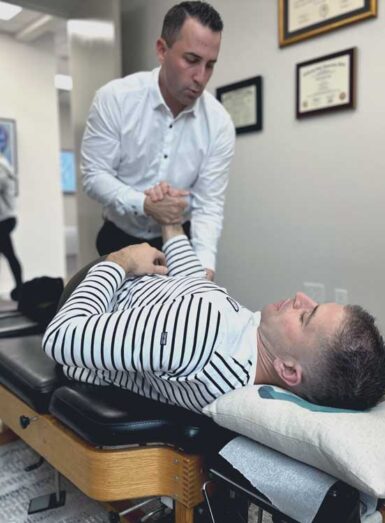
A specific chiropractic adjustment helps reintroduce motion to restricted joints. That mechanical change matters, but the neurological effect matters just as much. Better joint motion can improve the quality of input going to the brain, which may help with muscle tone, coordination, stress adaptation, and movement efficiency. In plain English, your body can stop fighting itself.
Why the spine matters so much to nervous system health
The nervous system is your master control system. It helps regulate heart rate, breathing, digestion, muscle activation, reflexes, recovery, and your ability to respond to physical and emotional stress. The spinal cord travels through the spine, and spinal nerves branch out from there to communicate with every region of the body.
When the spine is stable, mobile, and aligned well, that system is better positioned to do its job. When the spine is under chronic strain, the body often shifts into compensation. One area stiffens, another overworks, posture changes, breathing can become shallower, and stress patterns build. None of that happens in isolation.
This is why people often seek care for pain but stay because they notice broader changes. They may sleep more deeply, move more freely, recover faster after workouts, or feel less drained by the end of the day. Those shifts are not random. They reflect better nervous system regulation.
It is not just about pain relief
Pain is usually the last symptom to show up and one of the first to change. That is helpful, but it can also be misleading. You can have major dysfunction in the spine long before pain becomes intense enough to force action.
That is one reason symptom-chasing falls short. If care only starts and stops based on whether something hurts today, the deeper pattern often remains. Corrective chiropractic takes a different approach. It looks at structure, motion, posture, and nervous system stress so care can address the source instead of providing temporary relief.
The connection between spinal stress and stress response
A nervous system under constant mechanical stress tends to become more reactive. You may notice this as tension in the shoulders, jaw clenching, shallow breathing, sleep disruption, or a body that feels stuck in go-mode. For many active adults, this becomes normalized. They assume feeling keyed up, tight, and fatigued is just the price of ambition.
It is not.
When spinal dysfunction is reduced and movement improves, the body often shifts out of chronic defensive patterns. Adjustments may influence the balance between sympathetic activity, your fight-or-flight response, and parasympathetic activity, your rest-and-recover mode. That matters if you want to heal, train hard without breaking down, think clearly, and actually enjoy the life you are building.
This is also where nuance matters. Chiropractic is not a substitute for sleep, nutrition, training balance, or stress management. But it can be a powerful lever because it changes the system through which all those other inputs are processed.
How chiropractic improves nervous system performance in real life
The benefits become easier to understand when you look beyond theory.
If your neck is locked up and your posture is collapsing toward a screen all day, your brain is receiving low-quality input from that region. That can contribute to headaches, tension, reduced mobility, and fatigue. Restoring motion and improving alignment can reduce that burden.
If your mid-back is rigid and your ribs do not move well, breathing mechanics can suffer. That influences not only workout capacity but also stress physiology. When the thoracic spine moves better, breathing often becomes more efficient and less strained.
If your low back and pelvis are unstable or compensating, your gait, hip function, and athletic output can all take a hit. The nervous system then has to work around those inefficiencies. Correcting the underlying dysfunction can improve how force is transferred through the body and how well you recover afterward.
These changes are not about chasing perfection. They are about reducing interference so your body can perform the way it was designed to.
Why customized care matters
Not all chiropractic care is created equal. Quick, generic adjustments may provide temporary relief, but they do not always answer the bigger question: why is this pattern happening in the first place?
If you are serious about long-term change, objective assessment matters. Range-of-motion testing, posture analysis, and imaging when clinically appropriate help reveal whether the issue is joint restriction, structural imbalance, loss of curve, compensation, or a broader movement problem. That is how care becomes strategic instead of repetitive.
At a practice like Mōtus Chiropractic, the focus is not on rushing you through the same routine as everyone else. It is on identifying what is distorting your mechanics and stressing your nervous system, then building a corrective plan around measurable change. That approach tends to resonate with people who are done settling for vague answers and short-term fixes.
What results can you realistically expect from chiropractic care?
It depends on the person, the severity of the dysfunction, how long it has been there, and how consistent they are with care. Some people notice immediate changes in tension, clarity, or mobility after an adjustment. Others improve more gradually as the body relearns healthier patterns.
The biggest wins often come with time. Better posture. Smoother movement. Fewer flare-ups. More body awareness. Improved recovery. Less energy wasted on compensation. Those are the kinds of results that change daily life because they compound.
That said, chiropractic is not a cure-all. If you have significant inflammation, acute injury, advanced degeneration, or lifestyle habits that keep reinforcing the problem, progress may be slower. The point is not hype. The point is honesty. Real healing is powerful, but it usually requires consistency and personal responsibility.
Who benefits most from nervous system-focused chiropractic care?
People who get the most from this approach are usually the ones who want more than pain management. They want to understand their body, improve how it functions, and stay ahead of breakdown.
That includes athletes dealing with recurring tightness, professionals with tech-neck and stress overload, parents carrying physical strain they keep ignoring, and health-conscious adults who know something is off even if they have been told to just rest or take medication. If your body has been compensating for months or years, the nervous system is already involved.
This is especially relevant for active adults in Austin who want to keep training, working, traveling, and showing up at a high level without being limited by a body that feels older than it should. Stop settling for care that numbs symptoms while the underlying pattern keeps getting worse.
The bigger picture
When people ask how chiropractic improves the nervous system, they are often really asking something deeper: can my body function better than this?
For many people, the answer is yes. Not because a single adjustment changes everything overnight, but because the body is remarkably capable when interference is reduced and structure starts supporting function again. Better input. Better regulation. Better movement. Better resilience.
If you want lasting change, think beyond relief. Ask whether your spine is helping your nervous system thrive or forcing it to compensate every single day. That question alone can change the direction of your health. Check in with Mōtus Chiropractic for an in-depth chiropractic evaluation to see if we can help!
Mōtus Chiropractic is a top-rated chiropractor located in Austin, TX. Dr. Mike Isseks offers more than 15 years experience helping his patients alleviate pain and Move Consciously. To schedule a visit, click here.
RECLAIM YOUR LIFE
Rebuild your body and reduce your pain with our progressive technology, proven alternative methods of care, and integrative chiropractic experience.

“Dr. Mike improved the mobility of my spine measurably. The whole team is incredibly flexible and helpful to work with. Everything is fast and easy.”

Author, biohacker, and founder of Bulletproof Nutrition

“Dr. Mike and the team at Mōtus are top notch. The adjustments are specific and the analysis is beyond thorough. If you’re in Austin, this is the spot for high-level Chiropractic care.”
– Adrian Grenier
Actor and Film Producer

ABOUT DR. MIKE ISSEKS
Dr. Mike has been a practicing chiropractor for more than 15 years. He is a graduate of California State University at Chico and received his Doctor of Chiropractic degree from Life Chiropractic College West. He specializes in corrective care chiropractic, improving posture, as well as optimizing spinal motion to help uncover the best version of those he serves.
STAY IN THE KNOW
Get cutting-edge health tips, updates, and event notifications...
By entering your email above and clicking “Sign-Up,” you agree to receive occasional emails from Mōtus Chiropractic.

VISIT US
Trio at Menchaca Business Park
Ample free parking in the front lot
HOURS
Monday, Tuesday, Thursday
8:30 am – 12 pm
2:30 pm – 6 pm
Wednesday
12 pm – 5 pm
REACH US
(512) 777-2680
hello@motusatx.com
STAY IN THE KNOW
Get cutting-edge health tips, updates, and event notifications...
By entering your email above and clicking “Sign-Up,” you agree to receive occasional emails from Mōtus Chiropractic.
Copyright 2022, Mōtus Chiropractic. All rights reserved.