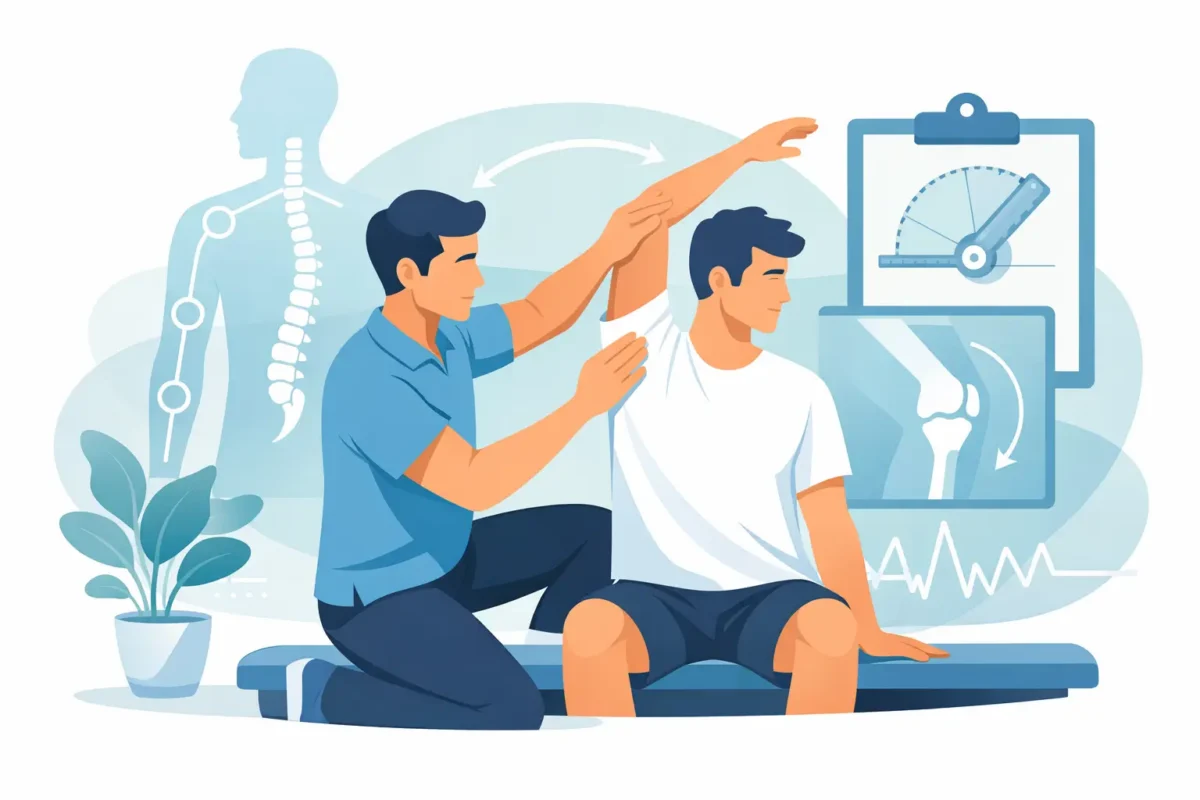
A quick adjustment can feel incredible. Your neck may turn more freely, your low back may feel lighter, and the tension you have been carrying through another demanding week may finally ease. But when people compare posture correction vs adjustments, they are often comparing two different levels of care: immediate relief versus a strategy designed to change the patterns that keep pulling your body out of balance.
If you are active, ambitious, and tired of managing recurring pain between workouts, meetings, and family commitments, that distinction matters. You do not need another temporary reset. You need to understand what is driving the problem – and what it takes to create measurable, lasting change.
What an Adjustment Is Designed to Do
A chiropractic adjustment is a precise force applied to a spinal joint or other joint that is not moving well. The goal is to improve motion, reduce joint restriction, and support healthier communication between the nervous system and the body.
When a joint becomes restricted, surrounding muscles often compensate. You may feel stiffness, guarding, pain, or a limited ability to rotate, bend, squat, press, or simply sit comfortably. An adjustment can help restore movement to that area and reduce the strain created by compensation.
That is valuable care. For some people, especially those dealing with an acute flare-up after travel, a hard training session, prolonged desk work, or an awkward lift, an adjustment may provide meaningful relief quickly.
But relief is not always correction.
A single adjustment does not automatically retrain the muscles, movement habits, and postural patterns that contributed to the restriction in the first place. If your head continues to sit forward for hours each day, if one hip remains less mobile than the other, or if your spine repeatedly loads unevenly during training, the same joints can become restricted again.
What Posture Correction Is Designed to Change
Posture correction is a broader, more intentional process. It focuses on improving the alignment, stability, and movement capacity that influence how your body functions over time.
This is not about forcing yourself to sit ramrod straight or obsessing over a picture-perfect posture. Human beings are built to move. No single static position is perfect for every body or every task. The issue is whether your habitual positions and movement patterns are creating excess stress, limiting motion, or forcing your nervous system to compensate.
Corrective care looks at questions that a symptom-based approach can miss. Is your neck curve reduced or reversed? Does your mid-back move well enough to let your shoulders function properly? Is pelvic imbalance changing the way you walk, run, or load a barbell? Are spinal restrictions contributing to recurring headaches, low-back tightness, or a persistent sense that your body is working harder than it should?
The answers shape the plan. Posture correction may involve specific chiropractic adjustments, targeted mobility work, stability exercises, ergonomic changes, movement coaching, and progress checks. The objective is not simply to make you feel better after a visit. It is to help your body hold a healthier pattern between visits.
Correction Requires Evidence, Not Guesswork
Posture is visible, but the reasons behind it are not always obvious. A shoulder that appears lower may reflect spinal rotation, muscle guarding, a pelvic issue, prior injury, or a combination of factors. Chasing what looks uneven without proper assessment can lead to generic care that never addresses the real driver.
That is why objective testing matters. Range-of-motion assessments can identify where movement is limited. Pre- and post-motion X-ray studies, when clinically appropriate, can reveal how spinal segments move and whether structural patterns may be affecting function. Reassessments provide a way to measure whether the plan is producing meaningful change.
At Mōtus Chiropractic, this diagnostic process supports a personalized corrective-care plan rather than a one-size-fits-all sequence of adjustments. Your body has a history. Your care should reflect it.
Posture Correction vs Adjustments: The Real Trade-Off
The choice is not necessarily posture correction or adjustments. In a well-designed corrective plan, adjustments are often one tool used to support posture and movement changes. The real question is whether care stops at short-term symptom relief or continues long enough to address the patterns behind recurring dysfunction.
An adjustment-first, relief-focused approach can be a practical choice when your issue is new, minor, and clearly tied to a temporary stressor. Maybe you slept poorly on a flight, strained your back gardening, or woke up with a stiff neck after an unusual week at your desk. Restoring motion and calming irritation may be exactly what you need.
A corrective approach is usually more appropriate when the problem keeps returning, has persisted for months or years, or is beginning to limit the life you want to live. Recurring headaches, chronic neck tension, stubborn low-back pain, reduced athletic performance, frequent joint stiffness, and a noticeable loss of mobility are not simply inconveniences to normalize.
The trade-off is commitment. Corrective care takes more involvement than occasional symptom relief. It may require consistent appointments, home exercises, changes to how you work or train, and patience while your body adapts. It also offers something that quick fixes cannot promise: a structured path toward better alignment, stronger movement, and fewer compensations over time.
Why Your Symptoms Keep Coming Back
Pain is often the alarm, not the entire problem.
Consider the professional who spends eight hours in a laptop posture, then trains hard at night. Their neck and upper back may become restricted, which can alter shoulder mechanics during pressing or overhead work. The body then recruits other muscles to get the job done. Tightness develops, performance drops, and eventually pain becomes loud enough to demand attention.
An adjustment may help restore motion and reduce the immediate burden. But if the person returns to the same daily loading pattern without building better thoracic mobility, neck stability, and workstation habits, the cycle can repeat.
The same principle applies to runners with recurring hip or low-back tightness, parents who keep getting headaches, and athletes who cannot seem to regain a full range of motion after an old injury. The body is adaptive. It will find a way to move around restriction. The problem is that compensation is rarely free. Over time, it can redistribute stress to tissues and joints that were never meant to carry it.
Stop settling for the idea that recurring discomfort is the price of a full life. Your body may be asking for a more complete strategy.
What a Thoughtful Corrective Plan Can Include
A quality posture-correction plan is not a standard list of stretches handed to everyone with back pain. It begins with an evaluation of your symptoms, health history, posture, movement quality, and spinal motion. From there, the plan should match your goals, whether that means returning to deadlifts, working at a desk without headaches, keeping up with your kids, or feeling more capable in your own body.
Chiropractic adjustments may be used to improve restricted joint motion. Corrective exercises can help reinforce new movement patterns and improve stability. Mobility work may address areas that are too stiff, while coaching can help you identify habits that repeatedly load your body in a less favorable way.
Progress should be visible in more than a temporary sensation of relief. You may notice easier rotation, deeper breathing, more comfortable sitting, better training mechanics, fewer flare-ups, improved energy, or greater confidence in movement. When appropriate, follow-up testing can add objective proof to what you are feeling.
No ethical provider should promise that every postural asymmetry will disappear or that every symptom has one simple cause. Bodies are complex, and factors such as stress, sleep, prior injuries, work demands, and training volume all matter. Still, complexity is not a reason to accept vague care. It is a reason to assess carefully and build a plan with purpose.
How to Choose the Right Approach for You
Ask yourself a direct question: Are you looking for relief from a current flare-up, or are you ready to address why your body keeps returning to the same problem?
If the answer is relief, an adjustment may be an appropriate starting point. If the answer is lasting improvement, look for care that includes a clear assessment, an explanation of findings, individualized recommendations, and a way to measure progress. Be cautious of anyone who offers the same plan to every patient or makes sweeping promises without examining how your spine and body actually move.
Your posture is not a cosmetic flaw to fix. It is one expression of how your body has adapted to your life. Give it the attention it deserves, and you can move beyond chasing the next temporary release toward building a body that supports the life, work, and performance you expect from it.