
THE MŌTUS BLOG
August 17, 2026
What a Customized Chiropractic Plan Does
Pain can be loud, but it is rarely the whole story. A tight neck after long workdays, recurring low-back pain after training, headaches that arrive like clockwork, or a shoulder that no longer moves freely can all be signals of a deeper pattern. A customized chiropractic plan is built to investigate that pattern, not simply quiet the symptom long enough for you to return to the same habits and restrictions.
For active adults, a generic adjustment schedule is not a serious strategy. Your body, training demands, work setup, injury history, posture, and goals are specific to you. Your care should be, too.
Why Generic Care Often Falls Short
Short-term relief has value. When pain is keeping you from sleeping, working, lifting, or being present with your family, you want help now. But relief without a clear understanding of why the problem keeps returning can become an expensive cycle: feel better, stop care, flare up, repeat.
The issue may be limited spinal motion, postural compensation, old injury patterns, joint restriction, muscle imbalance, or a combination of factors. A forward-head posture may contribute to persistent neck tension. Restricted hip or thoracic mobility may shift excess load into the low back. A past ankle injury can change how you walk, squat, and run years after the original pain fades.
That does not mean every ache has one simple cause or that chiropractic care is the right answer for every condition. It does mean your provider should look beyond the place that hurts. If a thorough evaluation suggests you need a different specialist, imaging referral, or co-managed care, that direction matters. Real healthcare is not about forcing every problem into one treatment method. It is about finding the most appropriate next step.
What a Customized Chiropractic Plan Includes
A meaningful plan starts with evidence, not assumptions. At Mōtus Chiropractic, the goal is to establish a baseline for how your body is functioning, then use that information to build a clear corrective path.
A Detailed Conversation About Your Life
Your symptoms are only one piece of the picture. A strong consultation considers when the issue began, what makes it better or worse, prior injuries, training habits, work demands, stress, sleep, and what you want to return to doing.
The goals matter. Someone training for a marathon has different needs than a founder spending ten hours a day at a laptop. A new parent lifting and carrying a child needs a plan that respects real-life demands. The point is not to create a perfect body. It is to restore capacity for the life you actually want to live.
Objective Movement and Spinal Assessment
Feeling better is meaningful, but it is not the only measurement that counts. A customized plan may include posture analysis, range-of-motion testing, neurological and orthopedic screening, and an evaluation of how the spine and joints move.
When clinically appropriate, pre- and post-motion X-ray studies can provide additional information about spinal alignment and segmental motion. These studies are not a routine checkbox for everyone. They should be used thoughtfully, with a clear clinical purpose and appropriate safety standards. For the right patient, they can reveal restrictions or structural patterns that are difficult to identify through symptoms alone.
This diagnostic stage gives you something far more useful than a vague promise to “come in and see how it goes.” It gives you a starting point. You can understand what is restricted, what is compensating, and what changes the plan is designed to pursue.
A Care Schedule With a Purpose
Frequency should not feel arbitrary. Early care may be more frequent when pain, mobility loss, or significant movement restriction is interfering with daily life. As function improves and your body holds changes more consistently, the schedule may shift.
The exact timeline depends on your findings, response to care, consistency, and goals. Structural and movement changes often require repetition because the body has spent months or years adapting to its current pattern. That is not a sales pitch. It is the reality of changing habits, tissue tolerance, motor control, and joint function.
A plan should explain what each phase is for. Relief-focused care can help reduce immediate interference. Corrective care is intended to address identified movement and alignment issues over time. Wellness or maintenance care may make sense for people who want ongoing support for mobility, posture, and performance. These phases are not interchangeable, and not every patient needs the same level of care.
Corrective Care Is More Than an Adjustment
A chiropractic adjustment may be part of a plan, but it should not be the entire plan. If your nervous system and movement habits repeatedly pull you back into the same dysfunctional pattern, a single intervention will have limited staying power.
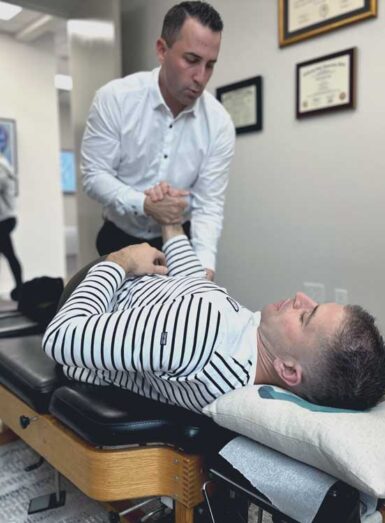
Depending on your evaluation, a customized approach can include specific chiropractic adjustments, posture-focused strategies, mobility recommendations, movement guidance, and practical changes to your daily environment. The goal is to improve how you move, not make you dependent on being adjusted forever.
This is where patient participation becomes non-negotiable. You cannot out-adjust a workstation that keeps you folded forward for eight hours a day. You cannot expect stable progress while repeatedly training through sharp pain, skipping recovery, and ignoring the movement limitations that caused compensation in the first place.
That is not blame. It is power. When you understand your role, you have more influence over your outcome.
How Progress Should Be Measured
“Do you feel better?” is a worthwhile question, but it is incomplete. A high-level treatment plan should revisit the measures established at the beginning of care. That can include changes in range of motion, posture, movement quality, symptom frequency, daily tolerance, and the activities you can perform with more confidence.
For some patients, progress looks like turning their head fully while driving, working through a meeting without a headache, or picking up a child without guarding their back. For others, it is getting deeper into a squat, returning to the golf course, increasing training volume, or recovering more efficiently after demanding weeks.
Re-evaluations create accountability on both sides. If the plan is working, you can see why continuing makes sense. If progress stalls, the plan should be adjusted. Maybe the home recommendations need to be simplified, training load needs to change, another provider should be involved, or the original working diagnosis needs reconsideration. You deserve that level of honesty.
Questions to Ask Before Starting Care
Before committing to any corrective chiropractic program, ask how the provider determines the plan, what metrics will be tracked, and when your progress will be reassessed. Ask what care may involve beyond adjustments. Ask what happens if you do not respond as expected.
Also ask for a clear explanation of recommended frequency, projected phases of care, costs, and your responsibilities between visits. Premium care should feel transparent, not mysterious. You should leave with a better understanding of your body and a practical path forward.
Be cautious of two extremes: promises of instant permanent fixes and plans that offer no measurable destination. Healing is rarely linear, especially when longstanding posture, stress, old injuries, and demanding routines are involved. Still, a plan should have direction, rationale, and checkpoints.
Build a Body That Can Meet Your Life
Stop settling for care that treats your symptoms as isolated interruptions. The right plan respects the fact that your body is connected, adaptable, and capable of meaningful change when it receives the right input consistently.
Your next step does not have to be dramatic. It can be a thorough evaluation, an honest look at how you move, and a commitment to address what has been quietly limiting you. When your care is built around measurable findings and your real goals, you are no longer chasing temporary relief. You are giving your body a better chance to support the work, training, relationships, and experiences that matter most.
Mōtus Chiropractic is a top-rated chiropractor located in Austin, TX. Dr. Mike Isseks offers more than 15 years experience helping his patients alleviate pain and Move Consciously. To schedule a visit, click here.
RECLAIM YOUR LIFE
Rebuild your body and reduce your pain with our progressive technology, proven alternative methods of care, and integrative chiropractic experience.
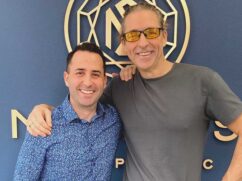
“Dr. Mike improved the mobility of my spine measurably. The whole team is incredibly flexible and helpful to work with. Everything is fast and easy.”

Author, biohacker, and founder of Bulletproof Nutrition

“Dr. Mike and the team at Mōtus are top notch. The adjustments are specific and the analysis is beyond thorough. If you’re in Austin, this is the spot for high-level Chiropractic care.”
– Adrian Grenier
Actor and Film Producer

ABOUT DR. MIKE ISSEKS
Dr. Mike has been a practicing chiropractor for more than 15 years. He is a graduate of California State University at Chico and received his Doctor of Chiropractic degree from Life Chiropractic College West. He specializes in corrective care chiropractic, improving posture, as well as optimizing spinal motion to help uncover the best version of those he serves.
STAY IN THE KNOW
Get cutting-edge health tips, updates, and event notifications...
By entering your email above and clicking “Sign-Up,” you agree to receive occasional emails from Mōtus Chiropractic.

VISIT US
Trio at Menchaca Business Park
Ample free parking in the front lot
HOURS
Monday, Tuesday, Thursday
8:30 am – 12 pm
2:30 pm – 6 pm
Wednesday
12 pm – 5 pm
REACH US
(512) 777-2680
hello@motusatx.com
STAY IN THE KNOW
Get cutting-edge health tips, updates, and event notifications...
By entering your email above and clicking “Sign-Up,” you agree to receive occasional emails from Mōtus Chiropractic.
Copyright 2022, Mōtus Chiropractic. All rights reserved.