
THE MŌTUS BLOG
June 23, 2026
The Mōtus Corrective Chiropractic Care Guide
If you have been adjusted before, felt better for a day or two, and then slid right back into the same pain, stiffness, or postural collapse, you are not imagining the pattern. That cycle is exactly why a corrective chiropractic care guide matters. Symptom relief has its place, but if your spine keeps returning to dysfunction, your body is telling you the problem runs deeper than a quick fix.
Corrective care is for people who are done managing decline. It is for the active adult who wants to train hard, work long, think clearly, and move through life without a neck that locks up by noon or a low back that flares every time stress spikes. If that sounds like you, stop settling for temporary relief and start asking a better question: what is actually driving the problem?
What is corrective chiropractic care?
Corrective chiropractic care is not the same as occasional symptom-based treatment. Relief care focuses on reducing pain in the moment. Corrective care focuses on changing the structural and functional patterns that keep recreating that pain.
That distinction matters. You can feel less pain and still have poor spinal alignment, restricted joint motion, unstable posture, compensation patterns, and nervous system stress. When those underlying issues stay in place, symptoms often return because the body is still operating from distortion.
A true corrective approach looks at the spine as part of a larger performance system. Alignment affects motion. Motion affects muscle tone. Muscle tone affects posture. Posture affects breathing, energy, coordination, and load distribution. When one part breaks down, the rest of the chain starts adapting, often in ways that look manageable until they are not.
The goal is not just pain relief
Most people begin care because something hurts. That is normal. But pain is only one signal, and not always the first one. Before pain shows up, many people notice reduced rotation, chronic tightness, tension headaches, uneven wear in training, numbness, fatigue, or a sense that their body is working harder than it should for basic movement.
Corrective care aims for a different outcome: better mechanics, stronger posture, cleaner movement, and a spine that holds its position more effectively over time. Yes, pain often improves. But the bigger win is resilience. You are not just trying to feel okay this week. You are trying to build a body that performs better under the demands of real life.
A corrective chiropractic care guide starts with measurement
If a provider cannot clearly show what is wrong, how they found it, and how they will track progress, be cautious. Premium care is not about vague promises. It is about objective data and a plan that makes sense.
A strong corrective workup often includes posture evaluation, spinal and extremity range-of-motion testing, orthopedic and neurologic assessment, and imaging when clinically appropriate. Pre- and post-motion X-ray studies can be especially valuable in cases involving long-standing structural dysfunction, because they reveal how the spine is actually moving rather than how it is assumed to move.
This is where many patients realize why generic care fell short. The issue is not that they were never adjusted. The issue is that no one mapped the problem with enough precision to correct it.
Why short-term care often fails
The mainstream model tends to chase symptoms. Painkiller. Rest. Maybe a quick adjustment. Maybe physical therapy exercises copied from a standard protocol. That can help some people, especially in straightforward acute cases. But if your issue has been building for months or years, a minimal approach may only calm the fire without removing the fuel.
Your body adapts to poor movement patterns over time. Muscles tighten to protect instability. Joints lose normal glide. Ligaments and fascia accommodate chronic stress. Your nervous system learns the dysfunction. That means lasting change usually requires repetition, progression, and consistency.
This is the part people do not always want to hear. Corrective care is not passive magic. It is a process. The trade-off is simple: it asks more from you upfront, but it can deliver far more in return.
What a personalized corrective plan may include
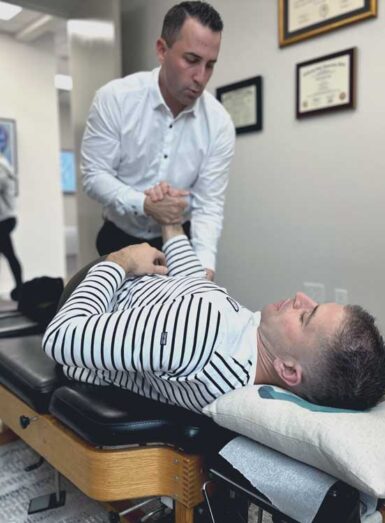
A customized plan usually centers on specific chiropractic adjustments delivered at the right frequency for your condition, not a one-size-fits-all schedule. Someone with a recent mobility restriction and mild postural stress may need a different strategy than someone with severe forward head posture, disc degeneration, or years of compensation from desk work and training.
Corrective care may also include posture retraining, targeted mobility work, spinal stabilization, ergonomic guidance, and recovery strategies that support nervous system regulation. These tools are not add-ons for show. They help your body hold onto the changes created during treatment.
That said, more is not always better. A premium plan is not about throwing every possible modality at you. It is about selecting the right inputs for your specific findings and goals.
How long does corrective care take?
It depends, and that is the honest answer. The timeline is influenced by age, injury history, consistency, work demands, stress load, exercise habits, and how advanced the structural problem has become.
Some people feel meaningful relief quickly but still need months of corrective work to stabilize the gains. Others improve more gradually because their body has spent years adapting to dysfunction. If you are expecting a decade of spinal stress to reverse in two visits, that expectation will sabotage your progress.
The better mindset is this: measure improvement in layers. Pain reduction is one layer. Better mobility is another. Improved posture, increased training tolerance, fewer headaches, stronger energy, and a body that stops relapsing under stress are deeper layers. Those changes often stack over time.
Who benefits most from corrective care?
The best candidates are usually people who want more than symptom management. They are motivated, coachable, and willing to follow through.
That includes professionals with desk-driven postural strain, athletes pushing repetitive loads, parents carrying stress and kids in equal measure, and active adults who know their body is no longer moving the way it should. It is also a smart fit for people who have tried piecemeal solutions and are frustrated by the lack of lasting results.
Not every case requires a long corrective plan. Acute, uncomplicated pain can sometimes respond well to shorter-term care. But when the same issue keeps coming back, or when posture and mobility have clearly deteriorated, corrective care becomes a much more logical path.
What progress should actually look like
A quality provider should not leave you guessing. You should understand what is being corrected, what milestones matter, and how your response is being evaluated.
Early progress may look like less pain, easier sleep, better turning, or fewer flare-ups. Mid-phase progress often includes measurable posture changes, improved range of motion, and a greater sense of strength and stability in everyday movement. Long-term progress is when your body starts holding those gains with less effort.
If you are in Austin and looking for a higher standard of spinal care, this is the difference a corrective practice like Mōtus Chiropractic is built around: not endless visits for dependency, but a structured process designed to create measurable change.
Questions to ask before starting care
Before committing to any treatment plan, ask how the doctor identifies root cause, how they measure structural change, and what your responsibilities are outside the office. Ask how often progress is re-evaluated. Ask what happens if you are not responding as expected.
Those questions protect you from vague care and put you back in a position of agency. You should never feel pressured into treatment you do not understand. But you also should not expect premium results from casual, inconsistent care.
The right corrective plan is both empowering and demanding. It gives you a clear path, objective benchmarks, and a reason for every recommendation.
The real decision
This is bigger than back pain or headaches. It is about whether you are willing to keep compensating through life in a body that is sending warning signs, or whether you are ready to correct what is actually breaking down.
You do not need to accept stiffness, recurring pain, poor posture, and limited mobility as the price of ambition or aging. Your spine influences how you move, how you recover, and how fully you can show up in your work, training, and relationships. When you restore alignment and motion at the source, you give your body a real chance to heal.
If you are ready for care that is specific, measurable, and built for lasting change, start with the truth: quick fixes are cheap, but they cost you time. Real correction asks more of you, and it gives more back.
Mōtus Chiropractic is a top-rated chiropractor located in Austin, TX. Dr. Mike Isseks offers more than 15 years experience helping his patients alleviate pain and Move Consciously. To schedule a visit, click here.
RECLAIM YOUR LIFE
Rebuild your body and reduce your pain with our progressive technology, proven alternative methods of care, and integrative chiropractic experience.
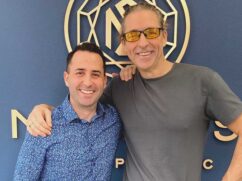
“Dr. Mike improved the mobility of my spine measurably. The whole team is incredibly flexible and helpful to work with. Everything is fast and easy.”

Author, biohacker, and founder of Bulletproof Nutrition

“Dr. Mike and the team at Mōtus are top notch. The adjustments are specific and the analysis is beyond thorough. If you’re in Austin, this is the spot for high-level Chiropractic care.”
– Adrian Grenier
Actor and Film Producer

ABOUT DR. MIKE ISSEKS
Dr. Mike has been a practicing chiropractor for more than 15 years. He is a graduate of California State University at Chico and received his Doctor of Chiropractic degree from Life Chiropractic College West. He specializes in corrective care chiropractic, improving posture, as well as optimizing spinal motion to help uncover the best version of those he serves.
STAY IN THE KNOW
Get cutting-edge health tips, updates, and event notifications...
By entering your email above and clicking “Sign-Up,” you agree to receive occasional emails from Mōtus Chiropractic.

VISIT US
Trio at Menchaca Business Park
Ample free parking in the front lot
HOURS
Monday, Tuesday, Thursday
8:30 am – 12 pm
2:30 pm – 6 pm
Wednesday
12 pm – 5 pm
REACH US
(512) 777-2680
hello@motusatx.com
STAY IN THE KNOW
Get cutting-edge health tips, updates, and event notifications...
By entering your email above and clicking “Sign-Up,” you agree to receive occasional emails from Mōtus Chiropractic.
Copyright 2022, Mōtus Chiropractic. All rights reserved.