
THE MŌTUS BLOG
June 25, 2026
Corrective Care vs Symptom Relief
You can ice the shoulder, stretch the neck, take the pill, and power through the week. A lot of high-functioning adults do exactly that until the same pain keeps circling back. That is the real issue behind corrective care vs symptom relief: do you want a quieter warning signal, or do you want to change the condition creating it?
For people who expect more from their body - in the gym, at work, on the trail, or simply getting through a long day without tension and fatigue - that distinction matters. Symptom relief has a place. But if your headaches, back pain, stiffness, poor posture, or restricted movement keep returning, relief alone is not a strategy. It is a pause button.
What corrective care vs symptom relief really means
Symptom relief focuses on reducing what you feel right now. That might mean decreasing pain, easing muscle tension, calming inflammation, or helping you get through the day with less discomfort. In the short term, that can be useful. If you are in acute pain, of course you want relief.
Corrective care aims at something deeper. Instead of asking only, "How do we make this hurt less?" it asks, "Why is this happening in the first place, and what has to change so it stops repeating?" That shift changes everything.
When the spine is misaligned, movement patterns are off, posture is collapsing, or joints are not functioning the way they should, the body compensates. Those compensations can show up as pain, but they can also show up as reduced mobility, recurring tightness, lower energy, headaches, slower recovery, and a nervous system that never quite settles. If you only chase the symptom, the pattern underneath remains in place.
That is why people can feel better temporarily yet never actually get better.
Why symptom relief often feels good - and falls short
There is a reason symptom-based care is common. It is fast, familiar, and easy to understand. You have pain, so you do something to reduce pain. Medication, rest, a quick adjustment, massage, or modifying activity can all help reduce intensity in the moment.
The problem is not that relief is bad. The problem is when relief is mistaken for resolution.
If your neck pain is being driven by years of forward-head posture, restricted spinal motion, and abnormal loading through the upper back, a temporary reduction in tension does not correct the mechanics. If low back pain keeps flaring because your spine is unstable, your pelvis is compensating, or your movement quality has broken down, masking the discomfort will not rebuild function.
This is where a lot of frustrated patients get stuck. They start to believe their body is unreliable, when the real issue is that they have only been offered short-term management. Stop settling for care that makes you slightly more comfortable while your structure keeps deteriorating.
Corrective care is about cause, not convenience
Corrective care takes more commitment because it is built for long-term change. It looks at spinal alignment, joint motion, posture, muscle imbalance, and how your nervous system is adapting to stress and dysfunction. Then it creates a plan to improve those findings over time.
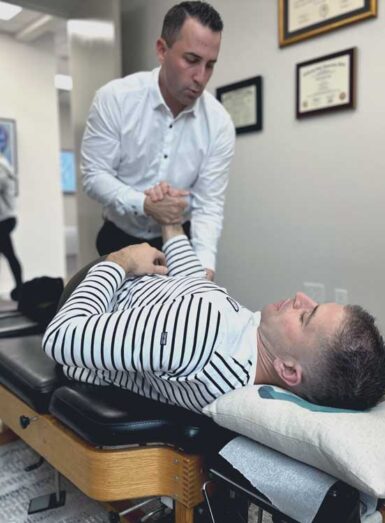
That process usually includes a more thorough evaluation than many people are used to. Instead of relying on a quick conversation and a generic treatment, corrective care often uses objective testing to see what is actually happening. Range-of-motion analysis, postural assessment, and pre- and post-motion imaging can reveal whether a joint is moving properly, whether the spine is under abnormal stress, and whether care is producing measurable change.
That matters because real healing should not be based on guesswork.
For the right patient, this approach is powerful. You are not just trying to survive your symptoms. You are restoring mechanics, reducing compensation, and creating conditions where the body can function better on its own.
Corrective care vs symptom relief in everyday life
The difference becomes obvious when you look at real patterns.
A runner has recurring hip tightness and low back pain. Symptom relief might calm the flare-up enough to get through the next training week. Corrective care would ask whether spinal restriction, pelvic imbalance, or gait compensation is driving repeated overload.
An entrepreneur has weekly tension headaches and constant upper-neck stiffness. Symptom relief may reduce the pain for a few hours or a few days. Corrective care would look at posture collapse, cervical alignment, screen-driven mechanics, and how nervous system stress is showing up physically.
A parent feels fine after occasional treatments, but every few weeks the same problem returns. That is a sign the body is not holding change. Corrective care is designed to improve stability and function so progress lasts longer, not just until the next bad day.
The point is not that every symptom requires a long corrective plan. It is that recurring issues usually have recurring causes.
When symptom relief is appropriate
There is nuance here. Not everyone needs the same level of care, and not every complaint demands a major corrective program.
If you slept awkwardly, tweaked something lifting, or are dealing with a short-term flare after travel or stress, symptom relief may be enough. The body can often recover well when the underlying structure is healthy and the trigger is temporary.
But if the problem is chronic, recurring, escalating, or affecting how you move and perform, that is different. If you are modifying workouts, avoiding travel, losing focus because of headaches, or waking up already stiff and depleted, the issue has moved beyond convenience. At that point, it makes sense to ask whether your body needs correction, not just comfort.
What a corrective approach should include
A true corrective-care model is not just more visits. It is a different philosophy.
It should start with a serious baseline. That means understanding your history, your goals, your movement quality, your spinal function, and the measurable patterns behind your symptoms. It should also include a customized plan, not a one-size-fits-all schedule handed to every patient who walks in.
Then the care itself should be intentional. Adjustments matter, but so does the context around them. Postural retraining, movement restoration, objective re-evaluation, and education all play a role in helping your body hold change. If your daily habits keep reinforcing the same distortion, treatment alone will always be fighting uphill.
This is why high-level patients often do better with a corrective model. They are willing to participate. They do not just want to be worked on. They want to understand their body, see their progress, and accelerate their healing with a plan that matches their goals.
Why ambitious people should care about this distinction
Pain is not the only cost of dysfunction. Poor spinal mechanics and chronic compensation can quietly limit performance long before they create a major crisis. You may still be functioning, but not at your best.
That can show up as reduced mobility in training, slower recovery after exercise, brain fog after long workdays, less resilience under stress, or a body that feels older than it should. If you are driven, active, and invested in your future, that matters.
Corrective care is not only about getting out of pain. It is about reclaiming capacity. Better alignment can support cleaner movement. Better motion can reduce wear and tear. Better nervous system function can improve how you adapt, recover, and perform.
That is a different standard of care than simply chasing the next flare-up.
In Austin, where so many people are balancing demanding careers with fitness, parenting, and full schedules, this matters even more. You do not need healthcare that tells you to slow down and accept decline. You need care that helps your body meet the level of life you expect to live.
How to know which path you need
Ask yourself a few honest questions. Is this problem new, or has it been cycling for months or years? Do you feel temporarily better, only to end up in the same place again? Have you changed your routine around the problem instead of solving it? Are you looking for the fastest fix, or the right fix?
If your symptoms are occasional and clearly tied to a short-term trigger, relief-focused care may be perfectly reasonable. If the pattern keeps returning, if your posture and movement have changed, or if you know your body is compensating, a corrective path is usually the smarter investment.
At Mōtus Chiropractic, that distinction is central: care should be measured by what it changes, not just by how good it feels for the next 48 hours.
Your body is always adapting to what you repeat. If you keep repeating temporary solutions, do not be surprised when temporary results are all you get. Choose the kind of care that respects how healing actually works, and your future self will feel the difference.
Mōtus Chiropractic is a top-rated chiropractor located in Austin, TX. Dr. Mike Isseks offers more than 15 years experience helping his patients alleviate pain and Move Consciously. To schedule a visit, click here.
RECLAIM YOUR LIFE
Rebuild your body and reduce your pain with our progressive technology, proven alternative methods of care, and integrative chiropractic experience.
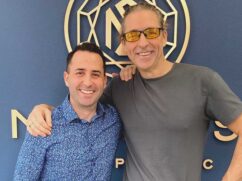
“Dr. Mike improved the mobility of my spine measurably. The whole team is incredibly flexible and helpful to work with. Everything is fast and easy.”

Author, biohacker, and founder of Bulletproof Nutrition

“Dr. Mike and the team at Mōtus are top notch. The adjustments are specific and the analysis is beyond thorough. If you’re in Austin, this is the spot for high-level Chiropractic care.”
– Adrian Grenier
Actor and Film Producer

ABOUT DR. MIKE ISSEKS
Dr. Mike has been a practicing chiropractor for more than 15 years. He is a graduate of California State University at Chico and received his Doctor of Chiropractic degree from Life Chiropractic College West. He specializes in corrective care chiropractic, improving posture, as well as optimizing spinal motion to help uncover the best version of those he serves.
STAY IN THE KNOW
Get cutting-edge health tips, updates, and event notifications...
By entering your email above and clicking “Sign-Up,” you agree to receive occasional emails from Mōtus Chiropractic.
VISIT US
Trio at Menchaca Business Park
Ample free parking in the front lot
HOURS
Monday, Tuesday, Thursday
8:30 am – 12 pm
2:30 pm – 6 pm
Wednesday
12 pm – 5 pm
REACH US
(512) 777-2680
hello@motusatx.com
STAY IN THE KNOW
Get cutting-edge health tips, updates, and event notifications...
By entering your email above and clicking “Sign-Up,” you agree to receive occasional emails from Mōtus Chiropractic.
Copyright 2022, Mōtus Chiropractic. All rights reserved.