
THE MŌTUS BLOG
August 8, 2026
Natural Care for Recurring Headaches
A headache that returns every week is not a personality trait, a badge of productivity, or something you should have to push through with another coffee and a pain reliever. Natural care for recurring headaches starts by getting curious about the pattern. When does the pain begin? Where do you feel it? What was happening in your body, workday, training schedule, sleep, and stress load before it arrived?
For active adults, recurring headaches often become background noise. You power through a presentation, shorten a workout, cancel dinner plans, then promise yourself you will deal with it later. But later rarely comes when symptom relief is the only strategy. The better move is to identify what is driving the cycle and build conditions that support lasting change.
First, Know When a Headache Is Not a Wellness Problem
Natural strategies have a place, but they are not a substitute for urgent medical care. Seek immediate evaluation for a sudden, severe headache that peaks quickly, a headache after a significant head injury, or pain accompanied by confusion, fainting, seizure, fever and stiff neck, weakness, numbness, vision loss, trouble speaking, or a new loss of balance.
A new or changing headache pattern also deserves prompt medical attention if you are pregnant or recently postpartum, have cancer or a compromised immune system, are over 50 with a new headache, or notice steadily worsening symptoms. Migraine, medication-overuse headache, high blood pressure, sinus disease, sleep disorders, and neurological conditions can all require medical diagnosis and treatment. Choosing natural care means being responsible enough to know when more evaluation is needed.
Natural Care for Recurring Headaches Begins With Patterns
Not every recurring headache has the same source. Tension-type headaches commonly feel like pressure or a tight band around the head. Migraines may involve throbbing pain, nausea, light sensitivity, sound sensitivity, or visual changes. Cervicogenic headaches are pain referred from structures in the neck and can be aggravated by neck position or movement. These categories can overlap, which is exactly why guessing is a poor long-term plan.
Keep a simple headache record for two to four weeks. Note the time symptoms begin, intensity, location, duration, food and caffeine intake, hydration, sleep, menstrual cycle when relevant, exercise, screen time, stress, and what made the pain better or worse. You are looking for repeatable inputs, not trying to achieve perfect data.
This record can reveal an obvious trigger, such as skipping lunch before a late-afternoon headache. More often, it reveals a stack: poor sleep, a demanding day, several hours of forward-head posture, dehydration, and an intense workout layered on top. The body can tolerate a lot, until it cannot. Recurring pain is often a capacity problem before it becomes a crisis.
Rebuild the Daily Inputs That Protect Your Nervous System
The most effective natural habits are rarely glamorous. They work because they lower the background stress your nervous system is carrying all day.
Start with hydration and consistent meals. Dehydration can contribute to headaches, especially in Austin heat, during long runs, or after a hard training session. Drink regularly rather than trying to catch up at night. Pair fluids with adequate electrolytes when you have been sweating heavily, and avoid routinely going long stretches without food if that reliably precedes head pain.
Caffeine deserves an honest assessment. For some people, a moderate, consistent amount can help. For others, too much caffeine, late-day caffeine, or withdrawal after a high-intake week can keep headaches in rotation. The goal is not to declare coffee the enemy. It is to stop letting a fluctuating stimulant habit dictate your energy and pain levels.
Sleep is equally personal but nonnegotiable. A weekend of sleeping until noon may feel like recovery after a demanding workweek, yet large swings in sleep timing can provoke headaches for some people. Aim for a stable wake time, a dark and cool sleep environment, and a wind-down routine that does not end with an hour of scrolling in a flexed-neck position.
Stress management should be physical, not just aspirational. Five minutes of slow breathing, a walk outside between meetings, a brief mobility break, or a training session scaled to your actual recovery level can interrupt the all-day stress response. You do not need a perfect morning routine. You need regular moments that tell your body it is no longer under threat.
Your Neck, Posture, and Movement May Be Part of the Story
If your headaches build after laptop work, driving, looking down at a phone, overhead training, or waking with neck stiffness, your cervical spine deserves attention. This does not mean posture has to be rigid or that one "perfect" position will solve everything. Bodies are built to move. The problem is often staying in one loaded position for too long, especially when neck mobility, shoulder mechanics, and upper-back strength are already limited.
A practical starting point is to change position more often. Raise your screen so you are not constantly looking down, use a headset instead of pinning a phone between your shoulder and ear, and take short movement breaks before discomfort forces you to stop. Gentle neck range-of-motion work, upper-back mobility, and shoulder-blade strength can be useful when performed without provoking symptoms.
This is also where individualized assessment matters. A headache that is truly linked to cervical dysfunction may respond differently than a migraine triggered by sleep disruption or hormones. For some people, manual therapy, targeted exercise, and corrective care can be appropriate components of a broader plan for cervicogenic or tension-related headache patterns. For others, they are not the primary answer. A credible provider should assess, measure, and adjust the plan rather than promising that one adjustment will cure every headache.
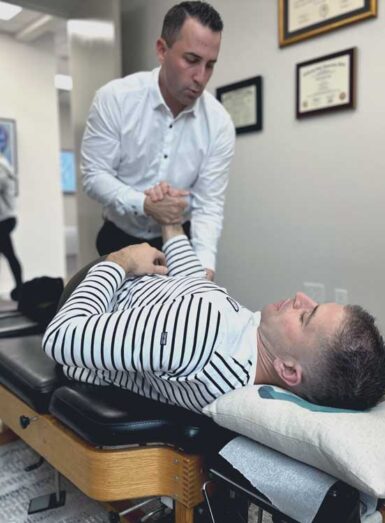
At Mōtus Chiropractic, the focus is on understanding how spinal alignment, motion restrictions, posture, and daily movement demands may be affecting your function. A thorough approach can include range-of-motion testing, postural assessment, and when clinically appropriate, imaging that helps clarify structural patterns. The goal is not to chase pain from one visit to the next. It is to identify whether your body has a mechanical problem that can be improved through a specific corrective strategy.
Be Careful With the Quick Fix Cycle
Over-the-counter pain relievers can be useful when taken as directed, but frequent use can create its own problem. Using certain acute headache medications too often may contribute to medication-overuse headaches, where relief becomes shorter and the cycle becomes harder to break. Do not abruptly stop prescribed medication or make major changes without speaking with your physician, especially if you use headache medication regularly.
Supplements also require discernment. Magnesium may help some people with migraines, particularly when dietary intake is low, but the right form and dose depend on your health history, medications, kidney function, and digestive tolerance. Riboflavin and other options are sometimes used in migraine prevention under clinical guidance. “Natural” is not a free pass for “safe for everyone.”
The same principle applies to intense stretching, aggressive self-manipulation, or pushing through a workout that clearly worsens your symptoms. More effort is not always more healing. The right plan creates progress without continually aggravating the system you are trying to restore.
Build a Plan You Can Actually Sustain
A sustainable headache plan is specific enough to create change and simple enough to follow during a demanding week. Pick the one or two patterns that are most obvious from your tracking. Maybe that means eating a protein-forward breakfast before your first meeting, moving for three minutes every hour, cutting caffeine after noon, or scheduling an evaluation for persistent neck-related symptoms.
Then measure what changes. Track headache days, intensity, duration, medication use, sleep quality, and your ability to train, work, and be present with the people you care about. The win is not merely fewer painful hours. It is more capacity for the life you are building.
You do not have to accept recurring headaches as the cost of being ambitious. Pay attention to the signal, rule out what needs medical attention, and give your body a plan that respects both its limits and its potential.
Mōtus Chiropractic is a top-rated chiropractor located in Austin, TX. Dr. Mike Isseks offers more than 15 years experience helping his patients alleviate pain and Move Consciously. To schedule a visit, click here.
RECLAIM YOUR LIFE
Rebuild your body and reduce your pain with our progressive technology, proven alternative methods of care, and integrative chiropractic experience.

“Dr. Mike improved the mobility of my spine measurably. The whole team is incredibly flexible and helpful to work with. Everything is fast and easy.”

Author, biohacker, and founder of Bulletproof Nutrition

“Dr. Mike and the team at Mōtus are top notch. The adjustments are specific and the analysis is beyond thorough. If you’re in Austin, this is the spot for high-level Chiropractic care.”
– Adrian Grenier
Actor and Film Producer

ABOUT DR. MIKE ISSEKS
Dr. Mike has been a practicing chiropractor for more than 15 years. He is a graduate of California State University at Chico and received his Doctor of Chiropractic degree from Life Chiropractic College West. He specializes in corrective care chiropractic, improving posture, as well as optimizing spinal motion to help uncover the best version of those he serves.
STAY IN THE KNOW
Get cutting-edge health tips, updates, and event notifications...
By entering your email above and clicking “Sign-Up,” you agree to receive occasional emails from Mōtus Chiropractic.

VISIT US
Trio at Menchaca Business Park
Ample free parking in the front lot
HOURS
Monday, Tuesday, Thursday
8:30 am – 12 pm
2:30 pm – 6 pm
Wednesday
12 pm – 5 pm
REACH US
(512) 777-2680
hello@motusatx.com
STAY IN THE KNOW
Get cutting-edge health tips, updates, and event notifications...
By entering your email above and clicking “Sign-Up,” you agree to receive occasional emails from Mōtus Chiropractic.
Copyright 2022, Mōtus Chiropractic. All rights reserved.