
THE MŌTUS BLOG
August 19, 2026
The Importance of Range of Motion Testing
You can stretch more, foam roll longer, and keep chasing temporary relief, but if your spine is not moving the way it should, your body will keep sending the same message. Pain, stiffness, headaches, reduced athletic output, and postural fatigue rarely show up out of nowhere. A chiropractor who tracks range of motion looks at how your body actually moves so care is based on function, not guesswork.
That matters if you are tired of being told everything looks “fine” while your neck still catches, your low back still locks up, or your shoulders still feel uneven in the gym. For active adults, mobility is not a bonus. It is the foundation for performance, recovery, and long-term health. If your movement is limited, your body compensates. And compensation always comes with a cost.
What range of motion testing actually measures
Range of motion testing sounds simple, but when done correctly, it reveals a great deal about the health of your spine and nervous system. In chiropractic care, it measures how far and how well a joint or spinal region can move in different directions. That includes flexion, extension, rotation, and side bending, depending on the area being assessed.
But the real value is not just in whether you can move. It is in how you move. Do you hit a wall on one side? Is motion restricted in the neck but excessive in the lower back? Do you feel pain during the movement, or only afterward? Those details help distinguish between a muscle that is tight, a joint that is restricted, and a compensation pattern that has been building for years.
A high-level chiropractor does not use motion testing as a quick box to check. It becomes part of a bigger clinical picture that may include posture analysis, orthopedic testing, neurological findings, and imaging when appropriate. The goal is not to label symptoms. The goal is to identify the structural and functional reasons those symptoms keep returning.
Why range of motion testing matters more than symptom chasing
Mainstream care often centers on symptom management. If your back hurts, you get medication. If your neck is tight, you get a generic stretch sheet. If the pain settles down, the case is considered handled.
That is a low standard.
Restricted motion is one of the clearest signs that something deeper is interfering with normal function. When spinal segments are not moving properly, the surrounding muscles work harder, posture starts to collapse, and stress on discs, ligaments, and joints increases. Over time, that can affect not just comfort but also energy, coordination, sleep, and training capacity.
This is why range of motion testing matters. It gives objective insight into how your structure is performing in real life. It can validate what you have been feeling even when previous providers brushed it off. Just as important, it creates a baseline. If care is working, motion should improve. If it is not, your plan needs to change.
For patients who want measurable progress, that is a different level of accountability.
Range of motion testing process and what to expect
A proper exam should feel focused, not rushed. Your chiropractor may ask when symptoms began, what aggravates them, what activities you have had to avoid, and whether the issue affects work, exercise, sleep, or daily life. Then comes the movement assessment.
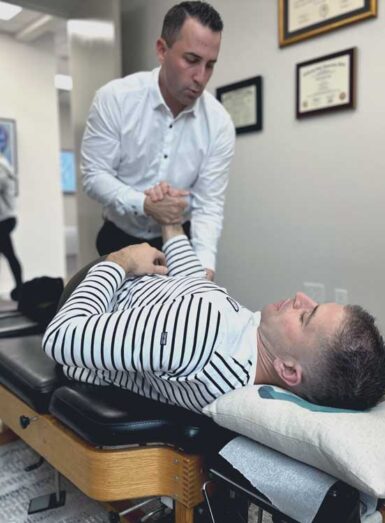
In a computerized range of motion chiropractic exam, you will be guided through specific neck, mid-back, low-back, shoulder, or hip movements while the doctor observes quality, symmetry, and pain response. In some practices, the testing is visual and hands-on. In more advanced settings, at Mōtus, digital tools are used to capture angles and compare movement against expected norms.
That difference matters. If your care plan is built on precision, your results tend to be more precise as well.
Range of motion findings are often paired with spinal imaging when clinically indicated, especially in corrective care models that focus on structural alignment. Pre- and post-motion X-rays can help reveal whether the spine is moving normally under load or whether certain regions are stuck, unstable, or compensating. This creates a much clearer picture than symptoms alone ever could.
What limited motion can reveal about the root cause
A restriction in movement does not always mean the problem is located exactly where you feel it. That is one of the most important truths in chiropractic evaluation.
Neck pain, for example, may involve more than local tension. It can be tied to forward head posture, upper thoracic rigidity, old injuries, long hours at a screen, or spinal misalignment affecting how the nervous system regulates muscle tone. Low-back tightness may reflect pelvic imbalance, poor spinal mechanics, weak stabilization, or compensation from restricted hip motion.
This is where many people waste months, sometimes years, treating the loudest symptom instead of the true driver.
A chiropractor who uses motion testing well can identify patterns that generic care misses. Maybe your right rotation is limited because one segment in the mid-spine is not contributing properly. Maybe your lower back keeps getting sore because your body is borrowing movement from unstable areas while other joints stay locked down. Maybe your headaches are not random at all, but connected to chronic cervical restriction and postural distortion.
It depends on the person, which is exactly why standardized treatment falls short.
Not all chiropractic care uses motion testing the same way
This is where patients need discernment. Some offices mention range of motion only as a routine chart note. Others use it as a central diagnostic and progress-tracking tool.
That distinction can change your entire experience.
If the exam is shallow, the recommendations are often shallow too. You get adjusted where it hurts, maybe receive some passive therapy, and hope for the best. That may create short-term relief, and sometimes that is useful. But if your goal is long-term correction, restored performance, and fewer setbacks, surface-level care is rarely enough.
A more advanced corrective approach uses range of motion testing to guide decisions. Which areas need support? Which need mobilization? Is posture improving? Is function becoming more balanced over time? Are your symptoms decreasing because the body is healing, or are you simply avoiding aggravating activities?
Those are very different outcomes.
For people who are serious about health, the standard should be clear. You want care that measures change, explains the findings, and gives you a customized plan built around your actual body.
How motion testing supports performance, not just pain relief
If you are active, movement quality affects everything. Running mechanics, lifting form, rotational power, breathing efficiency, and even recovery all depend on how well your spine and joints move together.
When motion is restricted, your body becomes less efficient. You may still perform for a while, especially if you are disciplined and strong, but compensation slowly chips away at durability. One side starts doing more work. Certain muscles stay switched on. Others stop contributing the way they should. Eventually the cost shows up as chronic tension, plateaued training, recurring strain, or pain that keeps interrupting momentum.
This is why corrective chiropractic care appeals to ambitious adults. It is not about doing the bare minimum to feel slightly better. It is about restoring alignment and movement so your body can perform the way it was designed to.
At Mōtus Chiropractic, that philosophy resonates with people who are done settling for patchwork care. They want objective answers, visible progress, and a plan that matches the level at which they live.
When to consider a range of motion evaluation
You do not need to wait until pain becomes severe. In fact, that is usually the worst time to start paying attention.
A movement-based chiropractic evaluation makes sense if you have recurring neck or back pain, frequent headaches, postural collapse, stiffness when turning your head, reduced flexibility, uneven movement during workouts, or a sense that your body is not recovering the way it used to. It also makes sense if you have tried massage, stretching, or temporary treatments and the issue keeps circling back.
There are cases where limited motion is driven by acute inflammation, recent injury, or a condition that requires co-management or referral. A good chiropractor knows the difference and will not force every case into the same plan. That is part of real clinical integrity.
Still, many people who think they just need rest or another mobility class are actually dealing with deeper structural dysfunction. The sooner you measure it, the sooner you can address it.
What progress should look like
The right care plan should not leave you guessing. You should understand what is restricted, why it matters, and what improvement will look like over time.
Progress is not always linear. Some patients feel better quickly while structural changes take longer. Others notice measurable movement gains before pain fully resolves. That is normal. Healing is not a script. But if care is on track, objective findings should start moving in the right direction. Range of motion, posture, stability, and day-to-day function should all begin to reflect the work being done.
That is the real standard - not whether you got a quick crack and ten minutes of relief, but whether your body is becoming more aligned, more resilient, and more capable.
Stop settling for care that only reacts after your body breaks down. When movement is measured with precision, healing becomes more specific, more honest, and far more powerful. Leave the guessing out and opt for data-driven results that are tangible. Reach out to book your Mōtus analysis!
Mōtus Chiropractic is a top-rated chiropractor located in Austin, TX. Dr. Mike Isseks offers more than 15 years experience helping his patients alleviate pain and Move Consciously. To schedule a visit, click here.
RECLAIM YOUR LIFE
Rebuild your body and reduce your pain with our progressive technology, proven alternative methods of care, and integrative chiropractic experience.
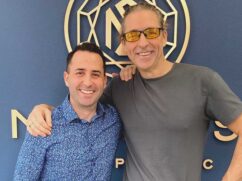
“Dr. Mike improved the mobility of my spine measurably. The whole team is incredibly flexible and helpful to work with. Everything is fast and easy.”

Author, biohacker, and founder of Bulletproof Nutrition

“Dr. Mike and the team at Mōtus are top notch. The adjustments are specific and the analysis is beyond thorough. If you’re in Austin, this is the spot for high-level Chiropractic care.”
– Adrian Grenier
Actor and Film Producer

ABOUT DR. MIKE ISSEKS
Dr. Mike has been a practicing chiropractor for more than 15 years. He is a graduate of California State University at Chico and received his Doctor of Chiropractic degree from Life Chiropractic College West. He specializes in corrective care chiropractic, improving posture, as well as optimizing spinal motion to help uncover the best version of those he serves.
STAY IN THE KNOW
Get cutting-edge health tips, updates, and event notifications...
By entering your email above and clicking “Sign-Up,” you agree to receive occasional emails from Mōtus Chiropractic.

VISIT US
Trio at Menchaca Business Park
Ample free parking in the front lot
HOURS
Monday, Tuesday, Thursday
8:30 am – 12 pm
2:30 pm – 6 pm
Wednesday
12 pm – 5 pm
REACH US
(512) 777-2680
hello@motusatx.com
STAY IN THE KNOW
Get cutting-edge health tips, updates, and event notifications...
By entering your email above and clicking “Sign-Up,” you agree to receive occasional emails from Mōtus Chiropractic.
Copyright 2022, Mōtus Chiropractic. All rights reserved.