
THE MŌTUS BLOG
July 27, 2026
8 Best Habits for Spinal Health That Last
Your spine is absorbing the cost of every compromise: the laptop posture you tolerate for three hours, the workout you skip because you feel stiff, the pain you medicate so you can keep pushing. The best habits for spinal health are not quick fixes or a once-a-week stretch class. They are the daily standards that protect how you move, perform, recover, and show up for your life.
For ambitious adults, spinal health is not only about avoiding back pain. It affects training capacity, sleep, focus, breathing mechanics, energy, and confidence in your body. You do not need to obsess over perfect posture or live cautiously. You do need a smarter system than waiting for pain to force a change.
Train the Pattern You Need
The best program depends on your sport, work demands, injury history, mobility, and goals. A runner may need more single-leg control and hip strength. A cyclist may need focused thoracic mobility and upper-back endurance. A parent lifting toddlers, luggage, and groceries needs a strong hinge pattern that transfers directly to real life.
Stop copying generic routines built for someone else’s body. Train with intention, progress gradually, and treat technique as a performance skill.
1. Change Positions Before Your Body Demands It
The human body is built for movement, not for holding one “ideal” position all day. Sitting is not the enemy. Standing is not automatically superior. The problem is prolonged stillness in any position, especially when your head, rib cage, and pelvis spend hours collapsed into the same pattern.
Set a standard to change positions every 30 to 60 minutes. Stand up for a call, walk to refill your water, perform a few controlled squats, or simply reset your posture before returning to work. These short interruptions help restore circulation, reduce stiffness, and remind your nervous system that movement is available.
If you work at a desk, make the setup earn its place in your life. Put your screen at a height that does not pull your chin toward your chest. Keep your keyboard close enough that your shoulders can relax. Use a chair that supports you without becoming a trap. A standing desk can help, but only if you alternate rather than stand rigidly for eight hours.
2. Build Strength Around the Spine, Not Just Muscle for Looks
A resilient spine depends on the strength and coordination of the whole system around it: feet, hips, glutes, abdominal wall, upper back, and shoulders. Training only the muscles you can see in the mirror may leave major gaps in how your body controls load.
Prioritize foundational movement patterns: squatting, hinging, pushing, pulling, carrying, rotating, and resisting rotation. Controlled deadlifts, rows, split squats, loaded carries, and anti-rotation exercises can be powerful choices when they match your current ability and are performed with sound technique.
The trade-off matters here. More weight is not always more progress, particularly when your movement quality is breaking down. If a lift repeatedly creates sharp pain, numbness, weakness, or pain that lingers and worsens after training, do not label it as toughness. Get it assessed. The goal is capacity - the ability to handle the demands you choose without sacrificing your structure.
3. Make Walking a Non-Negotiable Part of Recovery
Walking is one of the most underestimated habits for spinal health. It asks your body to coordinate reciprocal arm swing, hip motion, trunk stability, breathing, and balance without the high impact or complexity of more demanding exercise.
A brisk walk can reduce the stiffness that accumulates after driving, meetings, travel, or intense training. It also gives your eyes and nervous system a break from close-up screens. Ten minutes after a meal or a longer walk between work and your evening plans can create a meaningful reset.
Do not overcomplicate it. Consistency beats the occasional heroic effort. If you already train hard, walking is not “extra credit.” It is a low-cost recovery practice that supports the work you are already doing.
4. Treat Your Phone Posture Like a Repeated Load
Your neck was not designed to spend hours flexed toward a phone. The issue is not one quick glance. It is the cumulative load of hundreds of repetitions, every day, often paired with rounded shoulders and shallow breathing.
Bring your phone closer to eye level when possible. Use voice notes or headphones for longer conversations instead of pinning the device between your shoulder and ear. More importantly, notice the habit itself. Most people do not need another lecture about “tech neck.” They need an environment and routine that make a better choice easier.
Place your charger away from the bed. Turn off notifications that pull you back into unnecessary scrolling. Take calls while walking. Your spinal habits are shaped as much by your defaults as by your motivation.
5. Protect Sleep as a Structural Recovery Tool
Sleep is when your body manages tissue recovery, nervous-system regulation, and the fatigue that affects coordination the next day. If you wake up with neck or back stiffness every morning, do not assume that is simply part of adulthood.
Your mattress and pillow should support your preferred sleep position, but there is no universally perfect setup. Side sleepers generally need enough pillow height to keep the neck from dropping or bending excessively. Back sleepers often do well with a pillow that supports the neck without pushing the head forward. Stomach sleeping can be challenging for the neck because it requires prolonged rotation, though the right next step depends on the person and their symptoms.
Before buying an expensive mattress, look at the full picture: stress, late-night screen use, alcohol, training load, sleep duration, and the position you hold for hours. A premium product cannot outwork a consistently overloaded lifestyle.
6. Breathe With Your Rib Cage, Not Only Your Upper Chest
Breathing and spinal function are connected. When stress is high, many people shift into shallow chest breathing, elevate their shoulders, tighten their neck, and lose the rib-cage motion that helps the trunk move efficiently.
A few times a day, pause and take slow breaths that expand through the lower ribs and abdomen. Let your shoulders stay down. Exhale fully without forcing it. This is not about turning breathing into another stressful task. It is about giving your system a chance to leave a constant state of bracing.
For people who carry tension in the neck, jaw, and upper back, this practice can be especially useful alongside movement and individualized care. Breathing will not correct every structural issue, but it can reduce one source of unnecessary muscular guarding.
7. Do Not Wait for Severe Pain to Get Objective Answers
Pain is valuable information, but it is not a complete report card. Some people have significant movement restrictions, posture changes, or loss of spinal motion before pain becomes loud enough to interrupt their routine. Others feel intense symptoms from a relatively recent irritation that responds well to conservative care.
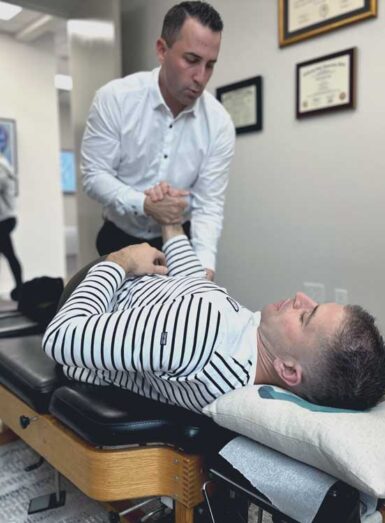
That is why a real assessment matters. Instead of accepting a generic adjustment or a prescription that only quiets symptoms, seek providers who evaluate how your spine moves, how your posture has adapted, and what patterns may be driving the issue. When appropriate, advanced range-of-motion testing and pre- and post-motion imaging can provide a more objective picture than guesswork alone.
At Mōtus Chiropractic, corrective care is built around identifying structural and functional limitations, then creating a personalized plan to improve alignment, mobility, and long-term capacity. The point is not to become dependent on care. The point is to understand your body, measure progress, and create conditions for lasting change.
8. Respond Early to the Signals You Keep Explaining Away
Recurring headaches, a neck that will not rotate comfortably, one-sided low-back tightness, tingling, persistent stiffness after sleep, or a sudden decline in training performance are not inconveniences to normalize. They are signals worth respecting.
You do not need to panic over every ache. Active bodies will feel effort, soreness, and occasional discomfort. But recurring symptoms deserve curiosity, especially when they alter your gait, sleep, exercise choices, or ability to focus at work. The earlier you address dysfunctional movement patterns, the more options you typically have.
Seek urgent medical attention for symptoms such as new bowel or bladder changes, saddle numbness, severe trauma, unexplained fever with back pain, or rapidly progressing weakness. Those are not situations for self-treatment or waiting it out.
Your spine does not need perfection. It needs regular movement, intelligent loading, recovery, and care that looks beyond the loudest symptom. Start with one habit you can repeat this week, then raise your standard. Small actions, practiced long enough, become the structure that lets you keep doing the work, training, and living you refuse to give up.
Mōtus Chiropractic is a top-rated chiropractor located in Austin, TX. Dr. Mike Isseks offers more than 15 years experience helping his patients alleviate pain and Move Consciously. To schedule a visit, click here.
RECLAIM YOUR LIFE
Rebuild your body and reduce your pain with our progressive technology, proven alternative methods of care, and integrative chiropractic experience.

“Dr. Mike improved the mobility of my spine measurably. The whole team is incredibly flexible and helpful to work with. Everything is fast and easy.”

Author, biohacker, and founder of Bulletproof Nutrition

“Dr. Mike and the team at Mōtus are top notch. The adjustments are specific and the analysis is beyond thorough. If you’re in Austin, this is the spot for high-level Chiropractic care.”
– Adrian Grenier
Actor and Film Producer

ABOUT DR. MIKE ISSEKS
Dr. Mike has been a practicing chiropractor for more than 15 years. He is a graduate of California State University at Chico and received his Doctor of Chiropractic degree from Life Chiropractic College West. He specializes in corrective care chiropractic, improving posture, as well as optimizing spinal motion to help uncover the best version of those he serves.
STAY IN THE KNOW
Get cutting-edge health tips, updates, and event notifications...
By entering your email above and clicking “Sign-Up,” you agree to receive occasional emails from Mōtus Chiropractic.

VISIT US
Trio at Menchaca Business Park
Ample free parking in the front lot
HOURS
Monday, Tuesday, Thursday
8:30 am – 12 pm
2:30 pm – 6 pm
Wednesday
12 pm – 5 pm
REACH US
(512) 777-2680
hello@motusatx.com
STAY IN THE KNOW
Get cutting-edge health tips, updates, and event notifications...
By entering your email above and clicking “Sign-Up,” you agree to receive occasional emails from Mōtus Chiropractic.
Copyright 2022, Mōtus Chiropractic. All rights reserved.