
THE MŌTUS BLOG
August 20, 2026
Does Corrective Care Work for Lasting Pain Relief?
Does corrective care work? It can, but not because someone delivers a quick adjustment and sends you back to the same habits, movement limitations, and spinal stress that created the problem. Corrective care works when it is built around a clear diagnosis, measurable goals, consistent participation, and a plan designed for your body instead of a generic protocol.
For an active Austin professional, athlete, or parent, that distinction matters. You do not need another temporary workaround that gets you through the week while your neck tightens, your low back flares up, or your training feels increasingly restricted. You need to understand what is limiting your movement and what it will take to change it.
What Corrective Care Is Actually Designed to Do
Corrective chiropractic care is a structured approach to improving spinal function, movement quality, posture, and tolerance for everyday stress. Rather than focusing only on the symptom that brought you through the door, it looks for contributing patterns: restricted joint motion, asymmetrical movement, poor spinal alignment, muscular compensation, previous injuries, repetitive work positions, and training demands your body is no longer handling well.
That does not mean every ache is caused by a single spinal finding, or that every posture difference needs treatment. Human bodies are adaptable, and pain is complex. Sleep, stress, tissue sensitivity, workload, recovery, and medical conditions can all influence how you feel.
The value of corrective care is in taking that complexity seriously. A thoughtful plan asks better questions: Where is motion limited? Which positions reliably provoke symptoms? What compensations show up during movement? Is your range of motion improving? Can you sit, lift, run, train, or sleep with less restriction?
When the plan is grounded in those answers, care becomes more than symptom management. It becomes a process for building capacity.
Does Corrective Care Work for Everyone?
No honest provider should promise that corrective care works the same way for every person. Some patients improve quickly, especially when their issue is recent and they can consistently follow through with care and movement recommendations. Others need more time because they are dealing with years of stiffness, a demanding work setup, recurring injuries, significant deconditioning, or a condition that requires coordination with another healthcare professional.
Corrective care is most likely to be useful when there is a functional problem that can be assessed and tracked. That may include mechanical neck or back pain, mobility loss, headaches associated with neck dysfunction, movement restrictions after an old injury, or postural strain that is affecting comfort and performance.
It is not a substitute for emergency or specialty medical care. Sudden weakness, loss of bowel or bladder control, fever with severe back pain, unexplained weight loss, major trauma, severe unrelenting pain, or symptoms that suggest a serious neurological condition need prompt medical evaluation. A premium care plan begins with knowing when chiropractic is appropriate and when it is not.
The Difference Between Relief Care and Corrective Care
Relief care has a legitimate purpose. When you are in pain, getting comfortable enough to sleep, work, or move is meaningful. The problem begins when relief is presented as resolution.
A single adjustment may reduce stiffness or discomfort for some people. But if your daily life repeatedly loads the same restricted areas, the improvement may be short-lived. Your body returns to the pattern it knows.
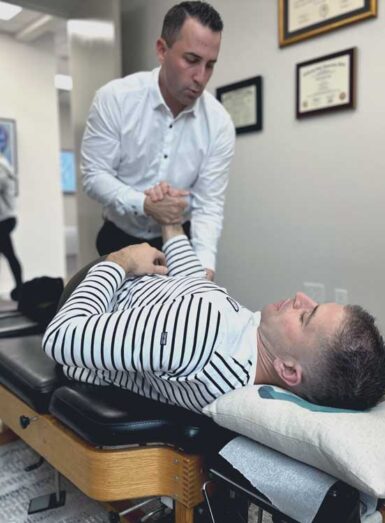
Corrective care aims to change that pattern over time. It typically combines chiropractic adjustments with targeted mobility work, posture and ergonomic guidance, movement retraining, and behavior changes that support the goal. The exact mix should depend on your findings and priorities. A desk-bound executive with persistent neck tension does not need the same plan as a CrossFit athlete rebuilding overhead mobility or a runner whose hip and low-back restrictions are changing their stride.
The trade-off is commitment. Meaningful change usually requires more than occasional appointments when symptoms spike. It may require a planned series of visits, home exercises, changes to training volume, better recovery habits, and periodic reassessment. That is not a gimmick. It is the practical reality of changing a pattern your body has rehearsed for months or years.
What Makes a Corrective Plan Credible
The best question is not, “How many visits do I need?” It is, “How will we know whether this is working?” A credible corrective-care plan has a baseline, a rationale, and a method for measuring progress.
At Mōtus Chiropractic, that can include a detailed history, postural assessment, advanced range-of-motion testing, neurological and orthopedic screening when indicated, and pre- and post-motion X-ray studies when clinically appropriate. Imaging should not be used to create fear or sell care. It should be used carefully, when it adds useful information to clinical decision-making.
Your plan should also define outcomes that matter outside the office. Less pain is one outcome, but it is not the only one. Better markers may include being able to rotate your head while driving without hesitation, completing a workday without a headache, getting through a long flight with less low-back aggravation, returning to deadlifts with confidence, or waking up with more energy because your body is not bracing all night.
Look for reassessment, not vague promises
Progress should be reviewed at planned intervals. That might mean repeating range-of-motion measures, comparing movement quality, discussing symptom frequency and intensity, or reassessing functional tasks that were limited at the start.
If the data and your lived experience show improvement, the plan can evolve. If you are not improving as expected, your provider should reassess the diagnosis, modify the approach, or recommend appropriate co-management. Care should earn your trust through results, not through open-ended language about “needing adjustments forever.”
Why Posture Matters, but Is Not the Whole Story
Posture is often misunderstood. There is no single perfect posture that every body must maintain all day. Forcing yourself into a rigid position can create as much tension as slumping through eight hours of email.
What matters more is your ability to move out of positions, distribute load well, and tolerate the activities your life demands. Still, persistent postural patterns can be relevant. If your head is consistently forward, your upper back is stiff, and your neck has lost comfortable rotation, those factors may contribute to strain and reduced movement options.
Corrective care should not shame you for how you sit. It should help you build more options. That can mean restoring thoracic mobility, improving neck control, adjusting your workstation, strengthening underused movement patterns, and taking strategic movement breaks before discomfort becomes a full shutdown.
What Results Can You Reasonably Expect?
Expect progress, not perfection. Many people notice early changes in mobility, tension, or daily comfort. Structural and movement changes, especially in longstanding cases, may take longer and are rarely linear. A hard training week, poor sleep, travel, stress, or an old injury can temporarily expose the same weak link again.
The goal is not to create a fragile body that needs constant correction. The goal is to create a more resilient body that handles work, training, travel, and life with greater freedom.
That means the strongest corrective-care plans give you an active role. Keep your appointments. Do the prescribed work. Be honest about your workload and recovery. Speak up if an exercise aggravates symptoms. Your provider brings clinical expertise, but you bring the repetition that turns a treatment-room gain into a real-life change.
Stop Settling for Temporary Answers
If you have been cycling through pain medication, occasional adjustments, stretches you found online, and long stretches of hoping your body will sort itself out, it may be time for a more deliberate approach. You deserve care that looks beyond the loudest symptom and tests whether your body is actually moving better.
Corrective care is not magic, and it should never be sold as one. But when it is personalized, measurable, and paired with your commitment to the process, it can be a powerful path toward less restriction, more confidence, and a body that better supports the life you are building.
Your health does not need another shortcut. It needs a clear assessment, a meaningful plan, and the decision to stop accepting “good enough” as your baseline.
Mōtus Chiropractic is a top-rated chiropractor located in Austin, TX. Dr. Mike Isseks offers more than 15 years experience helping his patients alleviate pain and Move Consciously. To schedule a visit, click here.
RECLAIM YOUR LIFE
Rebuild your body and reduce your pain with our progressive technology, proven alternative methods of care, and integrative chiropractic experience.
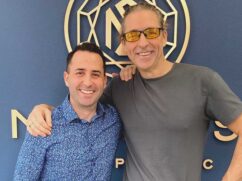
“Dr. Mike improved the mobility of my spine measurably. The whole team is incredibly flexible and helpful to work with. Everything is fast and easy.”

Author, biohacker, and founder of Bulletproof Nutrition

“Dr. Mike and the team at Mōtus are top notch. The adjustments are specific and the analysis is beyond thorough. If you’re in Austin, this is the spot for high-level Chiropractic care.”
– Adrian Grenier
Actor and Film Producer

ABOUT DR. MIKE ISSEKS
Dr. Mike has been a practicing chiropractor for more than 15 years. He is a graduate of California State University at Chico and received his Doctor of Chiropractic degree from Life Chiropractic College West. He specializes in corrective care chiropractic, improving posture, as well as optimizing spinal motion to help uncover the best version of those he serves.
STAY IN THE KNOW
Get cutting-edge health tips, updates, and event notifications...
By entering your email above and clicking “Sign-Up,” you agree to receive occasional emails from Mōtus Chiropractic.

VISIT US
Trio at Menchaca Business Park
Ample free parking in the front lot
HOURS
Monday, Tuesday, Thursday
8:30 am – 12 pm
2:30 pm – 6 pm
Wednesday
12 pm – 5 pm
REACH US
(512) 777-2680
hello@motusatx.com
STAY IN THE KNOW
Get cutting-edge health tips, updates, and event notifications...
By entering your email above and clicking “Sign-Up,” you agree to receive occasional emails from Mōtus Chiropractic.
Copyright 2022, Mōtus Chiropractic. All rights reserved.