Categories
Uncategorized

Posture Correction Chiropractor: Is It Worth It?

You can train hard, sit with better “ergonomics,” buy the standing desk, and still feel your body collapsing into the same patterns by 3 p.m. That is usually the moment people start looking for a posture correction chiropractor – not because they want straighter shoulders for appearance alone, but because poor posture is often tied to neck tension, headaches, back pain, reduced mobility, shallow breathing, and a nervous system that never fully settles.

The bigger issue is that posture is not just a pose. It is a reflection of how your spine moves, how your muscles compensate, and how your body has adapted to stress over time. If the structure underneath is off, reminders to “sit up straight” will only take you so far.


What a posture correction chiropractor actually does


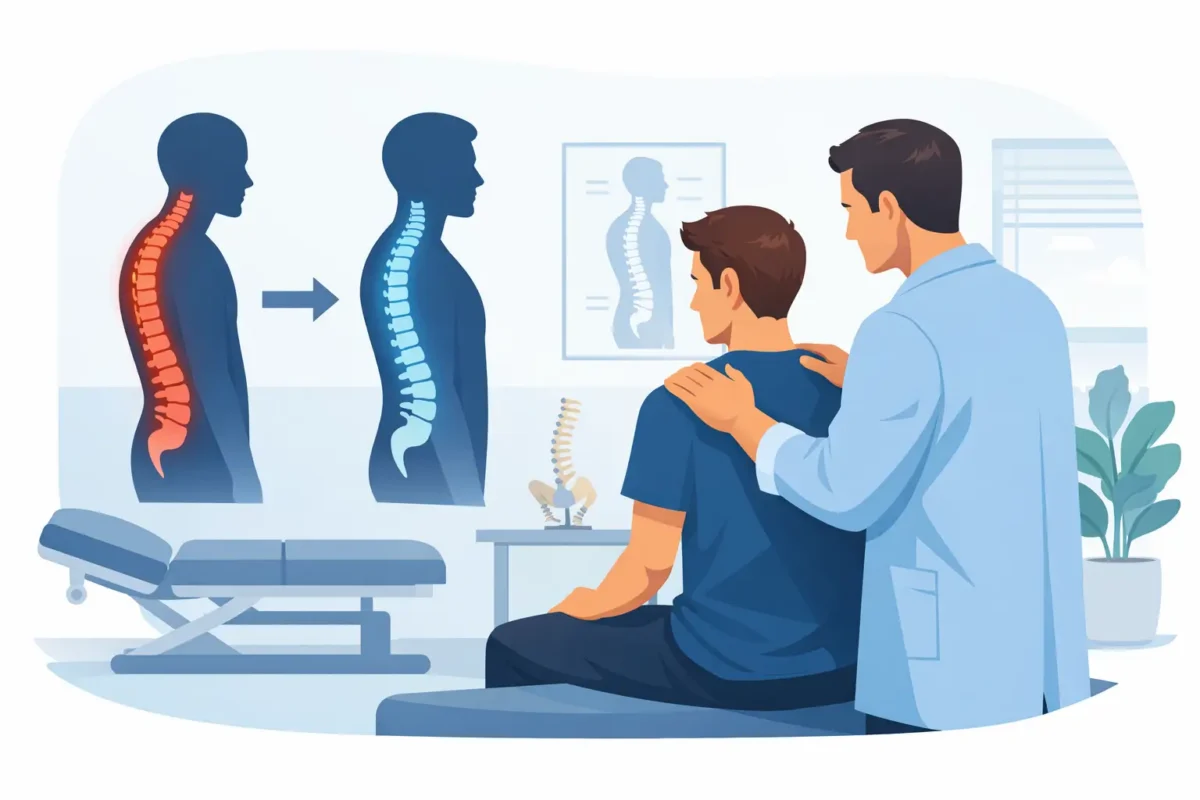
A posture correction chiropractor is not there to give you a generic adjustment and send you on your way. Real corrective care looks deeper. It asks why your head keeps drifting forward, why one shoulder sits higher, why your low back tightens after workouts, or why your hips and thoracic spine are no longer doing their share of the work.

That matters because posture changes for a reason. Sometimes it starts with old injuries. Sometimes it comes from years of desk work, repetitive training patterns, pregnancy, stress, or simply living in a body that has been compensating for too long. Over time, those compensation patterns can create spinal misalignments, restricted motion, muscle imbalance, and a constant low-grade strain on the joints and nervous system.

A corrective chiropractor is focused on that chain reaction. The goal is not to force your body into a textbook posture. The goal is to restore better alignment and movement so upright posture becomes easier, more natural, and more sustainable.


Why posture problems rarely stay cosmetic


A lot of people wait too long because they think posture is mostly aesthetic. It is not. The visible slouch is often just the outer layer of a deeper mechanical problem.

Forward head posture can load the neck and upper back far beyond what they were designed to handle. Rounded shoulders can limit shoulder mechanics and create tension through the chest and upper traps. A flattened or exaggerated spinal curve can affect balance, gait, breathing efficiency, and how force moves through your body in everyday life and training.

This is where the trade-off becomes real. You can ignore posture for a while and still function. Many high performers do. But functioning is not the same as moving well. And if you are constantly compensating, your body usually collects the bill later through pain, stiffness, fatigue, or reduced performance.


How a posture correction chiropractor evaluates the root cause


If you want real change, assessment matters more than hype. A quality posture correction chiropractor should not guess. They should measure.

That means looking at spinal alignment, range of motion, postural distortions, joint restriction, and movement quality. In a more advanced corrective setting, that may also include pre- and post-motion X-rays and objective spinal motion analysis to see what your spine is actually doing, not what someone assumes it is doing.

This is one of the biggest differences between symptom care and corrective care. Symptom care asks, “Where does it hurt?” Corrective care asks, “What pattern created this, and how do we change it in a measurable way?”

For the right patient, that distinction is everything. If you are active, ambitious, and serious about long-term health, you do not need vague reassurance. You need clarity. You need to know what is misaligned, what is not moving, and what the plan is to improve it.


What treatment usually involves


Posture correction is rarely one thing. It is usually a combination of precise chiropractic adjustments, mobility restoration, soft tissue work when needed, and customized corrective exercises that reinforce better movement patterns between visits.

The adjustment matters because a spine that is restricted and misaligned does not simply talk itself into better posture. But adjustments alone are not always enough. If your muscles have spent years adapting to distorted mechanics, they need time and guidance to support the new position.

That is why the best corrective programs are individualized. Someone with forward head posture from desk work may need a very different approach than someone whose posture issues are being driven by old sports injuries, scoliosis patterns, hip restrictions, or unstable core mechanics.

It also depends on severity. Mild postural changes may improve relatively quickly with consistent care and better habits. More established structural distortions take longer. Anyone promising instant posture correction is selling fantasy, not healthcare.


Can chiropractic really improve posture?


Yes, but the honest answer is it depends on what is causing the posture problem and how committed you are to the process.

If your posture is being driven by joint restriction, spinal misalignment, loss of normal curve, poor movement mechanics, and chronic compensation, chiropractic corrective care can be highly effective. It can improve alignment, restore motion, reduce stress on overloaded tissues, and help your body hold a more efficient position.

If your issue is mostly behavioral and temporary, like slumping during long meetings without underlying structural dysfunction, then awareness, strengthening, and workstation changes may do a lot of the heavy lifting.

Most people fall somewhere in the middle. They have both structural and lifestyle components. That is why a personalized plan works better than one-size-fits-all advice pulled from social media.


Signs you may need a posture correction chiropractor


You do not need to wait until the pain is extreme. In fact, waiting is one of the reasons minor dysfunction turns into a bigger interruption.

If you notice persistent neck or upper back tension, headaches that build through the day, uneven shoulders, a forward head position, recurring low back tightness, reduced mobility, or constant stiffness after sitting, your posture may be part of the problem. If your workouts feel less fluid, your breathing feels restricted, or you are always stretching the same spots without lasting relief, that is another clue.

The pattern to pay attention to is repetition. If your body keeps returning to the same strain, there is usually a reason.


What sets corrective care apart from mainstream care


Mainstream care often moves fast. You get a quick consult, maybe pain medication, maybe a referral, maybe a brief adjustment without much explanation. For some acute cases, that has a place. But if your goal is true structural change, that model often falls short.

Corrective chiropractic care takes a more demanding path. It requires deeper evaluation, a tailored plan, and patient participation. It is not passive. You do not show up once, get cracked, and magically undo a decade of compensation.

That is exactly why it works for people who are done settling. They want proof. They want progress they can feel and see. They want care that respects the intelligence of the body and the reality that healing takes both precision and consistency.

At a practice like Mōtus Chiropractic, that philosophy is central. The focus is not chasing pain from visit to visit. The focus is correcting the underlying dysfunction so your body can move better, recover better, and perform at a higher level for the long haul.


Choosing the right posture correction chiropractor


Not every chiropractor is built for corrective posture work. Some focus primarily on short-term symptom relief. Again, there is nothing inherently wrong with that, but it is not the same service.

If posture correction is your goal, look for a doctor who emphasizes diagnostics, measurable findings, customized care plans, and education. You should understand what is wrong, what the treatment is designed to do, and how progress will be tracked over time.

You should also pay attention to philosophy. If a provider reduces your posture issue to a generic sheet of exercises or gives the same adjustment to everyone, keep looking. Your spine is not generic. Your care should not be either.

The best providers combine clinical specificity with a bigger vision. They understand that posture is about more than standing taller. It is about reducing stress on the body, improving movement quality, supporting nervous system function, and helping you reclaim energy, resilience, and confidence in how you move through life.

Posture is not a vanity project. It is a signal. If your body has been whispering through stiffness, tension, fatigue, or recurring pain, stop overriding the message and start addressing the source. The right care will not just help you look more aligned. It can help you live that way.
Categories
Uncategorized

How Posture Affects Spinal Alignment

You can train hard, eat clean, and still feel off if your posture is quietly pulling your spine out of position all day. That is the real issue behind how posture affects spinal alignment. It is not just about looking more upright in a mirror. It is about how your body distributes force, how your joints move, how your muscles compensate, and how your nervous system performs under constant mechanical stress.

Most people do not lose spinal alignment from one dramatic event. They lose it in inches. Hours at a laptop. Driving with the head pushed forward. Standing with weight dumped into one hip. Scrolling in a slumped position. Those patterns seem harmless because they are common. Common does not mean normal, and it definitely does not mean healthy.


How posture affects spinal alignment over time


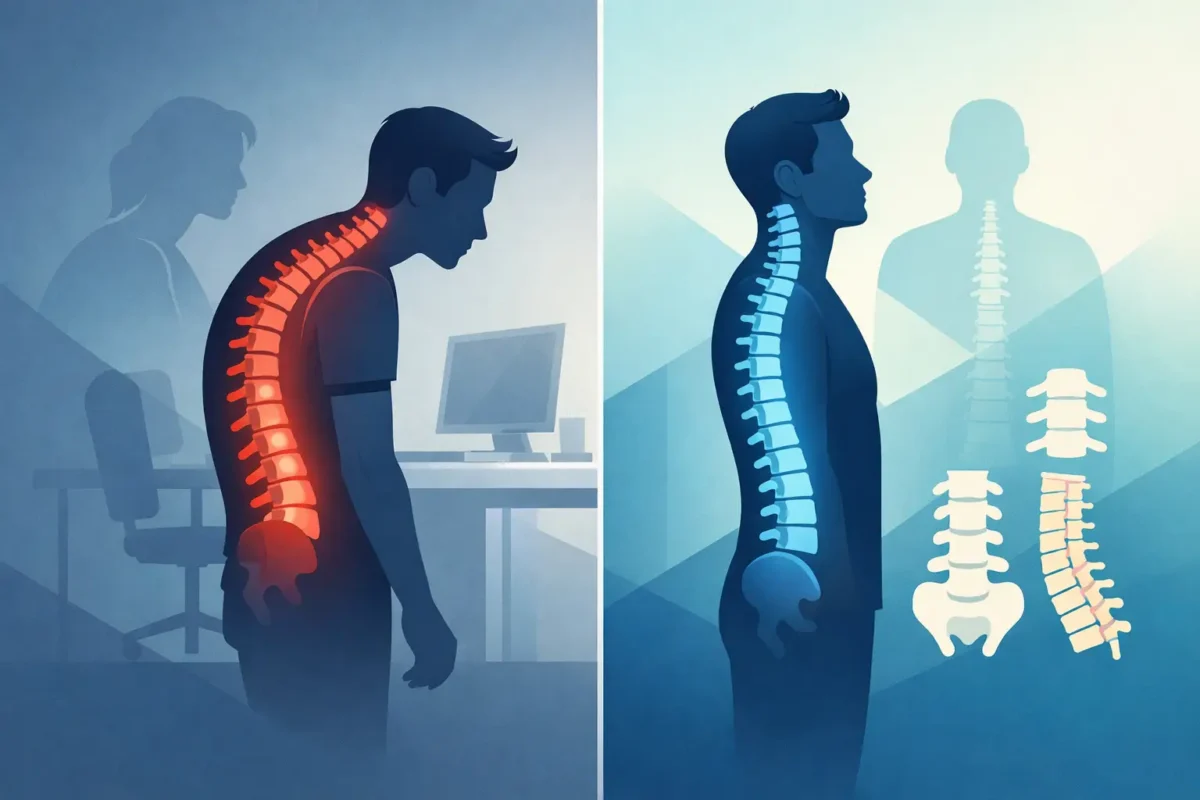
Your spine is designed with curves for a reason. A healthy cervical curve in the neck, thoracic curve in the upper back, and lumbar curve in the low back help absorb shock, support movement, and keep load distributed efficiently. Posture either supports those curves or slowly distorts them.

When posture is consistently poor, the body adapts. The head drifts forward. The shoulders round. The rib cage collapses. The pelvis tips too far forward or tucks too far under. As those shifts become habitual, the spine no longer stacks the way it should. That changes pressure on discs, tension in ligaments, and recruitment in the surrounding muscles.

At first, the body compensates well. That is why many high performers ignore early warning signs. You can still work, train, and get through the day. But compensation is not the same as function. Eventually the extra strain shows up as neck tightness, headaches, low back pain, shoulder restriction, numbness, fatigue, or a general sense that your body is fighting you.


Posture is not just a bad habit


A lot of mainstream advice reduces posture to a simple cue – sit up straight. That is lazy advice. Posture is a reflection of deeper structural and neurological patterns. If your spine has lost normal motion, if certain segments are misaligned, or if your muscles have been compensating for years, you cannot fix that with willpower alone.

That is why posture correction is more than remembering to pull your shoulders back. In some people, that cue actually creates more tension because it forces the body into a position it cannot support. Real correction depends on whether the spine can move properly, whether the curves are intact, and whether the nervous system can sustain a healthier pattern.

This is where people get frustrated. They stretch, foam roll, buy ergonomic gear, and still end up in the same position by the afternoon. The missing piece is often structural. If the spine is already adapting to long-term stress, posture work has to go beyond surface-level tips.


What poor posture does to the rest of the body


Spinal alignment affects more than the spine itself. When your posture shifts, your whole kinetic chain changes with it.

Forward head posture increases stress on the neck and upper back. The deeper stabilizing muscles weaken while larger muscles work overtime to hold the head up. That can contribute to tension headaches, jaw tension, reduced neck rotation, and shoulder pain.

A collapsed thoracic spine limits rib cage movement and can affect breathing mechanics. If your upper back is stiff and rounded, it is harder to take full diaphragmatic breaths. That matters more than most people realize. Breathing influences core stability, energy, exercise performance, and nervous system regulation.

Pelvic distortion creates its own cascade. If the pelvis is excessively tilted, the lumbar spine often overcompensates. That can increase low back compression, tighten the hip flexors, inhibit the glutes, and alter walking and running mechanics. The knee and ankle then deal with forces they were never meant to absorb in that pattern.

This is why posture problems rarely stay local. A spinal issue can present as shoulder dysfunction, recurring hamstring tightness, hip pain, or reduced athletic output. If you only chase symptoms, you miss the driver.


How posture affects spinal alignment and performance


If you are active, posture is not a cosmetic issue. It is a performance issue.

Efficient movement depends on alignment. When the spine is stacked well, force transfers cleanly through the body. You squat better, rotate better, breathe better, and recover better. When alignment is off, energy leaks. Muscles that should stabilize end up compensating. Joints that should move freely stiffen up. Joints that should be stable start taking abuse.

That does not always mean immediate pain. Sometimes it shows up as slower lifts, reduced mobility, uneven stride mechanics, or constant soreness that never fully resolves. For professionals and athletes, those subtle deficits matter. They affect output, focus, endurance, and resilience.

This is also why posture changes with stress. Long workdays, poor sleep, repetitive sitting, and intense training without enough recovery can all push the body deeper into compensation. The spine reflects how you live. If your daily patterns are driving distortion, your body will eventually tell the truth.


Why generic posture advice often fails


The internet loves quick fixes. Chin tucks, wall angels, lumbar rolls, standing desks. Some of these tools can help, but only when matched to the right person.

If someone has lost cervical curve, simply strengthening the upper back may not be enough. If another person has significant pelvic imbalance, stretching the hamstrings might actually make the instability worse. The body is specific. Real correction requires identifying what is actually happening, not guessing based on a symptom or trend.

This is where objective testing matters. Posture photos can be helpful. So can range-of-motion evaluation. But when care is built on measurable findings, the plan gets sharper. You can see where movement is restricted, where compensation is occurring, and whether the spine is changing over time.

That level of specificity matters if you want results that last. Temporary relief is easy to sell. Structural change takes a more disciplined approach.


What improving posture really requires


Posture improves when the body has both the structure and support to hold a better position. That usually means addressing three things at once: spinal alignment, mobility, and habit patterns.

First, the spine has to move properly. If segments are restricted or misaligned, the body will keep returning to compensation. Second, mobility has to be restored in the right places. A stiff thoracic spine, tight hip flexors, or weak deep neck stabilizers can all reinforce poor posture. Third, your daily environment has to stop fighting your progress. If you spend ten hours a day folded over a screen, no amount of occasional stretching will fully counteract that load.

This is why corrective care works best when it is personalized. Some people need focused spinal correction. Others need movement retraining layered on top of it. Most need both. The goal is not to create perfect posture every second of the day. The goal is to restore enough alignment and function that your body stops defaulting into breakdown.

For patients who are serious about long-term change, that often means tracking progress rather than relying on guesswork. At Mōtus Chiropractic, this is one reason advanced motion testing and pre- and post-care imaging can be so powerful. They show whether the spine is actually changing, not just whether symptoms are quieter for the week.


The trade-off no one talks about


There is a reason many people settle for temporary relief. Correcting posture and spinal alignment takes consistency. It is easier to get a quick massage, pop a pain reliever, or take a few days off from training. Those options may reduce discomfort, but they do not necessarily change the underlying mechanics.

The trade-off is simple. Fast relief often brings short-lived results. Corrective work asks more of you, but it gives you a real chance at durable change.

That does not mean every posture issue requires intensive care. Some people improve with modest changes in movement, workstation setup, and targeted exercises. Others have more advanced structural distortion and need a deeper plan. It depends on how long the pattern has been there, how much the spine has adapted, and how much function has already been lost.

What matters is not pretending all cases are the same. If your posture keeps slipping back, if your pain keeps returning, or if your performance keeps stalling, stop settling for surface-level solutions.


When to take posture seriously


If you notice recurring neck pain, back tension, headaches, reduced mobility, uneven wear in your workouts, or constant fatigue after sitting, your posture deserves attention. Not because posture is a trend, but because it may be revealing a deeper structural problem.

The earlier you address it, the easier it is to change. The longer your body lives in compensation, the more those patterns become your default. That is when simple discomfort can turn into chronic dysfunction.

Your spine is not supposed to feel fragile, stiff, or chronically inflamed. It is supposed to support a strong, capable life. Better posture is not about looking disciplined. It is about creating the alignment your body needs to heal, move, and perform the way it was built to.