
THE MŌTUS BLOG
July 1, 2026
How Posture Affects Spinal Alignment
You can train hard, eat clean, and still feel off if your posture is quietly pulling your spine out of position all day. That is the real issue behind how posture affects spinal alignment. It is not just about looking more upright in a mirror. It is about how your body distributes force, how your joints move, how your muscles compensate, and how your nervous system performs under constant mechanical stress.
Most people do not lose spinal alignment from one dramatic event. They lose it in inches. Hours at a laptop. Driving with the head pushed forward. Standing with weight dumped into one hip. Scrolling in a slumped position. Those patterns seem harmless because they are common. Common does not mean normal, and it definitely does not mean healthy.
How posture affects spinal alignment over time
Your spine is designed with curves for a reason. A healthy cervical curve in the neck, thoracic curve in the upper back, and lumbar curve in the low back help absorb shock, support movement, and keep load distributed efficiently. Posture either supports those curves or slowly distorts them.
When posture is consistently poor, the body adapts. The head drifts forward. The shoulders round. The rib cage collapses. The pelvis tips too far forward or tucks too far under. As those shifts become habitual, the spine no longer stacks the way it should. That changes pressure on discs, tension in ligaments, and recruitment in the surrounding muscles.
At first, the body compensates well. That is why many high performers ignore early warning signs. You can still work, train, and get through the day. But compensation is not the same as function. Eventually the extra strain shows up as neck tightness, headaches, low back pain, shoulder restriction, numbness, fatigue, or a general sense that your body is fighting you.
Posture is not just a bad habit
A lot of mainstream advice reduces posture to a simple cue - sit up straight. That is lazy advice. Posture is a reflection of deeper structural and neurological patterns. If your spine has lost normal motion, if certain segments are misaligned, or if your muscles have been compensating for years, you cannot fix that with willpower alone.
That is why posture correction is more than remembering to pull your shoulders back. In some people, that cue actually creates more tension because it forces the body into a position it cannot support. Real correction depends on whether the spine can move properly, whether the curves are intact, and whether the nervous system can sustain a healthier pattern.
This is where people get frustrated. They stretch, foam roll, buy ergonomic gear, and still end up in the same position by the afternoon. The missing piece is often structural. If the spine is already adapting to long-term stress, posture work has to go beyond surface-level tips.
What poor posture does to the rest of the body
Spinal alignment affects more than the spine itself. When your posture shifts, your whole kinetic chain changes with it.
Forward head posture increases stress on the neck and upper back. The deeper stabilizing muscles weaken while larger muscles work overtime to hold the head up. That can contribute to tension headaches, jaw tension, reduced neck rotation, and shoulder pain.
A collapsed thoracic spine limits rib cage movement and can affect breathing mechanics. If your upper back is stiff and rounded, it is harder to take full diaphragmatic breaths. That matters more than most people realize. Breathing influences core stability, energy, exercise performance, and nervous system regulation.
Pelvic distortion creates its own cascade. If the pelvis is excessively tilted, the lumbar spine often overcompensates. That can increase low back compression, tighten the hip flexors, inhibit the glutes, and alter walking and running mechanics. The knee and ankle then deal with forces they were never meant to absorb in that pattern.
This is why posture problems rarely stay local. A spinal issue can present as shoulder dysfunction, recurring hamstring tightness, hip pain, or reduced athletic output. If you only chase symptoms, you miss the driver.
How posture affects spinal alignment and performance
If you are active, posture is not a cosmetic issue. It is a performance issue.
Efficient movement depends on alignment. When the spine is stacked well, force transfers cleanly through the body. You squat better, rotate better, breathe better, and recover better. When alignment is off, energy leaks. Muscles that should stabilize end up compensating. Joints that should move freely stiffen up. Joints that should be stable start taking abuse.
That does not always mean immediate pain. Sometimes it shows up as slower lifts, reduced mobility, uneven stride mechanics, or constant soreness that never fully resolves. For professionals and athletes, those subtle deficits matter. They affect output, focus, endurance, and resilience.
This is also why posture changes with stress. Long workdays, poor sleep, repetitive sitting, and intense training without enough recovery can all push the body deeper into compensation. The spine reflects how you live. If your daily patterns are driving distortion, your body will eventually tell the truth.
Why generic posture advice often fails
The internet loves quick fixes. Chin tucks, wall angels, lumbar rolls, standing desks. Some of these tools can help, but only when matched to the right person.
If someone has lost cervical curve, simply strengthening the upper back may not be enough. If another person has significant pelvic imbalance, stretching the hamstrings might actually make the instability worse. The body is specific. Real correction requires identifying what is actually happening, not guessing based on a symptom or trend.
This is where objective testing matters. Posture photos can be helpful. So can range-of-motion evaluation. But when care is built on measurable findings, the plan gets sharper. You can see where movement is restricted, where compensation is occurring, and whether the spine is changing over time.
That level of specificity matters if you want results that last. Temporary relief is easy to sell. Structural change takes a more disciplined approach.
What improving posture really requires
Posture improves when the body has both the structure and support to hold a better position. That usually means addressing three things at once: spinal alignment, mobility, and habit patterns.
First, the spine has to move properly. If segments are restricted or misaligned, the body will keep returning to compensation. Second, mobility has to be restored in the right places. A stiff thoracic spine, tight hip flexors, or weak deep neck stabilizers can all reinforce poor posture. Third, your daily environment has to stop fighting your progress. If you spend ten hours a day folded over a screen, no amount of occasional stretching will fully counteract that load.
This is why corrective care works best when it is personalized. Some people need focused spinal correction. Others need movement retraining layered on top of it. Most need both. The goal is not to create perfect posture every second of the day. The goal is to restore enough alignment and function that your body stops defaulting into breakdown.
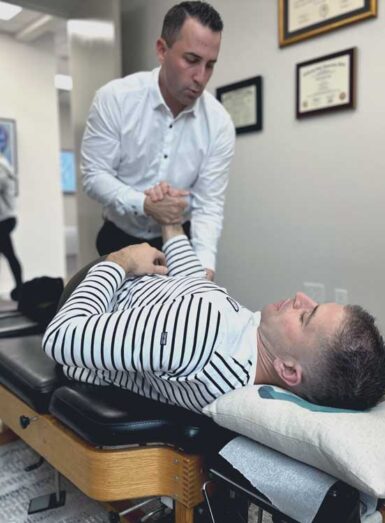
For patients who are serious about long-term change, that often means tracking progress rather than relying on guesswork. At Mōtus Chiropractic, this is one reason advanced motion testing and pre- and post-care imaging can be so powerful. They show whether the spine is actually changing, not just whether symptoms are quieter for the week.
The trade-off no one talks about
There is a reason many people settle for temporary relief. Correcting posture and spinal alignment takes consistency. It is easier to get a quick massage, pop a pain reliever, or take a few days off from training. Those options may reduce discomfort, but they do not necessarily change the underlying mechanics.
The trade-off is simple. Fast relief often brings short-lived results. Corrective work asks more of you, but it gives you a real chance at durable change.
That does not mean every posture issue requires intensive care. Some people improve with modest changes in movement, workstation setup, and targeted exercises. Others have more advanced structural distortion and need a deeper plan. It depends on how long the pattern has been there, how much the spine has adapted, and how much function has already been lost.
What matters is not pretending all cases are the same. If your posture keeps slipping back, if your pain keeps returning, or if your performance keeps stalling, stop settling for surface-level solutions.
When to take posture seriously
If you notice recurring neck pain, back tension, headaches, reduced mobility, uneven wear in your workouts, or constant fatigue after sitting, your posture deserves attention. Not because posture is a trend, but because it may be revealing a deeper structural problem.
The earlier you address it, the easier it is to change. The longer your body lives in compensation, the more those patterns become your default. That is when simple discomfort can turn into chronic dysfunction.
Your spine is not supposed to feel fragile, stiff, or chronically inflamed. It is supposed to support a strong, capable life. Better posture is not about looking disciplined. It is about creating the alignment your body needs to heal, move, and perform the way it was built to.
Mōtus Chiropractic is a top-rated chiropractor located in Austin, TX. Dr. Mike Isseks offers more than 15 years experience helping his patients alleviate pain and Move Consciously. To schedule a visit, click here.
RECLAIM YOUR LIFE
Rebuild your body and reduce your pain with our progressive technology, proven alternative methods of care, and integrative chiropractic experience.

“Dr. Mike improved the mobility of my spine measurably. The whole team is incredibly flexible and helpful to work with. Everything is fast and easy.”

Author, biohacker, and founder of Bulletproof Nutrition

“Dr. Mike and the team at Mōtus are top notch. The adjustments are specific and the analysis is beyond thorough. If you’re in Austin, this is the spot for high-level Chiropractic care.”
– Adrian Grenier
Actor and Film Producer

ABOUT DR. MIKE ISSEKS
Dr. Mike has been a practicing chiropractor for more than 15 years. He is a graduate of California State University at Chico and received his Doctor of Chiropractic degree from Life Chiropractic College West. He specializes in corrective care chiropractic, improving posture, as well as optimizing spinal motion to help uncover the best version of those he serves.
STAY IN THE KNOW
Get cutting-edge health tips, updates, and event notifications...
By entering your email above and clicking “Sign-Up,” you agree to receive occasional emails from Mōtus Chiropractic.
VISIT US
Trio at Menchaca Business Park
Ample free parking in the front lot
HOURS
Monday, Tuesday, Thursday
8:30 am – 12 pm
2:30 pm – 6 pm
Wednesday
12 pm – 5 pm
REACH US
(512) 777-2680
hello@motusatx.com
STAY IN THE KNOW
Get cutting-edge health tips, updates, and event notifications...
By entering your email above and clicking “Sign-Up,” you agree to receive occasional emails from Mōtus Chiropractic.
Copyright 2022, Mōtus Chiropractic. All rights reserved.