
THE MŌTUS BLOG
August 15, 2026
Your Guide to Mobility Recovery That Lasts
A stiff neck during your commute. A back that tightens halfway through a deadlift. Hips that make a long flight or a Saturday hike feel harder than they should. These are not always isolated problems to stretch away. A real guide to mobility recovery starts with a more useful question: Why did your body lose movement in the first place?
For ambitious, active people, mobility is not a party trick or a benchmark for social media. It is access to your life. It affects how confidently you train, how long you can sit without paying for it later, how well you recover, and whether pain keeps dictating your decisions. Stop settling for temporary relief that leaves the underlying pattern untouched.
Mobility Is More Than Flexibility
Flexibility is passive range - how far a muscle or joint can be moved with assistance. Mobility is controlled range - how well you can actively access, stabilize, and use that range under real-world demand. You may be able to pull your knee to your chest, for example, yet still lack the hip control needed to squat, run, or climb stairs without compensation.
That distinction matters because compensation is often where the problem grows. When a restricted ankle changes your squat pattern, your knee, hip, pelvis, or low back may take on work it was not designed to absorb. When limited thoracic motion forces your neck and shoulders to do more, headaches, tension, and inefficient lifting mechanics can follow.
The goal is not to make every joint move as far as possible. Hypermobility without control can be just as frustrating as stiffness. The goal is appropriate motion, strength, coordination, and alignment for the demands of your body and lifestyle.
Why Mobility Disappears
Mobility loss rarely arrives out of nowhere. It is commonly the accumulated result of repetitive positions, old injuries, poor movement strategies, training volume that outpaces recovery, and a nervous system that has learned to protect a region.
Desk work can contribute, but the issue is not simply that sitting is bad. It is that remaining in any position for hours reduces variation. A hard-charging workout schedule can create the same problem when every session repeats the same pattern without enough recovery, technique work, or strength through full ranges.
Pain can also create a protective loop. Your brain perceives threat, muscles brace, movement decreases, and the restricted pattern becomes more familiar. For some people, a mobility limitation is primarily muscular. For others, it reflects joint mechanics, spinal misalignment, nerve irritation, prior trauma, or a combination of factors. That is why generic mobility drills sometimes help briefly but fail to create lasting change.
A Guide to Mobility Recovery Starts With Assessment
You cannot correct what you have not measured. Before adding another stretch routine, establish a clear baseline: where movement is limited, what movements provoke symptoms, and which parts of the body are compensating.
A useful assessment looks beyond the location of pain. Shoulder discomfort may involve the thoracic spine. Recurring low-back tightness may be connected to hip motion, pelvic control, or the way the feet and ankles load the ground. Neck tension may be related to posture, breathing patterns, screen habits, or restricted spinal movement below the neck.
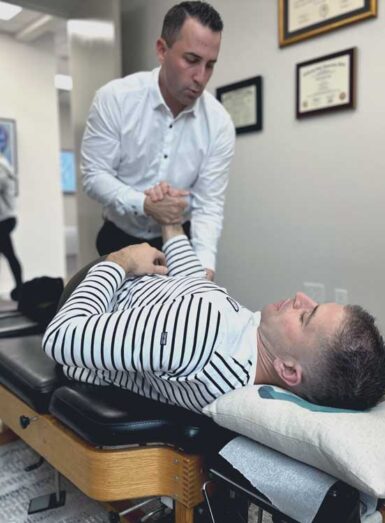
At Mōtus Chiropractic, this process can include detailed range-of-motion testing, posture analysis, and pre- and post-motion X-ray studies when clinically appropriate. The purpose is not to chase an image or apply a one-size-fits-all protocol. It is to identify structural and functional patterns that deserve attention, then track whether care is producing measurable change.
If your pain began after a fall, collision, or sudden injury, or if it comes with numbness, progressive weakness, loss of coordination, unexplained weight loss, fever, or bowel or bladder changes, seek prompt medical evaluation. Mobility work is not a substitute for diagnosing urgent conditions.
Build Recovery in the Right Order
The fastest-looking solution is often the least durable one. A foam roller, massage, or intense stretch may create a temporary sense of freedom, but relief is not the same as restoration. Sustainable mobility recovery usually follows an order.
Restore motion where it is truly restricted
First, address the joints and tissues that are not moving well. This may involve targeted chiropractic care, controlled mobility exercises, soft-tissue work, or changes to daily positions and training load. The specific approach depends on the assessment. Forcing range into an irritated joint is not progress.
Corrective chiropractic care can be valuable when restricted spinal motion, postural distortion, or subluxation patterns are part of the picture. The intent is to improve joint function and nervous-system communication so your body has a better foundation for movement, not simply to chase a temporary crack or short-lived reduction in discomfort.
Teach your body to own the new range
New motion that is not controlled is motion your body may not trust. Once range improves, reinforce it through strength and coordination. That could mean slow split squats for hip control, loaded carries for trunk stability, rows that teach the shoulder blade to move well, or controlled spinal rotation rather than aggressive twisting.
This is where active adults often make a critical mistake: they return to intensity before they have rebuilt capacity. You do not need to avoid training forever. You need to earn back the right to train hard by demonstrating clean, repeatable movement at manageable loads.
Integrate mobility into the demands of your life
Mobility is only useful if it shows up when you need it. A program should eventually connect to your actual goals: lifting without a pinching back, running without hip tightness, playing with your kids on the floor, working through a long presentation, or getting through travel without arriving locked up.
Your recovery plan may include a few minutes of movement between meetings, better workstation positioning, modified training, walking, sleep support, and a progressive strength plan. The right dosage matters more than doing everything at once. Consistency beats a heroic two-hour recovery session followed by six days of the same aggravating habits.
What to Do Between Appointments
Your day-to-day choices either reinforce the old pattern or support the correction. Start by treating movement like hygiene rather than punishment. Break up long sitting periods with short walks, gentle joint motion, or a change of position. Use your full available range in ordinary tasks without forcing painful end ranges.
During training, reduce the temptation to push through warning signs. Sharp pain, increasing symptoms, or a major change in technique are signals to modify the movement, range, load, or volume. Mild muscle effort and temporary stiffness are different from symptoms that escalate each session. When in doubt, get specific guidance instead of guessing.
Sleep is also part of mobility recovery. You do not need a perfect sleep posture, but your body needs enough recovery to adapt to corrective exercise and training. If you consistently wake with neck or back stiffness, look at your pillow, sleep position, stress level, and the cumulative load your body carries during the day.
Measure What Matters
Progress should be visible in more than a pain score. Pain can fluctuate with stress, sleep, and activity. Watch for meaningful markers: more comfortable rotation when backing out of a parking space, deeper controlled squats, fewer headaches, improved lifting mechanics, less post-work stiffness, and greater confidence in movement.
Objective reassessment matters because it keeps the plan honest. If your range, posture, or functional tolerance is not improving, the strategy may need to change. Premium care is not endless maintenance without direction. It is a thoughtful plan, measurable checkpoints, and a clear focus on restoring your capacity over time.
Mobility recovery is not about becoming endlessly bendy or taking the easy route around effort. It is about rebuilding a body that can meet the standards your life demands. Choose care that investigates the cause, commit to the work between visits, and give your body the chance to move with strength again.
Mōtus Chiropractic is a top-rated chiropractor located in Austin, TX. Dr. Mike Isseks offers more than 15 years experience helping his patients alleviate pain and Move Consciously. To schedule a visit, click here.
RECLAIM YOUR LIFE
Rebuild your body and reduce your pain with our progressive technology, proven alternative methods of care, and integrative chiropractic experience.
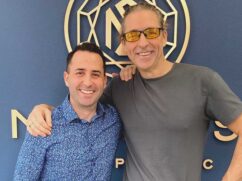
“Dr. Mike improved the mobility of my spine measurably. The whole team is incredibly flexible and helpful to work with. Everything is fast and easy.”

Author, biohacker, and founder of Bulletproof Nutrition

“Dr. Mike and the team at Mōtus are top notch. The adjustments are specific and the analysis is beyond thorough. If you’re in Austin, this is the spot for high-level Chiropractic care.”
– Adrian Grenier
Actor and Film Producer

ABOUT DR. MIKE ISSEKS
Dr. Mike has been a practicing chiropractor for more than 15 years. He is a graduate of California State University at Chico and received his Doctor of Chiropractic degree from Life Chiropractic College West. He specializes in corrective care chiropractic, improving posture, as well as optimizing spinal motion to help uncover the best version of those he serves.
STAY IN THE KNOW
Get cutting-edge health tips, updates, and event notifications...
By entering your email above and clicking “Sign-Up,” you agree to receive occasional emails from Mōtus Chiropractic.

VISIT US
Trio at Menchaca Business Park
Ample free parking in the front lot
HOURS
Monday, Tuesday, Thursday
8:30 am – 12 pm
2:30 pm – 6 pm
Wednesday
12 pm – 5 pm
REACH US
(512) 777-2680
hello@motusatx.com
STAY IN THE KNOW
Get cutting-edge health tips, updates, and event notifications...
By entering your email above and clicking “Sign-Up,” you agree to receive occasional emails from Mōtus Chiropractic.
Copyright 2022, Mōtus Chiropractic. All rights reserved.