
THE MŌTUS BLOG
August 11, 2026
How to Improve Neck Mobility Without Forcing It
Your neck should not feel like the bottleneck between your brain and your body. Yet if looking over your shoulder feels restricted, checking a blind spot is uncomfortable, or a workout leaves you stiff for days, your body is signaling that something needs attention. Learning how to improve neck mobility is not about cranking your head farther into a stretch. It is about restoring controlled motion, better alignment, and the stability that allows your neck to move with confidence.
For active adults, neck stiffness is easy to dismiss until it starts affecting sleep, training, focus, headaches, or the ability to stay present through a demanding workday. Stop settling for temporary relief that disappears as soon as you return to your desk, car, or gym routine. Your neck is part of a larger system, and lasting change starts by treating it that way.
Why Neck Mobility Disappears
The cervical spine is designed for movement. It rotates, bends, extends, and flexes while supporting the weight of your head and continually adapting to input from your eyes, inner ear, shoulders, and the rest of your spine. Mobility becomes limited when that system no longer shares work well.
Hours of forward-head posture can place the neck in a sustained, inefficient position. So can a laptop setup that is too low, a long commute, poorly managed training volume, stress-driven muscle tension, or an old injury your body has quietly compensated around. The result may be tightness in the upper traps, a pulling sensation at the base of the skull, reduced rotation to one side, or recurring pain that seems to come out of nowhere.
But tight muscles are often not the whole story. Muscles can become guarded because joints are not moving well, the upper back is stiff, the shoulder blades lack control, or the nervous system does not perceive a position as stable or safe. Repeatedly stretching the tightest spot may feel productive, but it can miss the reason that spot is working overtime.
How to Improve Neck Mobility Without Chasing a Quick Fix
Start with the quality of your movement, not how far you can force it. A healthy range of motion is smooth, controlled, and relatively equal from side to side. If your neck catches, pinches, shakes, or requires your shoulders to hike up toward your ears, that is useful information. Pushing through it is not a performance win.
Try this simple check: Sit tall with both feet on the floor and slowly turn your head to the right, then to the left. Notice where each side stops, whether your jaw clenches, and whether one shoulder wants to move with you. Next, gently look up and then tuck your chin as if making a double chin. You are looking for patterns, not a diagnosis.
A small daily mobility practice can help when it is done consistently and within a comfortable range. Move slowly enough that your nervous system can trust the motion. One or two rounds of five gentle repetitions in each direction is often more useful than an aggressive 20-minute stretching session you do once a week.
Use controlled rotations
Keep your ribs stacked over your pelvis, relax your shoulders, and turn your head as though you are looking behind you. Pause before discomfort, breathe out, and return to center. Do not twist your entire torso to borrow extra range. The goal is to teach the neck to rotate well, not to win a flexibility contest.
Add chin nods, not hard tucks
Lie on your back with your head supported, or sit against a wall. Make a subtle nod as if you are saying yes, keeping the movement small and the back of your neck long. This can build awareness of the deep neck flexors, which help support head position without relying on constant tension in the larger superficial muscles.
Restore upper-back movement
Your neck often tries to compensate for a thoracic spine that has become rigid. Sit in a chair with your hands behind your head and gently extend your upper back over the chair back. Keep the motion centered in the mid-back rather than jamming your lower back or neck. A few calm repetitions can make turning your head feel less restricted.
Give your shoulder blades a job
The neck and shoulders are teammates. Practice a light row with a resistance band, focusing on drawing the shoulder blades back and down without shrugging. Wall slides and controlled carries can also be valuable, especially for people whose work or training repeatedly pulls the shoulders forward.
Fix the Positions You Repeat All Day
No mobility drill can fully outwork ten hours of poor positioning. You do not need perfect posture held rigidly all day. In fact, trying to sit perfectly still can create its own tension. What you need is more movement variability and fewer long stretches in the same strained position.
Raise your screen so you are not constantly looking down. Bring your phone closer to eye level when possible. During focused work, take brief movement breaks before your neck demands one. Stand up, walk, take a few full breaths, and move your shoulders and upper back through a comfortable range.
For training, consider whether your current routine is feeding the problem. Heavy pressing, high-volume cycling, grappling, overhead work, and intense screen time can all be compatible with a healthy neck. But the load has to match your capacity. If your neck stiffens after every session, it may be time to adjust volume, improve technique, or add recovery rather than simply training through the warning signs.
Sleep position matters, too. Your pillow should support the space between your head and shoulder without forcing your neck into a sharp side bend or excessive flexion. The right setup depends on whether you sleep on your back, side, or a combination of both. The best pillow is not necessarily the most expensive one. It is the one that helps you wake up without your neck feeling twisted, compressed, or unsupported.
Mobility Requires Stability and Alignment
There is a reason a neck can feel loose in one moment and painfully stiff in the next. Mobility without control is not the goal. Your body may restrict motion because it is compensating for poor joint mechanics, postural changes, prior trauma, or instability elsewhere in the spine.
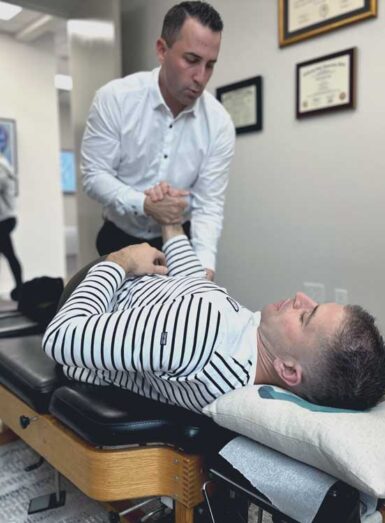
That is where individualized assessment changes the conversation. A thorough evaluation should look beyond the location of discomfort. It should assess your cervical range of motion, postural patterns, spinal alignment, neurological function, shoulder mechanics, and the way your body moves as a unit. Objective tools such as pre- and post-motion X-ray studies can help reveal restrictions and structural patterns that a generic adjustment or symptom checklist may miss.
At Mōtus Chiropractic in Austin, corrective care is built around that root-cause approach. The objective is not to keep you dependent on short-term relief. It is to identify what is limiting your motion, create a personalized plan to improve it, and measure progress as your body regains better alignment and function.
When Neck Stiffness Needs Professional Attention
A mildly stiff neck after sleeping awkwardly or doing an unfamiliar workout may improve with gentle movement and sensible recovery. But do not self-treat everything as ordinary tension. Get evaluated promptly if neck symptoms follow a car accident, fall, collision, or sudden forceful movement.
You should also seek medical attention if you have neck pain with any of the following:
- Numbness, tingling, weakness, or loss of coordination in an arm or hand
- Severe or worsening headache, dizziness, fainting, or vision changes
- Fever, unexplained weight loss, or pain that repeatedly wakes you at night
- New trouble with balance, walking, speaking, swallowing, or bladder or bowel control
Even without these red flags, persistent restrictions deserve more than endless foam rolling and temporary fixes. If one direction is consistently limited, headaches keep returning, or your neck interrupts the activities that make you feel like yourself, a detailed assessment can save you from months of guessing.
Build Capacity, Then Protect It
The most effective neck mobility routine is the one that becomes part of how you live. Move your neck gently every day. Strengthen the upper back and shoulders. Adjust the work and sleep positions that repeatedly load the same tissues. Respect the difference between productive discomfort and sharp, escalating pain.
Progress is rarely dramatic from one session to the next. It is measured in quieter wins: backing out of a parking space without bracing, finishing a workday without a headache, turning during a run without feeling locked up, or waking up ready to train instead of trying to loosen up. Your body is built to adapt. Give it the right input, enough consistency, and a plan that addresses the cause rather than chasing the symptom.
Mōtus Chiropractic is a top-rated chiropractor located in Austin, TX. Dr. Mike Isseks offers more than 15 years experience helping his patients alleviate pain and Move Consciously. To schedule a visit, click here.
RECLAIM YOUR LIFE
Rebuild your body and reduce your pain with our progressive technology, proven alternative methods of care, and integrative chiropractic experience.

“Dr. Mike improved the mobility of my spine measurably. The whole team is incredibly flexible and helpful to work with. Everything is fast and easy.”

Author, biohacker, and founder of Bulletproof Nutrition

“Dr. Mike and the team at Mōtus are top notch. The adjustments are specific and the analysis is beyond thorough. If you’re in Austin, this is the spot for high-level Chiropractic care.”
– Adrian Grenier
Actor and Film Producer

ABOUT DR. MIKE ISSEKS
Dr. Mike has been a practicing chiropractor for more than 15 years. He is a graduate of California State University at Chico and received his Doctor of Chiropractic degree from Life Chiropractic College West. He specializes in corrective care chiropractic, improving posture, as well as optimizing spinal motion to help uncover the best version of those he serves.
STAY IN THE KNOW
Get cutting-edge health tips, updates, and event notifications...
By entering your email above and clicking “Sign-Up,” you agree to receive occasional emails from Mōtus Chiropractic.

VISIT US
Trio at Menchaca Business Park
Ample free parking in the front lot
HOURS
Monday, Tuesday, Thursday
8:30 am – 12 pm
2:30 pm – 6 pm
Wednesday
12 pm – 5 pm
REACH US
(512) 777-2680
hello@motusatx.com
STAY IN THE KNOW
Get cutting-edge health tips, updates, and event notifications...
By entering your email above and clicking “Sign-Up,” you agree to receive occasional emails from Mōtus Chiropractic.
Copyright 2022, Mōtus Chiropractic. All rights reserved.