
THE MŌTUS BLOG
August 5, 2026
Headache Relief Through Spinal Correction
A headache that shows up after a workday, a hard training session, or another night spent scrolling in bed is not always a problem that begins in your head. For many active adults, headache relief through spinal correction starts with a better question: What is placing repeated strain on the neck, nervous system, and muscles that support your head?
Pain medication may quiet the signal for a few hours. But if your posture, spinal motion, and movement patterns keep feeding the same stress into your body, the cycle often returns. Stop settling for temporary relief when your body may be asking for a deeper assessment.
When Headaches May Have a Neck Connection
The head is supported by a remarkably mobile structure: the cervical spine. Seven vertebrae, surrounding joints, discs, nerves, and layers of muscles must coordinate every time you look down at a laptop, check traffic over your shoulder, lift a barbell, or carry a child.
When that system loses normal alignment or movement, the upper neck and shoulders can become overloaded. Tight muscles may develop tender points. Joints may become irritated or restricted. Sensory input from the neck can contribute to pain perceived around the base of the skull, temples, forehead, or behind the eyes.
This pattern is often associated with cervicogenic headaches, meaning headaches referred from structures in the neck. Tension-type headaches can also overlap with poor posture, sustained muscle loading, stress, and reduced cervical mobility. That does not mean every headache is caused by a spinal problem. Migraines, sinus conditions, sleep disruption, dehydration, medication effects, vision changes, hormonal shifts, and many other factors can be involved.
The point is not to force every headache into one explanation. The point is to investigate the patterns conventional symptom management can miss.
Clues Your Neck May Be Part of the Pattern
A neck-related component becomes more plausible when headaches consistently follow long desk sessions, driving, looking down, overhead training, or sleeping in an awkward position. Pain that begins at the upper neck or base of the skull and travels forward can be another clue. So can limited ability to turn your head, recurring neck stiffness, one-sided shoulder tension, or headaches triggered by a specific neck movement.
Your body is not failing you. It is adapting to the load placed on it. The question is whether that adaptation is helping you perform or quietly draining your capacity.
What Spinal Correction Actually Aims to Change
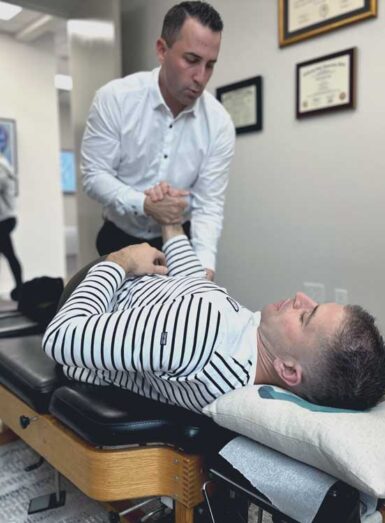
Corrective chiropractic care is different from chasing a quick crack when pain spikes. The goal is to identify and address meaningful restrictions in spinal motion, postural distortion, and movement compensation that may be contributing to recurring stress.
At Mōtus Chiropractic, that process begins with listening to the full story: when headaches occur, what makes them worse, how your training and work demands affect them, and what previous care has or has not changed. A proper evaluation also considers posture, range of motion, muscle function, and relevant neurological findings.
When clinically appropriate, advanced motion analysis and pre- and post-motion X-ray studies can provide objective information about how specific spinal segments move. Imaging is not necessary for every person with headaches, and it should never be used as a sales prop. It can be valuable when the clinical picture calls for a closer look at structure, instability, degeneration, or restricted movement.
From there, a customized corrective plan may include precise chiropractic adjustments, targeted mobility work, postural retraining, and movement recommendations that fit your real life. The intention is to improve the quality of motion and reduce the repeated mechanical stress that can keep sensitized tissues irritated.
That distinction matters. A single adjustment may create short-term relief for some people, but lasting change usually asks more of the process. It asks for repetition, consistency, and a willingness to change the habits that keep pulling your body back into the same pattern.
Headache Relief Through Spinal Correction Is Not One-Size-Fits-All
The strongest corrective plan is not the most aggressive one. It is the one built around your findings, your health history, and your goals.
For one person, the central issue may be a stiff upper cervical spine paired with hours of forward-head posture. For another, it may be a desk setup that forces constant rotation, poor thoracic mobility, jaw clenching under stress, and an exercise routine that adds load without restoring movement. A runner with recurring headaches may need a different strategy than a founder who spends ten hours a day in video calls.
This is why generic adjustments and generic posture advice often disappoint. “Sit up straight” is not a plan. Neither is repeatedly treating the most painful muscle without understanding why it is overworking.
Research on manual therapy for headache conditions is nuanced. Some people with cervicogenic or tension-type headache patterns may experience improvement from chiropractic care, manual therapy, therapeutic exercise, or a combination of approaches. Results vary, and care should be guided by a qualified clinician rather than promises of a cure. Migraine management, in particular, may require coordination with a medical provider and attention to triggers beyond the spine.
Real corrective care respects that complexity while refusing to dismiss what your mechanics may be telling us.
The Daily Inputs That Can Keep the Cycle Alive
Your adjustment matters. So does what happens in the 23 hours between appointments.
The modern Austin professional can train hard and still spend most of the day in a flexed, compressed position. Laptop work, phone use, long commutes, travel, stress, and interrupted sleep create a steady stream of input to the neck and upper back. If your body has limited capacity to move well, those inputs can accumulate until a headache becomes the weekly tax of your lifestyle.
A corrective plan should make your life more resilient, not more restrictive. That may mean adjusting screen height, building short movement breaks into your work blocks, improving upper-back mobility, strengthening the muscles that support your neck and shoulder blades, or modifying training temporarily while irritated tissues calm down. It may also mean taking hydration, sleep, recovery, and stress regulation seriously rather than treating them as optional wellness extras.
None of this is glamorous. It is powerful because it gives you agency. You cannot always control the demands of your career or family, but you can change how intentionally your body is prepared to meet them.
Know When a Headache Needs Urgent Medical Attention
Do not self-diagnose a severe or unfamiliar headache as “just posture.” Seek urgent medical evaluation for a sudden, explosive headache that reaches maximum intensity quickly, a headache after significant head or neck trauma, or pain accompanied by fainting, confusion, seizure, fever with a stiff neck, vision loss, slurred speech, facial drooping, weakness, numbness, or trouble walking.
You should also speak with a medical professional about a new headache pattern after age 50, headaches that are progressively worsening, headaches during pregnancy or postpartum, or headaches associated with cancer, immune suppression, or uncontrolled high blood pressure. These situations call for medical assessment first.
For recurring headaches without emergency warning signs, a thorough chiropractic evaluation can help determine whether spinal dysfunction, posture, and movement limitations deserve a place in your care plan. It may also reveal that a co-managed approach is the most responsible path.
Build a Body That Does Not Need to Keep Sounding the Alarm
Headaches can make ambitious people shrink their lives one decision at a time. You skip the workout, leave the event early, lose focus in the meeting, or reach for another pill before the pain has a chance to derail the day. That is not the standard you have to accept.
Correcting the drivers behind a recurring headache pattern takes patience, objective assessment, and a plan built for more than the next 30 minutes. When your spine moves better, your posture is stronger, and your daily habits support the work being done, relief can become part of a larger shift: more energy for your work, your training, and the life you are building.
Your headache is a signal. Treat it with the level of attention your performance deserves.
Mōtus Chiropractic is a top-rated chiropractor located in Austin, TX. Dr. Mike Isseks offers more than 15 years experience helping his patients alleviate pain and Move Consciously. To schedule a visit, click here.
RECLAIM YOUR LIFE
Rebuild your body and reduce your pain with our progressive technology, proven alternative methods of care, and integrative chiropractic experience.

“Dr. Mike improved the mobility of my spine measurably. The whole team is incredibly flexible and helpful to work with. Everything is fast and easy.”

Author, biohacker, and founder of Bulletproof Nutrition

“Dr. Mike and the team at Mōtus are top notch. The adjustments are specific and the analysis is beyond thorough. If you’re in Austin, this is the spot for high-level Chiropractic care.”
– Adrian Grenier
Actor and Film Producer

ABOUT DR. MIKE ISSEKS
Dr. Mike has been a practicing chiropractor for more than 15 years. He is a graduate of California State University at Chico and received his Doctor of Chiropractic degree from Life Chiropractic College West. He specializes in corrective care chiropractic, improving posture, as well as optimizing spinal motion to help uncover the best version of those he serves.
STAY IN THE KNOW
Get cutting-edge health tips, updates, and event notifications...
By entering your email above and clicking “Sign-Up,” you agree to receive occasional emails from Mōtus Chiropractic.

VISIT US
Trio at Menchaca Business Park
Ample free parking in the front lot
HOURS
Monday, Tuesday, Thursday
8:30 am – 12 pm
2:30 pm – 6 pm
Wednesday
12 pm – 5 pm
REACH US
(512) 777-2680
hello@motusatx.com
STAY IN THE KNOW
Get cutting-edge health tips, updates, and event notifications...
By entering your email above and clicking “Sign-Up,” you agree to receive occasional emails from Mōtus Chiropractic.
Copyright 2022, Mōtus Chiropractic. All rights reserved.