
THE MŌTUS BLOG
July 16, 2026
Top Benefits of Chiropractic Care
Your body can compensate for a long time. You can train through the tight hip, work through the neck tension, and call the recurring headache a normal cost of a demanding life. But compensation is not the same as healing. The top benefits of corrective chiropractic begin with a different standard: finding the movement and structural patterns behind the symptoms, then building a plan to change them.
For active adults, that distinction matters. A quick adjustment may provide temporary relief, but relief alone does not tell you why the problem keeps returning. Corrective care is designed for people who are ready to stop managing the same limitation and start measuring meaningful progress.
What Makes Corrective Chiropractic Different?
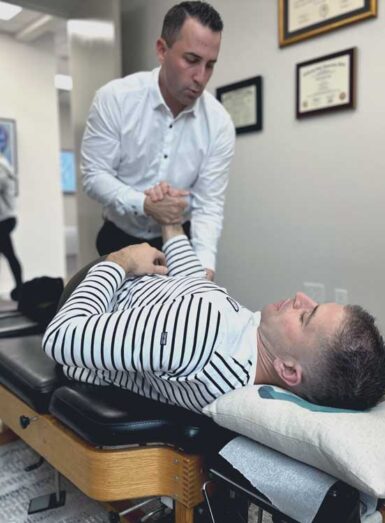
Corrective chiropractic is not a one-size-fits-all series of adjustments. It is a process built around assessment, individualized care, and reassessment. The goal is to identify restrictions in spinal motion, postural imbalances, and movement habits that may be contributing to pain, stiffness, or reduced performance.
At Mōtus Chiropractic, that process can include advanced range-of-motion testing and pre- and post-motion X-ray studies when clinically appropriate. These tools help create a clearer picture of how the spine moves, where it does not move well, and how a personalized corrective plan may be structured. Instead of guessing, care is guided by objective findings and your real-world goals.
That does not mean every ache requires extensive imaging or a lengthy care plan. The right approach depends on your history, exam findings, symptoms, and risk factors. It does mean you deserve more than a generic answer when your body is repeatedly telling you something is off.
Top Benefits of Corrective Chiropractic Care
1. A clearer path to better posture
Posture is not about forcing yourself into a rigid, military-straight position. It is about how your body organizes itself against gravity while you sit, stand, walk, lift, and train. When the head consistently drifts forward, the shoulders round, or the pelvis shifts, other tissues often work overtime to keep you upright.
Corrective chiropractic focuses on the structural and movement patterns that influence this compensation. Adjustments may be paired with specific mobility work, strengthening strategies, and guidance for the positions you repeat every day. For a professional spending hours at a laptop or an athlete loading one side more heavily than the other, that context matters.
Improved posture can support more efficient movement and reduce unnecessary strain. The result is not simply looking more upright in a photo. It is building a body that feels more capable during a long workday, a heavy training session, or a weekend outside Austin.
2. More usable mobility, not just temporary flexibility
Flexibility and mobility are not interchangeable. You may be able to stretch a tight muscle and still lack the control, joint motion, or stability needed to move well. That gap shows up when a squat feels uneven, rotation is limited during a golf swing, or turning your head while driving creates a sharp reminder that your neck is not moving freely.
Corrective care evaluates movement quality alongside spinal function. When appropriate, chiropractic adjustments can help address joint restrictions, while targeted corrective exercises help your body use the improved range of motion. This combination is essential. Gaining motion without building control is rarely a lasting answer.
Progress is often practical rather than dramatic. You may notice that you can reach overhead without bracing, sit through a meeting without constantly shifting, or return to a workout movement that previously felt guarded. Those changes add up because they expand what your body can do with confidence.
3. A more direct response to recurring pain patterns
Pain is real, but it is also a signal. If neck pain, back pain, or headaches keep returning after short-term treatment, the question should not only be, “How do we calm this down today?” It should also be, “What is repeatedly loading this area?”
Corrective chiropractic looks for potential contributors such as restricted spinal motion, postural stress, poor movement mechanics, prior injuries, and daily habits. That root-cause mindset can be especially valuable for people who are tired of cycling between discomfort, medication, rest, and another flare-up.
No responsible provider can promise that every condition will resolve through chiropractic care, and pain can have many causes. Some concerns require medical evaluation, co-management, or a different treatment path entirely. But when musculoskeletal dysfunction is part of the picture, a focused corrective plan can offer a more strategic alternative to chasing symptoms alone.
4. Better movement for work, training, and life
High performers often separate health from performance until their body forces the issue. The stiff back becomes a modified workout. The recurring headache becomes a shorter workday. The shoulder restriction becomes an excuse to avoid a movement you used to enjoy.
Corrective chiropractic connects those dots. The aim is not merely to make you less uncomfortable. It is to help restore the foundation for the activities that matter to you, whether that means lifting, running, cycling, playing with your kids, traveling, or staying sharp through a full day of focused work.
A well-designed plan should be specific. A runner may need attention to pelvic mechanics and lower-body control. A desk-based entrepreneur may need a strategy for cervical posture, thoracic mobility, and workstation habits. The best plan is not the most intense one. It is the one that addresses your findings and fits the life you are actually living.
5. Measurable progress instead of vague reassurance
“Just keep coming in” is not a plan. People committed to their health deserve to understand what is being addressed, how progress will be tracked, and when the plan should be adjusted.
One of the most valuable benefits of a corrective model is the emphasis on reassessment. Baseline findings can be compared with changes in range of motion, posture, functional movement, symptom patterns, and, when indicated, follow-up imaging. This gives you a tangible way to see whether your body is responding.
Numbers are not the whole story. Sleeping better, training with less hesitation, or finishing a workday with more energy matter too. Still, objective testing helps replace wishful thinking with informed decisions. It also keeps the care collaborative: you know what you are working toward and why each phase exists.
6. A long-term framework for self-responsibility
Corrective care is not passive. The adjustment is one part of the process, not the entire solution. Your results may also depend on movement practice, recovery, ergonomics, training choices, stress load, and consistency between visits.
That is not a burden. It is leverage. When you understand the patterns that keep pulling your body out of alignment, you gain more control over your health than a temporary fix can offer. You learn which habits support progress and which ones quietly reinforce the problem.
This approach requires patience. Structural and movement changes usually take time, especially when a pattern has been developing for years. There may be phases where your body is adapting, your exercise plan needs modification, or another provider should be involved. The trade-off is clear: lasting change asks more of you than momentary relief, but it can also give you more back.
Who May Benefit Most From a Corrective Approach?
Corrective chiropractic can be a strong fit for adults with recurring neck or back discomfort, persistent postural concerns, reduced mobility, headaches linked to musculoskeletal factors, or a sense that their body is not performing at its usual level. It is particularly relevant when you have tried symptom-focused care and still do not have a clear explanation or a plan for progression.
It is not a substitute for emergency care. Seek prompt medical evaluation for severe or sudden symptoms, significant trauma, unexplained weakness or numbness, bowel or bladder changes, fever, chest pain, or other red flags. Good chiropractic care knows its scope and refers when needed.
You do not have to accept stiffness, recurring pain, or diminished movement as the price of ambition. Start with an honest assessment of how your body moves now, then choose a plan that gives your future self more options than simply pushing through.
Mōtus Chiropractic is a top-rated chiropractor located in Austin, TX. Dr. Mike Isseks offers more than 15 years experience helping his patients alleviate pain and Move Consciously. To schedule a visit, click here.
RECLAIM YOUR LIFE
Rebuild your body and reduce your pain with our progressive technology, proven alternative methods of care, and integrative chiropractic experience.
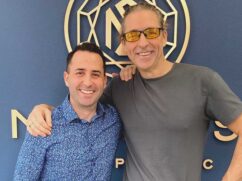
“Dr. Mike improved the mobility of my spine measurably. The whole team is incredibly flexible and helpful to work with. Everything is fast and easy.”

Author, biohacker, and founder of Bulletproof Nutrition

“Dr. Mike and the team at Mōtus are top notch. The adjustments are specific and the analysis is beyond thorough. If you’re in Austin, this is the spot for high-level Chiropractic care.”
– Adrian Grenier
Actor and Film Producer

ABOUT DR. MIKE ISSEKS
Dr. Mike has been a practicing chiropractor for more than 15 years. He is a graduate of California State University at Chico and received his Doctor of Chiropractic degree from Life Chiropractic College West. He specializes in corrective care chiropractic, improving posture, as well as optimizing spinal motion to help uncover the best version of those he serves.
STAY IN THE KNOW
Get cutting-edge health tips, updates, and event notifications...
By entering your email above and clicking “Sign-Up,” you agree to receive occasional emails from Mōtus Chiropractic.
VISIT US
Trio at Menchaca Business Park
Ample free parking in the front lot
HOURS
Monday, Tuesday, Thursday
8:30 am – 12 pm
2:30 pm – 6 pm
Wednesday
12 pm – 5 pm
REACH US
(512) 777-2680
hello@motusatx.com
STAY IN THE KNOW
Get cutting-edge health tips, updates, and event notifications...
By entering your email above and clicking “Sign-Up,” you agree to receive occasional emails from Mōtus Chiropractic.
Copyright 2022, Mōtus Chiropractic. All rights reserved.