
THE MŌTUS BLOG
June 17, 2026
Chiropractic Care vs Pain Medication
You can silence pain and still be getting worse.
That is the real tension in chiropractic care vs pain medication. One approach is designed to reduce symptoms fast. The other asks a harder question: why is your body sending pain signals in the first place? If you are an active adult trying to stay sharp at work, train consistently, sleep better, and move without limitation, that difference matters more than most people realize.
Pain is not just an inconvenience. It is feedback. Sometimes it shows up after a hard lift, a long day at a desk, a car accident, or years of posture breakdown that finally catch up with you. The mainstream answer is often a pill, a refill, and a vague hope that things calm down. But if the joint dysfunction, spinal misalignment, or movement restriction underneath the pain is still there, you have not solved the problem. You have simply made it quieter.
Chiropractic care vs pain medication: what each one is built to do
Pain medication is largely about symptom control. That can be useful. If someone is in acute pain and needs short-term relief to function, medication may have a place. Anti-inflammatories, muscle relaxers, and prescription pain medications can reduce discomfort enough to help a person get through the day.
But symptom control is not the same as healing. Medication does not restore spinal alignment. It does not improve posture. It does not retrain movement patterns. It does not address the mechanical stress that may be overloading your neck, back, hips, or nervous system every single day.
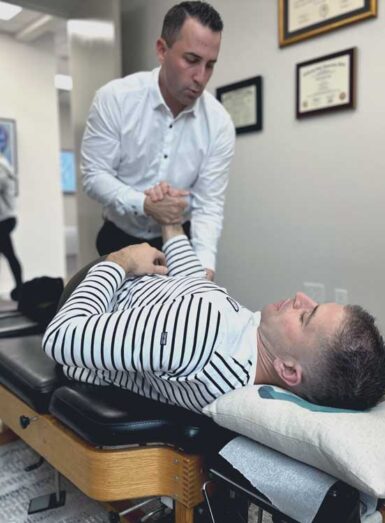
Chiropractic care, when done at a high level, is built around structural and functional correction. The goal is not to numb signals. The goal is to identify where the body is not moving well, where the spine is under abnormal stress, and how those dysfunctions are contributing to pain, tension, headaches, or mobility loss. Then care is designed to correct those issues over time.
That distinction is everything. One approach manages the message. The other works on the source.
Why pain medication can feel effective even when progress is stalled
Medication often wins early because it is convenient. You take something, symptoms drop, and you feel like you have done something productive. For a lot of people, that becomes the whole strategy.
The problem is that reduced pain can create false confidence. You return to the same workstation setup, the same compensation patterns, the same compressed posture, the same training mechanics, and the same spinal stress that triggered the issue. Since the discomfort is muted, you may push harder on a body that is still unstable or restricted.
This is where small issues become chronic patterns. A stiff neck becomes recurring headaches. Low back tension becomes disc irritation. Shoulder tightness starts changing the way your rib cage and spine move. You keep functioning, but not cleanly. Over time, that gap between how you feel and how well you are actually moving gets expensive.
That does not mean medication is always the wrong call. It means it should be seen honestly. It is a tool for relief, not a plan for correction.
What chiropractic care can offer that medication cannot
When chiropractic care is personalized and objective, it gives you data and direction. Instead of guessing, a provider can assess posture, range of motion, spinal integrity, joint restriction, and how your structure is affecting function. That matters because pain is rarely random.
A person with recurring low back pain may have pelvic imbalance, lumbar fixation, weak postural endurance, and years of compensation from an old injury. Someone with headaches may have forward head posture, restricted cervical motion, and upper thoracic dysfunction that keeps driving tension. If you only chase pain, you miss the pattern.
Corrective chiropractic care is valuable because it respects that pattern. Adjustments can help restore motion to restricted segments. Targeted recommendations can improve posture, reduce mechanical overload, and support more efficient movement. Over time, that can change not just pain levels, but how your body performs under stress.
For patients who are serious about long-term outcomes, this is the bigger win. Relief matters, but resilience matters more.
Chiropractic care vs pain medication for long-term results
If your goal is to get through a rough week, pain medication may seem like enough. If your goal is to reclaim full function and stop repeating the same cycle every few months, the equation changes.
Long-term results require more than pain reduction. They require better mechanics. Your spine has to move well. Your posture has to support the way you live and work. Your body has to stop compensating around dysfunction. That takes a more active process than taking a pill.
This is also where patient mindset matters. Some people want the fastest exit from discomfort, even if the problem returns. Others are done settling for temporary fixes. They want measurable progress, clear answers, and a strategy that helps them train, work, travel, and live with more freedom. Chiropractic care tends to resonate with the second group because it asks for engagement and rewards consistency.
There is no magic in that. It is simply how real change works.
The trade-offs most people are not told about
Medication can be appropriate, but it comes with trade-offs. Depending on the type, those may include stomach irritation, drowsiness, dependence risk, reduced mental sharpness, or the tendency to rely on relief without addressing what is driving the pain. Even over-the-counter options can become a habit when they are used to manage a recurring structural issue.
Chiropractic care has trade-offs too. It is not passive, and it is not always instant. If you have chronic dysfunction built over years, correction takes time. Progress may involve phases of care, lifestyle changes, and a willingness to follow a plan instead of chasing a quick fix. That level of commitment is exactly why some people get dramatic results and others bounce back into the same pattern.
The right choice depends on the situation, your goals, and whether you want short-term suppression or true functional improvement.
When a combined approach may make sense
This is not a simplistic good-versus-bad debate. There are times when medication and chiropractic care can coexist. Severe acute pain, recent injury, or inflammatory flare-ups may require short-term symptom support while the deeper corrective work begins. That can be reasonable.
The key is not to confuse temporary support with the full answer. Medication may help lower the volume of pain. It should not replace a proper evaluation of why your body is struggling. If there is measurable spinal dysfunction, movement restriction, or postural collapse, those findings deserve a treatment strategy of their own.
For the right patient, the smartest path is often relief plus correction, not relief instead of correction.
Who should seriously consider chiropractic care first
If you are dealing with recurring neck pain, back pain, headaches, stiffness, posture problems, reduced mobility, or pain that keeps returning after workouts, long commutes, or desk-heavy weeks, you should at least ask whether the issue is structural. If your symptoms are triggered by movement, position, or load, that is another clue.
This is especially true for high-performing adults who ask a lot from their bodies. You cannot outwork spinal dysfunction forever. You cannot keep masking poor mechanics and expect elite output in the gym, at the office, or at home. At some point, performance drops, recovery gets slower, and the body starts demanding your attention.
That is where a corrective approach stands apart. At practices like Mōtus Chiropractic in Austin, the process is not built around generic adjustments or surface-level relief. It is built around objective testing, motion analysis, and individualized care plans that show people exactly what is happening and what it will take to change it. That level of specificity is what serious patients are looking for.
You do not need to wait until pain becomes debilitating to care about alignment, movement, and nervous system function. In fact, the people who get the most out of this kind of care are often the ones who refuse to wait that long.
Pain has a purpose. It gets your attention. What you do next determines whether you stay in the cycle or break it.
If you want a body that performs, adapts, and holds up under pressure, stop treating pain like the enemy and start treating it like information. Relief has value. Correction changes lives.
Mōtus Chiropractic is a top-rated chiropractor located in Austin, TX. Dr. Mike Isseks offers more than 15 years experience helping his patients alleviate pain and Move Consciously. To schedule a visit, click here.
RECLAIM YOUR LIFE
Rebuild your body and reduce your pain with our progressive technology, proven alternative methods of care, and integrative chiropractic experience.

“Dr. Mike improved the mobility of my spine measurably. The whole team is incredibly flexible and helpful to work with. Everything is fast and easy.”

Author, biohacker, and founder of Bulletproof Nutrition

“Dr. Mike and the team at Mōtus are top notch. The adjustments are specific and the analysis is beyond thorough. If you’re in Austin, this is the spot for high-level Chiropractic care.”
– Adrian Grenier
Actor and Film Producer

ABOUT DR. MIKE ISSEKS
Dr. Mike has been a practicing chiropractor for more than 15 years. He is a graduate of California State University at Chico and received his Doctor of Chiropractic degree from Life Chiropractic College West. He specializes in corrective care chiropractic, improving posture, as well as optimizing spinal motion to help uncover the best version of those he serves.
STAY IN THE KNOW
Get cutting-edge health tips, updates, and event notifications...
By entering your email above and clicking “Sign-Up,” you agree to receive occasional emails from Mōtus Chiropractic.

VISIT US
Trio at Menchaca Business Park
Ample free parking in the front lot
HOURS
Monday, Tuesday, Thursday
8:30 am – 12 pm
2:30 pm – 6 pm
Wednesday
12 pm – 5 pm
REACH US
(512) 777-2680
hello@motusatx.com
STAY IN THE KNOW
Get cutting-edge health tips, updates, and event notifications...
By entering your email above and clicking “Sign-Up,” you agree to receive occasional emails from Mōtus Chiropractic.
Copyright 2022, Mōtus Chiropractic. All rights reserved.