
THE MŌTUS BLOG
July 8, 2026
South Austin Corrective Chiropractor Guide
If your back only feels better for a day or two after an adjustment, that is not a real solution. A South Austin corrective chiropractor should do more than chase pain from one visit to the next. The right approach looks at why your spine keeps drifting, why your posture keeps collapsing, and why your body keeps compensating under stress, training, and long workdays.
That distinction matters, especially in a city full of active adults who expect a lot from their bodies. If you are lifting, running, sitting at a desk for ten hours, parenting, traveling, or building a business, temporary relief is a weak return on your effort. You need care that respects the fact that pain is often the last symptom to show up and the first one people try to silence.
What a South Austin corrective chiropractor actually does
Corrective chiropractic is not the same as basic symptom-based care. Traditional short-term care often focuses on reducing discomfort in the moment. That can help, and sometimes it is the right first step. But if the underlying structure is still off, the same patterns usually return.
A South Austin corrective chiropractor focuses on the mechanics underneath the symptoms. That means looking at spinal alignment, joint motion, posture, compensation patterns, and nervous system stress. Instead of asking only, "Where does it hurt?" the better question is, "What is causing your body to work harder than it should?"
For many patients, the answer shows up in places they did not expect. Chronic headaches may trace back to forward head posture and restricted neck motion. Low back pain can be tied to pelvic imbalance, weak movement patterns, or years of sitting with poor spinal support. Shoulder tension may have less to do with the shoulder itself and more to do with thoracic rigidity and cervical stress.
Corrective care is designed to change those patterns over time. That usually includes detailed testing, a personalized care plan, and measurable progress instead of vague promises.
Relief care vs corrective care
Relief care has a place. When someone walks in with acute pain, the immediate goal may be to calm irritation and reduce stress on the affected area. There is nothing wrong with wanting to feel better quickly.
The problem starts when relief becomes the whole model. If you get adjusted, feel looser, and then slide right back into the same mechanical dysfunction, your body is stuck in a loop. You are managing symptoms, not changing function.
Corrective care asks for more commitment, but it also offers more upside. It is built around structural improvement, better movement, stronger postural habits, and longer-term nervous system support. That means results may not always feel dramatic after a single visit, because the real goal is not a quick spike of relief. The goal is durable change.
There is a trade-off here. Corrective care often requires consistency, follow-through, and a willingness to see your health as a process. If you want one visit to erase ten years of degeneration, screen posture, old injuries, and movement compensation, no honest provider should sell you that fantasy.
How a corrective chiropractor evaluates the root cause
A serious corrective approach starts with objective information. That includes a thorough health history, postural analysis, range-of-motion testing, orthopedic and neurologic evaluation, and when clinically appropriate, imaging such as pre- and post-motion X-rays.
This matters because guessing is not a strategy. If your spine is rotating, your neck curve is reduced, or certain segments are not moving properly, that should be assessed directly. The more precise the diagnosis, the more specific the plan.
Advanced motion testing can reveal whether your spine is functioning the way it was designed to. X-ray studies, when used appropriately, can show structural distortion that no amount of surface-level treatment can explain away. Together, these tools help separate generic care from customized corrective work.
That level of detail is especially valuable for high-performing adults. If you are training hard, leading a demanding career, or trying to stay active with kids and family, you do not have time for vague care plans built on trial and error. You want to know what is wrong, what can improve, and how progress will be measured.
Signs you may need corrective care, not just occasional adjustments
Some people assume chiropractic is only for severe pain. That mindset keeps a lot of dysfunction hidden until it becomes harder to reverse. The body adapts for a long time before it finally protests.
You may be a strong candidate for corrective care if you deal with recurring neck or back pain, frequent headaches, stiffness that returns no matter how much you stretch, or posture that seems to worsen every year. It also matters if you feel restricted in workouts, lose mobility under load, or notice that one side of your body always feels tighter or less stable.
Another overlooked sign is fatigue. When your structure is off, your body spends more energy compensating. You may still be functional, but not efficient. That can show up as poor recovery, chronic tension, reduced focus, or the feeling that your body is always working against you.
People in South Austin often live highly physical, high-output lives. They train before work, sit at a laptop all day, then chase another round of activity at night. That combination of performance and compression creates the perfect environment for slow-building dysfunction. Waiting until the pain becomes unbearable is a bad strategy.
What your chiropractic care should feel like
A high-level corrective plan should feel personal, not packaged. Your care should reflect your spinal findings, movement restrictions, goals, and timeline. Someone training for races, someone recovering from years of desk posture, and someone trying to stop recurring migraines should not all be handed the same formula.
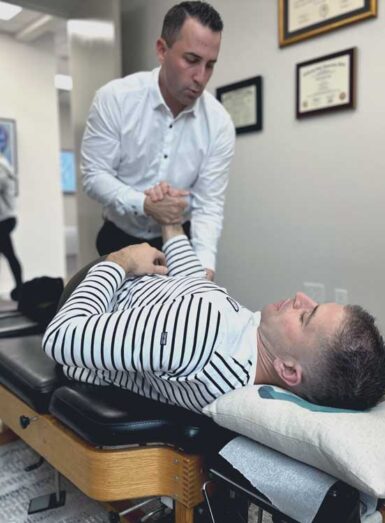
Treatment may include precise chiropractic adjustments, posture correction strategies, mobility restoration, and recommendations that support long-term healing between visits. Education is a major part of the process. If you do not understand what is changing in your body, it is harder to stay engaged and easier to fall back into passive healthcare.
This is where the best practices separate themselves. At a premium corrective office like Mōtus Chiropractic, care is built around measurable change, not endless maintenance with no destination. That means your progress should be tracked, explained, and tied back to function, not just pain scores.
You should also expect honesty. Not every issue resolves on the same timeline. Some patients respond quickly. Others are dealing with years of structural stress, old injuries, or advanced degeneration. A credible chiropractor will tell you when healing takes time and when your habits outside the office are either helping or sabotaging your results.
Choosing the right South Austin corrective chiropractor
Not every chiropractor who uses the word "corrective" practices true corrective care. Some use the label loosely while delivering standard high-volume adjustments with little testing and even less personalization.
Ask better questions. Does the doctor perform a detailed structural and functional evaluation? Do they use objective diagnostics when needed? Can they explain what is wrong in plain English? Do they show you how care will progress over time? Do they talk about posture, movement, and lifestyle, or only pain?
You should also pay attention to the philosophy behind the practice. If the office is built around getting you in and out as fast as possible, that may not match your goals. If you want to reclaim your posture, restore movement, and stop settling for recurring symptoms, you need a doctor who is willing to go deeper than mainstream symptom management.
That does not mean every person needs an aggressive long-term plan. It depends on the severity of the problem, your history, and what the exam reveals. But if your symptoms are recurring, your posture is declining, or your performance is slipping, a superficial approach is probably not enough.
Why this matters beyond pain
Corrective chiropractic is not just about feeling less sore. It is about restoring the quality of your life inside the body you use every day. Better alignment can support cleaner movement. Better movement can support stronger training, better recovery, and less wear and tear. Better nervous system function can influence how you adapt to stress, physically and mentally.
That is why the right care attracts people who refuse to normalize decline. They are not looking for permission to cope. They want to heal with intention, move with confidence, and build a body that keeps up with their standards.
If that is where you are, stop settling for quick fixes that fade by the weekend. Find a provider who tests thoroughly, thinks structurally, and treats your health like something worth rebuilding well.
Mōtus Chiropractic is a top-rated chiropractor located in Austin, TX. Dr. Mike Isseks offers more than 15 years experience helping his patients alleviate pain and Move Consciously. To schedule a visit, click here.
RECLAIM YOUR LIFE
Rebuild your body and reduce your pain with our progressive technology, proven alternative methods of care, and integrative chiropractic experience.
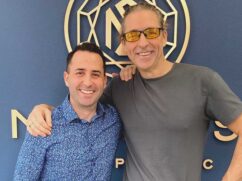
“Dr. Mike improved the mobility of my spine measurably. The whole team is incredibly flexible and helpful to work with. Everything is fast and easy.”

Author, biohacker, and founder of Bulletproof Nutrition

“Dr. Mike and the team at Mōtus are top notch. The adjustments are specific and the analysis is beyond thorough. If you’re in Austin, this is the spot for high-level Chiropractic care.”
– Adrian Grenier
Actor and Film Producer

ABOUT DR. MIKE ISSEKS
Dr. Mike has been a practicing chiropractor for more than 15 years. He is a graduate of California State University at Chico and received his Doctor of Chiropractic degree from Life Chiropractic College West. He specializes in corrective care chiropractic, improving posture, as well as optimizing spinal motion to help uncover the best version of those he serves.
STAY IN THE KNOW
Get cutting-edge health tips, updates, and event notifications...
By entering your email above and clicking “Sign-Up,” you agree to receive occasional emails from Mōtus Chiropractic.

VISIT US
Trio at Menchaca Business Park
Ample free parking in the front lot
HOURS
Monday, Tuesday, Thursday
8:30 am – 12 pm
2:30 pm – 6 pm
Wednesday
12 pm – 5 pm
REACH US
(512) 777-2680
hello@motusatx.com
STAY IN THE KNOW
Get cutting-edge health tips, updates, and event notifications...
By entering your email above and clicking “Sign-Up,” you agree to receive occasional emails from Mōtus Chiropractic.
Copyright 2022, Mōtus Chiropractic. All rights reserved.