
THE MŌTUS BLOG
August 1, 2026
Spinal Correction for Athletes Who Train Hard
A hard training session should leave you challenged, not feeling like your body is falling apart. Yet many athletes normalize recurring low-back tightness, a shoulder that will not move cleanly overhead, hip pain during runs, or neck tension that follows them from the gym into the workday. Spinal correction for athletes is not about chasing a quick crack before the next workout. It is about identifying the movement and structural patterns that keep demanding more compensation from an already hard-working body.
For serious athletes and active adults, pain is rarely the only cost. When the spine does not move, stabilize, or align well, training quality can change. You may lose range of motion, load one side more than the other, alter your mechanics to avoid discomfort, and eventually hit a plateau that more stretching or more effort cannot solve. Stop settling for temporary relief when your goal is to perform, recover, and stay active for the long run.
Why Athletes Develop Spinal Dysfunction
Athletic bodies are built to adapt. That is a strength, but it can also hide a problem for a long time. A runner can keep logging miles with restricted hip motion. A lifter can keep adding weight while shifting into one leg. A cyclist can tolerate a forward posture until numbness, headaches, or persistent upper-back tension makes it impossible to ignore.
Repetition is only part of the story. Old injuries, long hours at a desk, poor recovery, falls, collisions, and one-sided training demands can all affect spinal motion and posture. The body finds a workaround. Muscles tighten to create stability, joints move differently, and the nervous system becomes more protective. That compensation may keep you in the game initially, but it is not the same as moving well.
This is why an athlete can be strong, disciplined, and technically skilled while still dealing with recurring issues. Fitness does not automatically equal functional alignment. You can have exceptional conditioning and still have restricted spinal segments, asymmetrical movement, or postural stress that changes how force travels through your body.
What Spinal Correction for Athletes Is Designed to Address
Corrective chiropractic care looks beyond the painful area. A sore knee may have a relationship to poor hip control. A shoulder that pinches overhead may be influenced by thoracic stiffness, rib motion, or a forward-head posture. Low-back tension may reflect a spine and pelvis that are taking over work the hips should be doing.
That does not mean every symptom has one simple cause, and it does not mean spinal care replaces a proper medical evaluation when one is needed. Athletes with acute trauma, progressive weakness, loss of bowel or bladder control, fever, unexplained weight loss, or severe unrelenting pain need timely medical assessment. Smart care respects those boundaries.
For many non-emergency movement complaints, the real question is not simply, Where does it hurt? It is, What pattern is creating the repeated overload? Corrective care is designed to answer that question, then create a plan that supports more efficient motion, posture, and load tolerance over time.
Start With Evidence, Not Assumptions
If your care plan is identical to everyone else's, it is not truly built around your sport, history, or goals. An athlete who wants to return to barbell training needs a different emphasis than a marathoner preparing for race season or a tennis player whose serve aggravates the neck and shoulder.
A comprehensive evaluation should examine posture, spinal mobility, joint motion, movement quality, previous injuries, and the specific positions that provoke symptoms. Advanced range-of-motion testing can help identify where motion is restricted or unstable. When clinically appropriate, pre- and post-motion X-ray studies may provide objective information about spinal alignment and movement that cannot be seen from symptoms alone.
That information matters because it establishes a baseline. Rather than guessing whether you are improving, you can compare measurable findings as care progresses. At Mōtus Chiropractic, this objective approach supports personalized corrective plans instead of generic adjustments delivered on autopilot.
The goal is not to make an image look perfect or promise a flawless body. Human bodies vary, and imaging is one piece of a larger clinical picture. The goal is to understand whether identifiable structural and functional limitations may be contributing to your pattern, then measure meaningful progress against the demands of your life and training.
Correction Is More Than a Single Adjustment
An adjustment can be valuable for improving joint motion and reducing the sense of restriction for some people. But athletes who want durable change usually need more than a one-time intervention. The body has practiced its compensations for months or years. It often takes a consistent, customized process to change the inputs that keep recreating them.
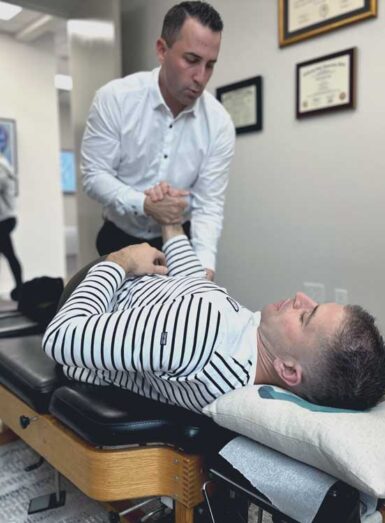
A corrective plan may include specific chiropractic adjustments, posture-focused strategies, mobility work, movement restoration, and guidance around training load and recovery. The exact approach depends on the examination findings, your health history, and what you are trying to do. Someone in the middle of a competitive season may need a plan that protects performance while gradually building capacity. Someone in an off-season or rebuilding phase may be ready for a deeper corrective focus.
Consistency is not glamorous, but it is where results are built. Athletes understand progressive overload in the gym. Structural and movement change follow a similar principle: the right stimulus, applied consistently, with enough recovery and reassessment to know whether it is working.
Keep Training, But Train With Better Information
Spinal correction should not force an all-or-nothing choice between treatment and athletic identity. In many cases, the better move is to adjust training intelligently while the body regains motion and control. That may mean reducing volume temporarily, changing a provocative lift, cleaning up warm-up habits, or prioritizing sleep and recovery during a high-stress period.
The trade-off is real. Pushing through every warning sign can turn a manageable limitation into a longer interruption. But unnecessarily avoiding all activity can reduce confidence and capacity. The right decision depends on symptom severity, tissue tolerance, technique, sport demands, and the findings from your evaluation.
A good corrective strategy works with your training reality. It does not shame you for wanting to compete, lift, run, climb, or play hard. It gives you a clearer understanding of what your body can handle now and what must improve to expand that capacity.
Signs Your Body May Need a Deeper Look
Recurring symptoms are a clear signal, especially when they return after massage, stretching, rest, or occasional adjustments. So are persistent mobility differences from side to side, discomfort in a specific training position, frequent headaches after desk work or rides, a sense that one hip or shoulder never feels right, and a stalled performance pattern without an obvious explanation.
Do not wait until pain forces a complete stop. Athletes are often praised for toughness, but ignoring the same warning for six months is not discipline. It is a gamble. A thorough assessment can help separate normal training fatigue from a pattern that deserves targeted attention.
Build a Body That Can Carry Your Ambition
Your body is not a machine to be punished into submission. It is the foundation beneath every finish line, promotion, weekend adventure, and personal record. When spinal function, posture, and movement are addressed at the root, you are better positioned to train with confidence instead of constantly managing the next flare-up.
Choose care that measures, explains, and adapts. Your goals are too demanding for a symptom-only strategy. Reclaim the movement your sport requires, give your nervous system better information, and build the kind of resilience that keeps you in the work you love.
Mōtus Chiropractic is a top-rated chiropractor located in Austin, TX. Dr. Mike Isseks offers more than 15 years experience helping his patients alleviate pain and Move Consciously. To schedule a visit, click here.
RECLAIM YOUR LIFE
Rebuild your body and reduce your pain with our progressive technology, proven alternative methods of care, and integrative chiropractic experience.

“Dr. Mike improved the mobility of my spine measurably. The whole team is incredibly flexible and helpful to work with. Everything is fast and easy.”

Author, biohacker, and founder of Bulletproof Nutrition

“Dr. Mike and the team at Mōtus are top notch. The adjustments are specific and the analysis is beyond thorough. If you’re in Austin, this is the spot for high-level Chiropractic care.”
– Adrian Grenier
Actor and Film Producer

ABOUT DR. MIKE ISSEKS
Dr. Mike has been a practicing chiropractor for more than 15 years. He is a graduate of California State University at Chico and received his Doctor of Chiropractic degree from Life Chiropractic College West. He specializes in corrective care chiropractic, improving posture, as well as optimizing spinal motion to help uncover the best version of those he serves.
STAY IN THE KNOW
Get cutting-edge health tips, updates, and event notifications...
By entering your email above and clicking “Sign-Up,” you agree to receive occasional emails from Mōtus Chiropractic.

VISIT US
Trio at Menchaca Business Park
Ample free parking in the front lot
HOURS
Monday, Tuesday, Thursday
8:30 am – 12 pm
2:30 pm – 6 pm
Wednesday
12 pm – 5 pm
REACH US
(512) 777-2680
hello@motusatx.com
STAY IN THE KNOW
Get cutting-edge health tips, updates, and event notifications...
By entering your email above and clicking “Sign-Up,” you agree to receive occasional emails from Mōtus Chiropractic.
Copyright 2022, Mōtus Chiropractic. All rights reserved.