
THE MŌTUS BLOG
August 27, 2026
Nervous System Optimization Care That Lasts
Your body can tolerate a lot - long hours at a desk, hard training blocks, travel, stress, old injuries, and the constant pull of a phone. But tolerance is not the same as resilience. When neck tension, recurring back pain, headaches, stiffness, poor sleep, or reduced performance become normal, your body is giving you data. Nervous system optimization care is about taking that data seriously before you settle for managing symptoms forever.
For ambitious adults, the goal is not simply to hurt less for a few days. It is to move with more confidence, recover more completely, train without hesitation, and bring better energy to work and life. That requires a different question than, “Where does it hurt?” The better question is, “What pattern is keeping my body from functioning at its best?”
What Nervous System Optimization Care Looks Like at Mōtus
Your nervous system coordinates movement, sensation, balance, muscular control, and your response to physical and emotional stress. The brain and spinal cord rely on a continuous exchange of information from joints, muscles, and surrounding tissues to help you adapt to what is happening around you.
When spinal motion is restricted, posture has deteriorated, or an old compensation pattern has become your default, movement can become less efficient. You may notice it as pain. You may also notice it as a shoulder that no longer moves freely overhead, a low back that tightens after a run, a head that feels heavy at the end of every workday, or a body that takes longer to recover than it used to.
Nervous system optimization care does not promise a magical reset or treat the nervous system as a button to push. It is a deliberate, individualized process of identifying structural and movement-related stressors, improving spinal and joint function where appropriate, and building the habits that support lasting change.
That distinction matters. Relaxation techniques, breathwork, exercise, massage, and better sleep can all be valuable. But if your body is repeatedly operating around limited spinal motion, postural strain, or poor movement mechanics, temporary relief may not change the pattern that keeps bringing symptoms back.
Stop Chasing Symptoms and Start Measuring Patterns
Mainstream care often works best in a crisis: rule out serious injury, control acute pain, and intervene when necessary. There is a place for medication, physical therapy, imaging, and medical specialists. The problem begins when the entire plan stops at short-term symptom control.
A pain reliever may help you get through a presentation. A generic adjustment may create a brief sense of relief. Rest may calm an irritated area. None of those outcomes automatically tells you why the issue started, why it returns, or what needs to change for your body to carry more load with less compensation.
Corrective care starts with evidence. At Mōtus Chiropractic, that can include a detailed health and movement history, posture assessment, range-of-motion testing, and, when clinically appropriate, pre- and post-motion X-ray studies. The purpose is not to overwhelm you with data. It is to establish a baseline and make your plan accountable to something more meaningful than how you feel on one good day.
Pain is real, but it is not always a reliable progress report. Some people have significant structural and mobility limitations before pain becomes obvious. Others feel better quickly while their underlying movement capacity still needs work. Objective testing helps separate a temporary change from a durable improvement.
What a Thorough Assessment Can Reveal
A quality evaluation looks for relationships, not isolated body parts. For example, recurring headaches may be associated with cervical posture, restricted neck motion, jaw tension, desk ergonomics, training volume, stress, or several of these factors at once. A painful low back may reflect local irritation, but it may also be working overtime because the hips, thoracic spine, core control, or gait are not sharing the load well.
This is why two people with “the same” complaint should not automatically receive the same plan. Your history, imaging findings when needed, daily demands, training goals, mobility restrictions, and recovery capacity all matter.
The Three Layers of a Corrective Plan
Lasting progress usually requires more than an adjustment and a hopeful recommendation to stretch. A well-designed plan works across three layers: restoring motion, improving control, and reinforcing the environment that created the problem.
Restore Motion Where the Body Is Restricted
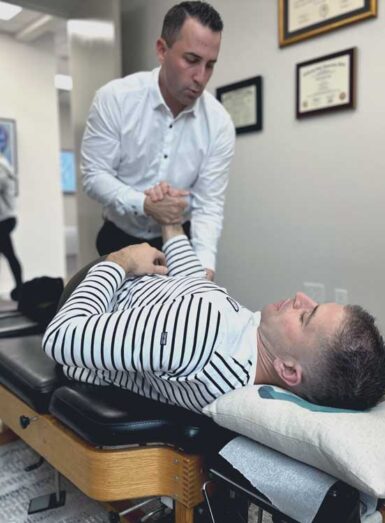
Restricted spinal or joint motion can contribute to protective tension and inefficient movement. Chiropractic adjustments may be used to improve joint motion and reduce mechanical stress when they are clinically appropriate. The goal is precise care based on your examination, not a one-size-fits-all sequence.
This phase can help create an opportunity for your body to move differently. It is not the entire answer. If you return immediately to the same posture, workload, and movement habits without building capacity, the old pattern can reassert itself.
Improve Control Through Movement and Posture
Once motion improves, your body needs to learn how to use it. This may involve mobility work, posture retraining, targeted stability exercises, ergonomic changes, and guidance around training modifications. The exact prescription depends on what your assessment shows.
This is where self-responsibility becomes powerful. Corrective care is not passive. Your provider should lead with expertise and clear direction, but your consistency between visits influences the result. A few minutes of intentional work each day can matter more than a single heroic workout on Saturday.
Respect Recovery Instead of Treating It as a Weakness
High performers are often excellent at pushing through discomfort. That mindset can build careers and athletic capacity, but it can also delay recovery. Nervous system health is affected by the total load you carry: training, deadlines, sleep disruption, travel, relationships, nutrition, and unresolved pain all count.
Optimization does not mean avoiding challenge. It means building enough capacity to meet challenge without breaking down. Sometimes that means progressing your workouts. Sometimes it means temporarily reducing volume, changing technique, or prioritizing sleep while a corrective plan takes hold. The right choice depends on the person and the evidence in front of you.
What Progress Should Feel Like
Progress is rarely a straight line. You may notice better range of motion, fewer tension headaches, easier breathing mechanics, improved training recovery, less stiffness after sitting, or a more stable sense of posture. You may also have days when an old pattern flares as you adapt to new movement demands.
The key is to look for a favorable trend supported by reassessment. Are you moving farther? Is your posture becoming more sustainable? Are symptoms occurring less often, resolving faster, or limiting you less? Are you returning to the activities that matter without paying for them afterward?
Be skeptical of anyone who promises permanent results after one visit, especially when your issue has been building for years. At the same time, do not accept endless care with no explanation, no measurable milestones, and no plan to increase your independence. Premium care should be personal, transparent, and built around meaningful outcomes.
When You Need More Than Corrective Care
Chiropractic and movement-based care are not substitutes for emergency or specialty medical evaluation. Sudden severe headache, chest pain, fainting, new weakness, loss of bladder or bowel control, numbness in the saddle area, significant trauma, unexplained weight loss, fever, or worsening neurological symptoms require prompt medical attention.
A responsible provider knows when to co-manage, refer, or pause care. Root-cause thinking is not about rejecting every conventional tool. It is about using the right tool for the actual problem rather than defaulting to the fastest temporary fix.
Build a Body That Can Keep Up With Your Life
Your body is not asking you to lower your standards. It is asking you to stop normalizing the signals that tell you your current strategy is no longer working. The most meaningful form of nervous system optimization is not chasing a feeling of perfection. It is restoring enough alignment, motion, strength, and recovery capacity that you can show up fully for the life you chose.
Pay attention to the patterns. Get them measured. Then commit to the work that gives your body a real chance to change. If you're in need of a South Austin Chiropractor, Mōtus can provide high-level care for your nervous system!
Mōtus Chiropractic is a top-rated chiropractor located in Austin, TX. Dr. Mike Isseks offers more than 15 years experience helping his patients alleviate pain and Move Consciously. To schedule a visit, click here.
RECLAIM YOUR LIFE
Rebuild your body and reduce your pain with our progressive technology, proven alternative methods of care, and integrative chiropractic experience.
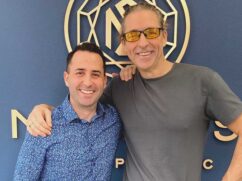
“Dr. Mike improved the mobility of my spine measurably. The whole team is incredibly flexible and helpful to work with. Everything is fast and easy.”

Author, biohacker, and founder of Bulletproof Nutrition

“Dr. Mike and the team at Mōtus are top notch. The adjustments are specific and the analysis is beyond thorough. If you’re in Austin, this is the spot for high-level Chiropractic care.”
– Adrian Grenier
Actor and Film Producer

ABOUT DR. MIKE ISSEKS
Dr. Mike has been a practicing chiropractor for more than 15 years. He is a graduate of California State University at Chico and received his Doctor of Chiropractic degree from Life Chiropractic College West. He specializes in corrective care chiropractic, improving posture, as well as optimizing spinal motion to help uncover the best version of those he serves.
STAY IN THE KNOW
Get cutting-edge health tips, updates, and event notifications...
By entering your email above and clicking “Sign-Up,” you agree to receive occasional emails from Mōtus Chiropractic.

VISIT US
Trio at Menchaca Business Park
Ample free parking in the front lot
HOURS
Monday, Tuesday, Thursday
8:30 am – 12 pm
2:30 pm – 6 pm
Wednesday
12 pm – 5 pm
REACH US
(512) 777-2680
hello@motusatx.com
STAY IN THE KNOW
Get cutting-edge health tips, updates, and event notifications...
By entering your email above and clicking “Sign-Up,” you agree to receive occasional emails from Mōtus Chiropractic.
Copyright 2022, Mōtus Chiropractic. All rights reserved.