
THE MŌTUS BLOG
August 10, 2026
A Guide to Posture Correction Programs That Work
Your posture is not just how you look in a mirror or whether you remember to pull your shoulders back during a meeting. It is a visible expression of how your spine moves, how your nervous system adapts, and how your body distributes stress throughout the day. A real guide to posture correction programs begins there: not with a generic stretch or a posture brace, but with the question most people never get answered - why did your body adopt this position in the first place?
For active adults, poor posture is rarely a cosmetic issue. It can show up as recurring neck tension after work, low-back stiffness after a run, headaches that appear by late afternoon, limited overhead mobility in the gym, or fatigue that no amount of coffee seems to fix. Stop settling for temporary relief when your body is signaling that something deeper needs attention.
What a Posture Correction Program Should Actually Address
Posture is dynamic. You do not need to hold one rigid, military-style position all day to be healthy. In fact, forcing your body into a position it cannot support can create more tension. Healthy posture is the ability to access efficient positions, move out of them easily, and maintain spinal stability under the real demands of your life.
That is why an effective program looks beyond rounded shoulders or a forward head. Those patterns may be visible, but they are often the result of a larger issue: restricted spinal motion, muscle imbalance, past injuries, repetitive work positions, poor movement mechanics, or compensation elsewhere in the body.
A thoughtful corrective program evaluates three connected areas:
- Structural alignment: How the spine is positioned and whether there are measurable shifts, curves, or compensations affecting load distribution.
- Functional movement: How well the neck, shoulders, thoracic spine, hips, and pelvis move together during everyday activity and training.
- Daily inputs: The work setup, sleep position, exercise habits, stress load, and repetitive movements that either reinforce or challenge the existing pattern.
The goal is not perfection. Bodies are not machines that need to be frozen into a single “ideal” shape. The goal is better alignment, more available movement, less unnecessary strain, and a body that can perform without constantly negotiating around discomfort.
Start With Evidence, Not Assumptions
Many posture programs begin with a quick visual assessment and a sheet of exercises. That may help someone with a mild, temporary issue, but it is not enough for a person dealing with persistent pain, restricted motion, or a pattern that keeps returning.
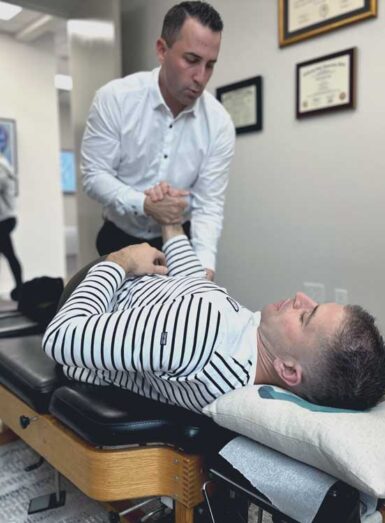
A more complete assessment should connect what you feel to what is actually happening. This can include a detailed health history, posture and gait evaluation, range-of-motion testing, orthopedic and neurological screening, and, when clinically appropriate, pre- and post-motion X-ray studies. These tools can help identify areas of reduced mobility, spinal misalignment, instability, or compensation that a mirror cannot reveal.
Objective testing matters because it creates a baseline. If your plan is working, you should not have to rely only on whether you happened to have a better week. You should be able to track changes in motion, symptoms, function, and, when indicated, structural findings over time.
At Mōtus Chiropractic, this root-cause approach is central to corrective care. The point is not to chase each flare-up with another temporary adjustment. It is to understand the pattern, create a plan around it, and measure whether your body is moving toward a stronger baseline.
The Core Parts of a Strong Corrective Plan
1. Specific spinal care
When joint restriction or spinal dysfunction is part of the problem, targeted chiropractic care may help restore motion and reduce mechanical stress. The keyword is targeted. A corrective plan should be based on your findings, not a one-size-fits-all sequence delivered without context.
For some people, restoring motion in the mid-back changes how the neck and shoulders carry load. For others, the pelvis, low back, or old injury pattern may be the larger driver. The body works as a system. Treating only the loudest symptom can miss the reason it keeps coming back.
2. Mobility where your body is restricted
Mobility work has value when it is specific. If your thoracic spine is stiff from long hours at a laptop, carefully chosen extension and rotation work may be useful. If your hips lack extension, your low back may be doing work it was never designed to do repeatedly.
But more stretching is not always the answer. A joint can feel tight because it lacks control, not because it needs to be pushed farther. Aggressive stretching can irritate an already unstable area. This is where assessment matters: the right mobility work should create usable range of motion, not just a temporary sensation of looseness.
3. Strength and motor control
Posture changes last when your body learns to support new positions during real life. That means building strength and coordination through the deep neck stabilizers, upper back, trunk, glutes, and feet as appropriate for your needs.
This is not about endlessly doing band pull-aparts because social media said they fix posture. It is about progressing from simple awareness and controlled movement to stronger patterns that hold up during a long drive, a demanding workday, a deadlift session, or a weekend on the trail.
Your program may include breathing mechanics, controlled spinal movement, scapular stability, hip control, loaded carries, or exercise modifications. The right combination depends on what your assessment reveals and what you need your body to do.
4. Habits that stop feeding the problem
You cannot out-adjust an environment that repeatedly drives your body into the same stressed position. A corrective plan should look honestly at the hours between appointments.
That does not mean obsessing over every minute at your desk. It means making practical changes: setting your screen at a better height, using movement breaks instead of marathon sitting sessions, changing how you carry a bag, adjusting training volume when pain is escalating, and finding sleep positions that do not leave your neck compressed every morning.
The most useful habit is frequent movement variability. Your best posture is often your next posture. Change positions, walk between tasks, and give your joints regular opportunities to move through comfortable ranges.
A Guide to Posture Correction Programs: What Progress Looks Like
Progress is not always a perfectly straight line. If you have spent years adapting to desk work, old injuries, stress, or repetitive training, meaningful change takes consistency. Some people feel less tension quickly as movement improves. Structural and motor-control changes often require a longer runway.
Look for progress in the outcomes that matter to your life. You may notice that you can turn your head while driving without stiffness, finish a presentation without a headache, train overhead with better control, sit through dinner without low-back irritation, or wake up with more energy. Those are not small wins. They are signs that your body is becoming more adaptable.
A quality program should also be adjusted as you improve. Early care may focus on relieving irritation and restoring basic motion. The next phase may emphasize stabilization, corrective exercise, and progressive loading. Eventually, the focus shifts to maintaining gains independently, with periodic reassessment when needed.
Be cautious of programs that promise to “fix” your posture in a few days, sell a single device as the answer, or make you dependent on constant treatment without a clear plan for progress. A brace may offer short-term feedback for certain situations, but it does not build the strength, movement capacity, or awareness required for lasting change. Likewise, an exercise app can be a helpful supplement, but it cannot diagnose the reason your body is compensating.
Who Benefits Most From Professional Guidance?
Self-directed mobility and strength work can be appropriate for mild discomfort or prevention, especially when you have no significant pain, neurological symptoms, or history of injury. But professional evaluation is a smarter starting point when symptoms are persistent, recurring, worsening, or affecting your work, sleep, training, or quality of life.
Seek timely medical evaluation for severe pain after trauma, new weakness, numbness, unexplained balance changes, loss of bowel or bladder control, fever, or unexplained weight loss. Posture work is valuable, but it should never replace appropriate assessment for serious symptoms.
If you are tired of managing the same tightness, headaches, or limited movement on repeat, choose a posture correction program that treats you like an individual. Demand a clear assessment, a measurable plan, and guidance that connects your spinal health to the life you want to lead. Your body has adapted before. With the right inputs, it can adapt in a better direction.
Mōtus Chiropractic is a top-rated chiropractor located in Austin, TX. Dr. Mike Isseks offers more than 15 years experience helping his patients alleviate pain and Move Consciously. To schedule a visit, click here.
RECLAIM YOUR LIFE
Rebuild your body and reduce your pain with our progressive technology, proven alternative methods of care, and integrative chiropractic experience.
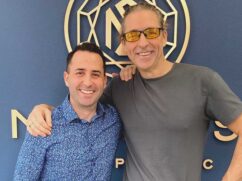
“Dr. Mike improved the mobility of my spine measurably. The whole team is incredibly flexible and helpful to work with. Everything is fast and easy.”

Author, biohacker, and founder of Bulletproof Nutrition

“Dr. Mike and the team at Mōtus are top notch. The adjustments are specific and the analysis is beyond thorough. If you’re in Austin, this is the spot for high-level Chiropractic care.”
– Adrian Grenier
Actor and Film Producer

ABOUT DR. MIKE ISSEKS
Dr. Mike has been a practicing chiropractor for more than 15 years. He is a graduate of California State University at Chico and received his Doctor of Chiropractic degree from Life Chiropractic College West. He specializes in corrective care chiropractic, improving posture, as well as optimizing spinal motion to help uncover the best version of those he serves.
STAY IN THE KNOW
Get cutting-edge health tips, updates, and event notifications...
By entering your email above and clicking “Sign-Up,” you agree to receive occasional emails from Mōtus Chiropractic.
VISIT US
Trio at Menchaca Business Park
Ample free parking in the front lot
HOURS
Monday, Tuesday, Thursday
8:30 am – 12 pm
2:30 pm – 6 pm
Wednesday
12 pm – 5 pm
REACH US
(512) 777-2680
hello@motusatx.com
STAY IN THE KNOW
Get cutting-edge health tips, updates, and event notifications...
By entering your email above and clicking “Sign-Up,” you agree to receive occasional emails from Mōtus Chiropractic.
Copyright 2022, Mōtus Chiropractic. All rights reserved.