
THE MŌTUS BLOG
July 25, 2026
9 Top Signs You May Have Spinal Misalignments
You can stretch, strengthen, foam roll, upgrade your desk setup, and still feel like your body is fighting you. That is often what makes the top signs of spinal misalignment so easy to dismiss - they do not always start as dramatic pain. More often, they show up as stubborn tension, reduced performance, recurring headaches, and a posture pattern that keeps coming back no matter how disciplined you are.
For high-functioning adults, this matters. If your spine is not moving and supporting your body the way it should, your nervous system, joint mechanics, and muscle balance all have to compensate. You may still get through work, workouts, and family life, but you do it with extra strain. That is not resilience. That is adaptation, and eventually the bill comes due.
What spinal misalignment actually means
Spinal misalignment is not just a casual way to describe bad posture. It refers to structural and mechanical problems in the spine that can alter motion, load distribution, and nerve communication. In chiropractic care, these patterns are often discussed in terms of subluxation, abnormal movement, and loss of proper alignment over time.
This is where mainstream advice often falls short. If you only chase symptoms, you may get temporary relief while the underlying stress pattern remains untouched. A spine that is not aligned well can create ripple effects from the neck to the low back, and sometimes far beyond the obvious pain point.
That said, not every ache means your spine is misaligned. Training hard, sitting too much, old injuries, and stress can all create similar symptoms. The difference is that misalignment tends to create patterns that repeat, resist quick fixes, and show up in more than one area of your life.
Top signs of spinal misalignment to watch for:
1. Recurring neck or back pain
This is the one most people notice first, but it is also the one they normalize fastest. If your neck tightens up every afternoon or your low back always flares after a long drive, your body may be telling you more than “you are getting older.”
Pain that repeatedly returns in the same region often points to a mechanical problem that has not been corrected. Muscles may be overworking to protect restricted joints, and inflammation can build around a pattern that never fully resets.
2. Headaches that start at the base of the skull
Not every headache is spinal, but a surprising number have a strong cervical component. If tension builds in your upper neck, shoulders, and the base of your skull, it can trigger headache patterns that feel random until you notice the connection.
People who spend long hours at a screen or carry chronic stress often blame posture alone. Posture is part of the picture, but so is the way the neck is moving - or not moving. A misaligned cervical spine can create constant irritation that your body expresses as pressure, tension, or recurring headaches.
3. One shoulder or hip sits higher than the other
Asymmetry matters, especially when it is consistent. If your shirts hang unevenly, one pant leg always feels different, or you notice one shoulder rounding forward more than the other, your frame may be compensating for spinal distortion.
Some people are naturally a little asymmetrical. That is normal. What is not ideal is a visible imbalance paired with pain, stiffness, or a reduced ability to move evenly during exercise or daily activity.
4. Poor posture that keeps coming back
You should not have to “force” good posture every minute of the day. If you constantly catch yourself slumping, pushing your head forward, or collapsing through one side, there may be more going on than weak willpower or a bad chair.
Posture reflects structure. When the spine loses its ideal curves or certain segments stop moving well, your body finds a less efficient position it can sustain. You can cue yourself into better posture for a while, but unless the underlying restriction is addressed, old patterns usually return.
5. Reduced range of motion
If turning your head feels limited, twisting is tight on one side, or bending backward feels blocked, pay attention. Restricted motion is one of the clearest signs that the spine is not functioning the way it should.
This matters whether you are an athlete or someone who just wants to move through life without stiffness. A healthy spine should support fluid movement. When motion is lost in one area, another area often has to overcompensate. That is how small limitations become broader performance issues.
Why these signs often get missed
6. Numbness, tingling, or radiating discomfort
When spinal alignment and joint mechanics are off, nerves can become irritated or compressed. That may show up as tingling into the arms, hand numbness, burning between the shoulder blades, or discomfort that travels into the hips or legs.
This is where people often get alarmed, and rightly so. Neurological symptoms deserve attention. They do not always mean something severe, but they should not be brushed off as a minor inconvenience, especially if they are recurring or worsening.
7. One-sided muscle tightness that never fully resolves
If one trap is always tight, one hip flexor never loosens, or one side of your low back constantly feels loaded, that can be a compensation pattern rather than a simple mobility issue. Muscles often become chronically tense when they are trying to stabilize an area that lacks proper support or movement.
This is why stretching alone sometimes disappoints people. You can lengthen a muscle temporarily, but if the spine underneath it is still not moving correctly, the tension tends to return.
8. Fatigue and physical drain from ordinary activity
This sign surprises people because it seems less obvious. But when your body is compensating all day, it burns energy. Poor alignment can make standing, walking, lifting, and even sitting require more effort than necessary.
You may not describe it as pain. You may just feel worn down, heavy, or less capable than you think you should. If your body is working overtime to manage dysfunction, your energy often reflects that.
9. Balance changes or clumsy movement patterns
Your spine plays a major role in body awareness and coordination. When alignment and motion are compromised, movement can become less efficient and less precise. You may feel unstable during single-leg work, awkward during rotational movements, or off-balance in ways you cannot quite explain.
For active adults, this is a major red flag. Performance is not only about strength. It is also about timing, control, and clean communication between the brain and body.
The top signs of spinal misalignment are patterns, not isolated events
One headache after a stressful week is not enough to diagnose anything. The same goes for a stiff neck after travel or a sore back after a heavy lift. What deserves attention is the pattern.
If you notice several of these signs together, or one symptom that keeps cycling back despite rest, massage, stretching, or workout modifications, stop settling for guesswork. Repeated symptoms usually mean repeated stress somewhere in the system.
That is why a real assessment matters. Generic advice has limits. If you want actual answers, you need to know whether your spine is moving properly, whether your posture reflects deeper structural imbalance, and whether objective testing supports what you are feeling.
When to get checked instead of pushing through
The right time is usually earlier than people think. You do not need to wait until the pain is severe or your training has completely stalled. In fact, the best time to address spinal misalignment is when the signs are still manageable and before compensation patterns become more entrenched.
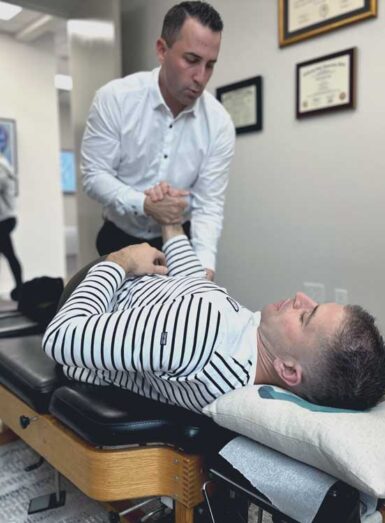
A thorough chiropractic evaluation can help separate simple muscle tension from a deeper structural issue. At a corrective-care practice like Mōtus Chiropractic in Austin, that process may include posture analysis, range-of-motion testing, and imaging that compares how the spine looks and functions before and after care. That matters because progress should be measurable, not just based on whether you feel a little better that day.
There is also a trade-off worth being honest about. Corrective care is not the fast-food version of healthcare. If you want lasting change, it usually takes more than one adjustment and more than symptom relief. It takes a plan, consistency, and the willingness to address the root cause instead of chasing the flare-up.
If your body has been whispering through tension, headaches, asymmetry, stiffness, or fatigue, listen now. The earlier you address the pattern, the easier it is to restore movement, improve alignment, and reclaim the level of energy and performance your life actually demands.
Mōtus Chiropractic is a top-rated chiropractor located in Austin, TX. Dr. Mike Isseks offers more than 15 years experience helping his patients alleviate pain and Move Consciously. To schedule a visit, click here.
RECLAIM YOUR LIFE
Rebuild your body and reduce your pain with our progressive technology, proven alternative methods of care, and integrative chiropractic experience.

“Dr. Mike improved the mobility of my spine measurably. The whole team is incredibly flexible and helpful to work with. Everything is fast and easy.”

Author, biohacker, and founder of Bulletproof Nutrition

“Dr. Mike and the team at Mōtus are top notch. The adjustments are specific and the analysis is beyond thorough. If you’re in Austin, this is the spot for high-level Chiropractic care.”
– Adrian Grenier
Actor and Film Producer

ABOUT DR. MIKE ISSEKS
Dr. Mike has been a practicing chiropractor for more than 15 years. He is a graduate of California State University at Chico and received his Doctor of Chiropractic degree from Life Chiropractic College West. He specializes in corrective care chiropractic, improving posture, as well as optimizing spinal motion to help uncover the best version of those he serves.
STAY IN THE KNOW
Get cutting-edge health tips, updates, and event notifications...
By entering your email above and clicking “Sign-Up,” you agree to receive occasional emails from Mōtus Chiropractic.

VISIT US
Trio at Menchaca Business Park
8701 Menchaca Road
Building 3, Unit 101
Austin, TX 78748
Ample free parking in the front lot
HOURS
Monday, Tuesday, Thursday
8:30 am – 12 pm
2:30 pm – 6 pm
Wednesday
12 pm – 5 pm
REACH US
(512) 777-2680
hello@motusatx.com
STAY IN THE KNOW
Get cutting-edge health tips, updates, and event notifications...
By entering your email above and clicking “Sign-Up,” you agree to receive occasional emails from Mōtus Chiropractic.
Copyright 2022, Mōtus Chiropractic. All rights reserved.