
THE MŌTUS BLOG
June 9, 2026
How to Find a Corrective Chiropractor Near Me
Typing "corrective chiropractor near me" usually happens after the usual options have already let you down. Maybe the pain keeps coming back. Maybe your posture is getting worse, your neck stays tight, your low back flares after workouts, or your headaches keep interrupting your week. You do not need another temporary fix. You need to know whether the doctor you choose is actually built to correct the problem, not just manage it.
That distinction matters more than most people realize. A lot of chiropractic care is centered on symptom relief. If your goal is short-term comfort, that may be enough. But if you are an active adult who wants better movement, stronger posture, and a body that can keep up with your life, corrective care is a different standard.
What a corrective chiropractor near me should actually offer
Corrective chiropractic is not just a nicer phrase for getting adjusted. It is a more precise, more accountable approach to care. The goal is to identify structural and functional problems in the spine and nervous system, then create a plan designed to improve them over time.
That usually means the first visit is more thorough than what many patients expect. Instead of a quick conversation followed by a generic adjustment, corrective care should start with evaluation. A doctor should want to understand how your spine moves, where it has lost motion, how your posture has adapted, and whether those patterns are contributing to pain, tension, fatigue, or performance limits.
In a serious corrective office, care is guided by measurable findings. That can include range-of-motion analysis, posture assessment, orthopedic and neurologic testing, and when clinically appropriate, imaging to evaluate alignment and structural stress. If a provider is calling their work corrective but has no way to measure change, that is worth noticing.
Relief care and corrective care are not the same
Relief care has a place. When you can barely turn your head or your back is locked up, getting out of pain matters. But stopping there is often why people end up in the same cycle for months or years.
Corrective care goes further. It asks a tougher question - why did this happen in the first place? Was it years of forward-head posture? Repetitive training patterns? Old injuries that never fully healed? Desk work, stress, poor spinal mechanics, and restricted movement can all create compensation patterns that your body eventually stops tolerating.
If your spine has been under strain for a long time, the body adapts around that strain. Muscles tighten. Joints stop moving well. Posture shifts. Nerve irritation can increase. Pain is often the last signal, not the first. That is why masking symptoms without addressing the underlying pattern rarely creates lasting change.
Signs you need more than a quick adjustment
Some people know immediately that they need a deeper level of care. Others are not sure whether their issue is serious enough. A few patterns tend to point toward corrective treatment.
If your pain keeps returning after temporary improvements, that is a sign. If your headaches, neck stiffness, or back tension are tied to posture, work demands, training volume, or long-standing movement issues, that is another. If you feel less mobile than you used to, recover more slowly, or notice that your body is compensating during exercise, your spine may not be functioning as well as it should.
There is also the performance side of this. Many high-functioning adults are not dealing with severe pain every day. They are dealing with friction. They feel stiff in the morning, restricted in rotation, unstable under load, or drained by physical stress that used to feel easy. They know something is off, even if they are still pushing through. That is often when corrective care makes the biggest difference.
How to evaluate a corrective chiropractor near me
If you are comparing options, stop looking at marketing language first. Look at process. The right office should be able to explain exactly how they assess your condition, how they determine the root cause, and how they track progress.
A good corrective chiropractor will not promise magic in one visit. They should be clear that structural change takes time, consistency, and patient participation. That is not a drawback. It is honesty.
Pay attention to whether the office offers individualized recommendations or pushes the same formula on everyone. Real corrective care is customized. Your history, posture, spinal mechanics, lifestyle, and goals should shape the plan. A former athlete with years of compression and limited hip-spine mobility does not need the same strategy as a desk-bound professional with tension headaches and pronounced forward-head posture.
You should also ask how progress is measured. Symptom changes matter, but they are not enough on their own. Stronger posture, improved motion, better stability, and objective findings over time tell a much fuller story. The best corrective practices combine clinical skill with proof.
What your first phase of care may look like
Corrective care is not random. It tends to move in phases.
The first phase is usually about reducing irritation, restoring motion, and creating enough stability for your body to stop living in defense mode. That may include specific chiropractic adjustments, mobility work, posture retraining, and recommendations that change how you sit, train, sleep, or recover.
The second phase is where many people start to notice a bigger shift. Their body holds changes longer. They move better. They feel less compressed. Workouts improve. Energy improves. Daily tension is no longer running the show. This is also where consistency matters most, because your body is learning a new baseline instead of slipping back into the old one.
The final phase is about strengthening the correction and protecting your results. Depending on your goals, that may involve wellness care, movement support, and periodic reassessment. It depends on your demands and how much stress your body carries. Someone training hard, traveling often, or spending long hours at a desk may need a different maintenance rhythm than someone with lower physical strain.
Why imaging and motion testing can matter
Not every case needs X-rays. But in corrective care, imaging and motion-based testing can be extremely valuable when they are used thoughtfully.
If a doctor is trying to improve spinal alignment and function, they need a clear picture of what is happening. Pre- and post-motion imaging, posture analysis, and range-of-motion testing can reveal whether there are measurable restrictions, distortions, or patterns that explain your symptoms and guide your treatment plan.
This is one reason premium corrective care feels different from generic care. It is not based on guesswork. It is based on findings. For patients who want real answers, that level of specificity matters.
The trade-off nobody talks about
Corrective care asks more of you. That is the truth.
It often requires more visits up front, more consistency, and more buy-in than relief-based treatment. Think short term intensity for long term gain, aka a more permanent spinal correction. If you only want someone to crack your back when things get bad, corrective care may feel like too much. But if you are tired of living in a loop of flare-up, relief, relapse, it can be exactly the right investment.
This is especially true for people who care about longevity, not just comfort. Your posture, movement quality, and spinal function affect far more than pain. They influence how you train, how you recover, how you sleep, how you focus, and how your nervous system handles stress. Stop settling for care that only reacts after your body has already raised the alarm.
Choosing the right fit for a corrective care chiropractor in Austin
In a city like Austin, there is no shortage of wellness messaging. The harder part is finding a provider who combines clinical depth with a real corrective model. If you are searching in South Austin, Downtown, West Lake Hills, or nearby neighborhoods, look for a practice that treats your case like a system to be understood, not a symptom to be silenced.
That means detailed diagnostics, individualized care plans, clear recommendations, and a doctor who is willing to educate you instead of rushing you through. At Mōtus Chiropractic, that corrective approach is central to the experience. The focus is not on chasing pain from visit to visit. It is on identifying structural dysfunction, improving alignment and movement, and helping patients build long-term resilience.
The best provider for you will not just be convenient. They will be thorough, specific, and committed to measurable change. That is the difference between feeling briefly better and actually getting your body back.
If you have been searching for a corrective chiropractor near me, take that instinct seriously. Your body is asking for a higher standard of care. Listen to it, choose carefully, and give yourself the chance to heal in a way that lasts.
Mōtus Chiropractic is a top-rated chiropractor located in Austin, TX. Dr. Mike Isseks offers more than 15 years experience helping his patients alleviate pain and Move Consciously. To schedule a visit, click here.
RECLAIM YOUR LIFE
Rebuild your body and reduce your pain with our progressive technology, proven alternative methods of care, and integrative chiropractic experience.
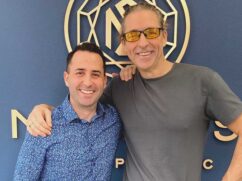
“Dr. Mike improved the mobility of my spine measurably. The whole team is incredibly flexible and helpful to work with. Everything is fast and easy.”

Author, biohacker, and founder of Bulletproof Nutrition

“Dr. Mike and the team at Mōtus are top notch. The adjustments are specific and the analysis is beyond thorough. If you’re in Austin, this is the spot for high-level Chiropractic care.”
– Adrian Grenier
Actor and Film Producer

ABOUT DR. MIKE ISSEKS
Dr. Mike has been a practicing chiropractor for more than 15 years. He is a graduate of California State University at Chico and received his Doctor of Chiropractic degree from Life Chiropractic College West. He specializes in corrective care chiropractic, improving posture, as well as optimizing spinal motion to help uncover the best version of those he serves.
STAY IN THE KNOW
Get cutting-edge health tips, updates, and event notifications...
By entering your email above and clicking “Sign-Up,” you agree to receive occasional emails from Mōtus Chiropractic.

VISIT US
Trio at Menchaca Business Park
Ample free parking in the front lot
HOURS
Monday, Tuesday, Thursday
8:30 am – 12 pm
2:30 pm – 6 pm
Wednesday
12 pm – 5 pm
REACH US
(512) 777-2680
hello@motusatx.com
STAY IN THE KNOW
Get cutting-edge health tips, updates, and event notifications...
By entering your email above and clicking “Sign-Up,” you agree to receive occasional emails from Mōtus Chiropractic.
Copyright 2022, Mōtus Chiropractic. All rights reserved.