
THE MŌTUS BLOG
June 3, 2026
Can Chiropractic Care Fix Poor Posture?
You can spot poor posture before it becomes pain. It shows up when your head drifts forward on Zoom calls, your shoulders round during workouts, or your low back tightens after a short drive. Chiropractic care for poor posture matters because posture is not just about how you look - it affects how you move, breathe, recover, and perform.
Most people have been taught to treat posture like a willpower problem. Sit up straight. Pull your shoulders back. Try harder. That advice sounds simple, but it misses the point. If your spine has lost healthy alignment, your joints are not moving well, and your muscles have adapted around dysfunction, forcing yourself into better posture rarely lasts. The body always falls back to the pattern it can support.
Why poor posture is more than a cosmetic issue
Bad posture is often dismissed as a visual problem, but the real cost is mechanical and neurological. When the head shifts forward, the neck and upper back absorb more stress. When the shoulders collapse inward, breathing mechanics can change and shoulder movement often suffers. When the pelvis tilts out of balance, the low back and hips usually pay the price.
That stress can show up as neck pain, headaches, mid-back tension, low back stiffness, reduced mobility, numbness, fatigue, and even lower training output. For active adults, posture is not a side issue. It is a performance issue.
This is where mainstream advice often falls short. Stretching a tight muscle or doing a few band exercises may help, but if the underlying spinal pattern is still there, progress tends to plateau. You feel a little better, then you slide back into the same tension, same compensations, and same frustration.
How chiropractic care for poor posture actually works
Effective posture correction starts by asking a better question. Not, “How do we make you sit straighter?” but, “Why has your body adapted this way in the first place?”
Chiropractic care for poor posture focuses on restoring normal spinal alignment and motion so your body can hold itself better without constant effort. That distinction matters. The goal is not to force a position. The goal is to rebuild function.
When the spine develops areas of restricted movement and misalignment, the surrounding muscles often overwork to stabilize what the joints are no longer doing well. Some tissues become chronically tight. Others weaken or shut down. Over time, those patterns become your default posture.
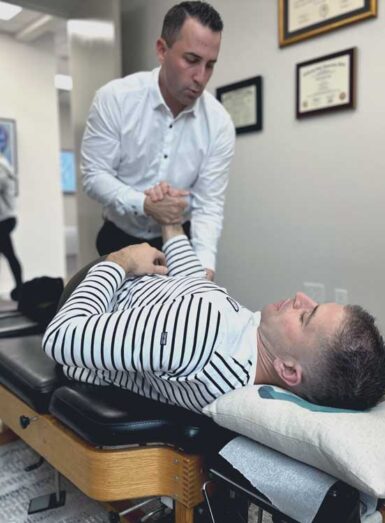
A corrective chiropractic approach works to change that pattern at the source. Precise adjustments can improve joint motion and reduce abnormal stress on the spine. At the same time, posture-specific recommendations, mobility work, and corrective exercises help retrain the body to support a healthier structure.
This is also why not all chiropractic care is the same. If care is limited to quick symptom-based adjustments with no deeper assessment, posture change may be minimal. True corrective work usually requires a more complete process, especially when the issue has been building for years.
What a real posture evaluation should include
If you are serious about changing posture, stop settling for guesswork. A high-level assessment should go beyond asking where it hurts.
A meaningful evaluation often includes a posture analysis, spinal and joint mobility testing, and range-of-motion measurements to identify where movement is being lost. In more advanced settings, pre- and post-motion imaging can help show whether the spine is moving and aligning the way it should. That kind of objective data matters because it separates generic care from personalized care.
Poor posture can look similar from the outside while having very different drivers underneath. One person may have forward head posture tied to upper cervical dysfunction. Another may have the same visual pattern because of thoracic stiffness, shoulder restriction, or pelvic imbalance. If the plan is not tailored to the actual pattern, results are usually inconsistent.
This is why ambitious, health-conscious adults tend to do better with providers who measure rather than assume. If you want lasting change, you need a baseline, a strategy, and a way to track progress.
Can chiropractic care fix posture permanently?
Sometimes yes, but the honest answer is that it depends on how long the pattern has been there, how much structural change has occurred, and how committed you are to the process.
Posture is not corrected in one visit. If your body has spent years adapting to desk work, old injuries, repetitive training patterns, or stress-driven tension, those changes have been reinforced thousands of times. Reversing them takes consistency.
That said, people often notice meaningful shifts once spinal motion improves and the body is no longer fighting itself. Standing feels easier. Neck tension decreases. Breathing opens up. Workouts become smoother. You stop needing to constantly remind yourself to “fix” your posture because your body starts choosing a better position on its own.
The permanent part comes from maintaining the change. That usually means combining chiropractic care with targeted mobility, strength balance, ergonomic changes, and awareness of your daily movement habits. The spine responds well to correction, but it also responds to repetition. Your environment and routines still matter.
Signs your poor posture may need more than stretching
A lot of active adults try to solve posture problems with yoga, foam rolling, strength work, or massage. Those can all be valuable. But if your results keep fading, your body may need more than soft-tissue relief.
You may be dealing with a deeper structural issue if you keep noticing recurring neck or back tension, headaches after screen time, one-sided tightness that never fully resolves, limited shoulder rotation, or a posture pattern that returns no matter how disciplined you are. If standing tall feels exhausting instead of natural, that is often a clue that your body lacks the structural support to sustain better alignment.
This is where chiropractic care can change the equation. Rather than chasing muscle symptoms alone, it can help restore the spinal mechanics that those muscles are reacting to.
The difference between temporary relief and corrective care
Plenty of people have experienced short bursts of relief from conventional approaches. A medication dulls pain. A massage loosens tension. A basic adjustment helps for a day or two. There is nothing wrong with symptom relief, but symptom relief is not the same as correction.
Corrective care is more demanding. It asks what is driving the dysfunction, what objective findings support that, and what plan is required to create measurable change over time. That takes more precision and more patient commitment, but it also offers something better than short-term comfort. It offers a path to actual transformation.
For the person who wants to keep training, building, parenting, traveling, and performing at a high level, that distinction is everything. You are not just trying to feel less pain. You are trying to reclaim capacity.
In a city like Austin, where people expect a lot from their bodies, posture problems can quietly drag down energy and output for years before they become impossible to ignore. That is why a corrective, root-cause model resonates with so many people who are done wasting time on temporary fixes.
What to expect from chiropractic care for poor posture
The best posture-focused care plans are individualized. Some people need more emphasis on cervical correction because forward head posture is driving headaches and upper back strain. Others need attention on thoracic extension, rib mobility, or pelvic balance to change how the whole spine stacks and moves.
Care may include specific spinal adjustments, mobility recommendations, posture retraining, and customized exercises designed to reinforce the correction between visits. Progress is often measured not just by pain reduction, but by changes in alignment, movement quality, tension patterns, and daily function.
That outcome-based approach matters. If your care is working, you should be able to feel and see the difference. You should move more freely, sit and stand with less strain, and notice less energy drain from holding yourself together all day.
Mōtus Chiropractic takes this kind of approach seriously, using detailed motion-based assessment and customized corrective plans for patients who want more than a quick crack and a hopeful shrug.
Poor posture does not mean your body is broken. It means your body has adapted, and adaptations can change when the right inputs are applied consistently. Stop settling for reminders to sit up straighter. Build a structure that actually supports the life you want to live.
Mōtus Chiropractic is a top-rated chiropractor located in Austin, TX. Dr. Mike Isseks offers more than 15 years experience helping his patients alleviate pain and Move Consciously. To schedule a visit, click here.
RECLAIM YOUR LIFE
Rebuild your body and reduce your pain with our progressive technology, proven alternative methods of care, and integrative chiropractic experience.

“Dr. Mike improved the mobility of my spine measurably. The whole team is incredibly flexible and helpful to work with. Everything is fast and easy.”

Author, biohacker, and founder of Bulletproof Nutrition

“Dr. Mike and the team at Mōtus are top notch. The adjustments are specific and the analysis is beyond thorough. If you’re in Austin, this is the spot for high-level Chiropractic care.”
– Adrian Grenier
Actor and Film Producer

ABOUT DR. MIKE ISSEKS
Dr. Mike has been a practicing chiropractor for more than 15 years. He is a graduate of California State University at Chico and received his Doctor of Chiropractic degree from Life Chiropractic College West. He specializes in corrective care chiropractic, improving posture, as well as optimizing spinal motion to help uncover the best version of those he serves.
STAY IN THE KNOW
Get cutting-edge health tips, updates, and event notifications...
By entering your email above and clicking “Sign-Up,” you agree to receive occasional emails from Mōtus Chiropractic.

VISIT US
Trio at Menchaca Business Park
Ample free parking in the front lot
HOURS
Monday, Tuesday, Thursday
8:30 am – 12 pm
2:30 pm – 6 pm
Wednesday
12 pm – 5 pm
REACH US
(512) 777-2680
hello@motusatx.com
STAY IN THE KNOW
Get cutting-edge health tips, updates, and event notifications...
By entering your email above and clicking “Sign-Up,” you agree to receive occasional emails from Mōtus Chiropractic.
Copyright 2022, Mōtus Chiropractic. All rights reserved.