
THE MŌTUS BLOG
September 6, 2026
Top Signs of Spinal Instability You Shouldn’t Ignore
Your spine should create a stable platform for work, training, sleep, and everything else you ask of your body. When it cannot control movement well, the top signs of spinal instability can show up long before a dramatic injury forces you to stop. The problem is that many high-functioning people explain those early signals away as stress, aging, a tough workout, or simply the cost of an active life.
That mindset keeps people stuck in a cycle: pain flares, they rest or get a quick adjustment, symptoms settle, then the same issue returns when they lift, sit through a long meeting, run, travel, or play with their kids. Stop settling for temporary relief when your body is asking for a deeper answer.
What Spinal Instability Actually Means
Spinal instability does not necessarily mean your spine is fragile or that a vertebra is dramatically slipping out of place. In clinical terms, it refers to excessive or poorly controlled movement between spinal segments. The discs, ligaments, joints, muscles, and nervous system normally work together to guide motion and protect the spinal cord and nerves. When that system loses coordination or structural support, certain movements can become painful, guarded, or unpredictable.
Instability can occur in the neck, mid-back, or low back. It may follow a car accident, sports injury, fall, repetitive strain, pregnancy, surgery, degeneration, or years of posture and movement habits that gradually overload the same areas. Sometimes there is a clear event. Often, there is not.
Just as significant, instability and stiffness can coexist. A person may feel rigid through the hips, shoulders, or upper back while one or two spinal segments are moving too much. Stretching harder may feel temporarily satisfying, but it can miss the actual problem: the body needs better control, not more force.
The Top Signs of Spinal Instability
Pain alone cannot confirm instability. Still, the pattern of symptoms matters. These signs are worth taking seriously, particularly when they recur, limit your confidence, or interfere with the way you move.
Pain that keeps coming back in the same spot
A recurring ache, pinch, catch, or sharp sensation in one specific area can be a clue that a spinal segment is not tolerating load well. You may feel fine for days or weeks, then trigger the same pain while picking up a suitcase, rotating during golf or tennis, deadlifting, looking down at a laptop, or sitting in traffic.
The issue is not simply that pain returned. It is that the same movement pattern repeatedly exposes a weak point. Pain medication may blunt the signal, but it does not reveal why that segment is under stress.
Catching, locking, or a feeling that your back gives out
People with poor spinal control often describe a sudden catch when they stand up, bend forward, or rotate. Others say their low back briefly gives out, their neck feels like it cannot hold their head comfortably, or they need to move very carefully after changing positions.
This does not automatically mean severe structural damage. Protective muscle spasms, irritated joints, and disc-related pain can create similar sensations. But repeated episodes of catching or giving way deserve a more complete assessment than a generic recommendation to rest and stretch.
Symptoms that worsen with certain positions and improve with support
Instability symptoms frequently have a mechanical pattern. Prolonged standing, bending, twisting, overhead work, impact exercise, or holding one posture may aggravate them. Lying down, changing positions, bracing the core, wearing supportive gear, or manually supporting the neck or back may bring relief.
For example, low-back discomfort that builds during standing or walking but settles when you sit or lie down can point to a load-management issue. Neck pain that grows after hours at a screen but improves when you support your head or reset your posture can signal a similar need for better alignment and muscular control. The exact cause depends on the person, which is why assumptions are not a strategy.
Guarding and loss of confidence in movement
Your nervous system is designed to protect you. When it senses a movement is unsafe, it may tighten surrounding muscles, reduce your range of motion, or make you hesitate before a familiar task. You might avoid turning your head while driving, brace before getting out of bed, skip a favorite lift, or feel anxious about a simple bend-and-twist movement.
That loss of confidence is meaningful. It can change how you walk, train, breathe, and recover. Over time, compensation shifts stress into the hips, shoulders, knees, and other spinal regions. The body is adaptable, but it should not have to improvise around the same unresolved dysfunction indefinitely.
Radiating symptoms, numbness, or weakness
When unstable or irritated spinal segments affect nearby nerves, symptoms can travel. In the neck, this may include pain, tingling, numbness, or weakness into the shoulder, arm, or hand. In the low back, symptoms may extend into the buttock, leg, or foot.
Radiating symptoms do not always come from instability, and instability does not always cause nerve symptoms. Disc irritation, narrowing around a nerve, and other conditions can produce a similar picture. That is precisely why a careful examination matters. A provider should assess sensation, strength, reflexes, coordination, and how symptoms change with movement rather than guessing from a symptom list.
Fatigue that arrives faster than it should
If the stabilizing muscles around your spine are working overtime, everyday tasks can become unexpectedly draining. You may notice that standing at a concert, carrying groceries, sitting upright in a meeting, or maintaining form during a workout feels harder than it used to.
This is not a character flaw or a reason to push through blindly. It can be the body’s way of telling you that passive structures and active muscular support are not sharing the workload effectively. Better movement control, appropriate strength, and improved spinal alignment can all be part of the long-term conversation.
Why Quick Fixes Often Fall Short
A flare-up can make anyone want immediate relief. Rest, heat, gentle movement, and symptom-focused care can have a place, especially in the early stages of pain. The trade-off is that relief alone does not establish whether your spine is moving too much, too little, or poorly in a specific direction.
Generic treatment also overlooks a critical fact: two people can report the same low-back pain and need very different plans. One may need to restore motion in restricted hips and thoracic segments. Another may need to reduce irritation, improve segmental control, and rebuild tolerance to load. The goal is not to chase perfect posture or make every joint equally mobile. The goal is a spine that can handle the demands of your actual life.
How a Precise Assessment Changes the Plan
A meaningful spinal evaluation starts with your story. When did symptoms begin? What positions provoke them? What has changed in your work, training, sleep, stress, or recovery? Then comes a physical examination that evaluates posture, movement quality, range of motion, neurological function, muscle control, and compensation patterns.
When clinically appropriate, advanced range-of-motion testing and pre- and post-motion X-ray studies can add objective information about how spinal segments move relative to one another. Static imaging can be useful, but a single still image cannot always show what happens when you bend, extend, or rotate. Dynamic findings help a provider distinguish between assumptions and measurable patterns.
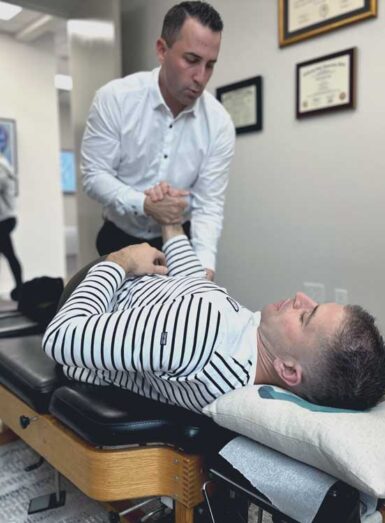
At Mōtus Chiropractic, corrective care is built around that bigger picture. A personalized plan may include precise chiropractic adjustments, posture-focused strategies, progressive mobility work, stability training, and practical guidance for work and exercise. The right plan is not about keeping you dependent on care. It is about helping your body regain the capacity to move with more control, less compensation, and greater confidence.
When to Get Evaluated Urgently
Do not wait for a routine appointment if back or neck pain comes with new bowel or bladder changes, numbness in the groin or inner thighs, rapidly worsening weakness, major loss of balance, fever, unexplained weight loss, severe unrelenting pain, or symptoms after a significant accident. These can signal conditions that require urgent medical evaluation.
For recurring pain, movement fear, or performance limits without emergency warning signs, earlier assessment still matters. The longer compensation becomes your normal, the more work it can take to restore efficient movement.
Your body is not asking you to ignore your ambitions. It is asking for a stronger foundation beneath them. Pay attention to the patterns, get clear on what is actually happening, and choose care that gives your spine a real path back to stability.
Mōtus Chiropractic is a top-rated chiropractor located in Austin, TX. Dr. Mike Isseks offers more than 15 years experience helping his patients alleviate pain and Move Consciously. To schedule a visit, click here.
RECLAIM YOUR LIFE
Rebuild your body and reduce your pain with our progressive technology, proven alternative methods of care, and integrative chiropractic experience.

“Dr. Mike improved the mobility of my spine measurably. The whole team is incredibly flexible and helpful to work with. Everything is fast and easy.”

Author, biohacker, and founder of Bulletproof Nutrition

“Dr. Mike and the team at Mōtus are top notch. The adjustments are specific and the analysis is beyond thorough. If you’re in Austin, this is the spot for high-level Chiropractic care.”
– Adrian Grenier
Actor and Film Producer

ABOUT DR. MIKE ISSEKS
Dr. Mike has been a practicing chiropractor for more than 15 years. He is a graduate of California State University at Chico and received his Doctor of Chiropractic degree from Life Chiropractic College West. He specializes in corrective care chiropractic, improving posture, as well as optimizing spinal motion to help uncover the best version of those he serves.
STAY IN THE KNOW
Get cutting-edge health tips, updates, and event notifications...
By entering your email above and clicking “Sign-Up,” you agree to receive occasional emails from Mōtus Chiropractic.

VISIT US
Trio at Menchaca Business Park
Ample free parking in the front lot
HOURS
Monday, Tuesday, Thursday
8:30 am – 12 pm
2:30 pm – 6 pm
Wednesday
12 pm – 5 pm
REACH US
(512) 777-2680
hello@motusatx.com
STAY IN THE KNOW
Get cutting-edge health tips, updates, and event notifications...
By entering your email above and clicking “Sign-Up,” you agree to receive occasional emails from Mōtus Chiropractic.
Copyright 2022, Mōtus Chiropractic. All rights reserved.