
THE MŌTUS BLOG
June 22, 2026
9 Spinal Alignment Benefits That Matter
You can train hard, eat clean, and still feel off in your own body. The issue is not always effort. Often, it is structure. When your spine is not moving and supporting your body the way it should, the effects show up everywhere - in your posture, your recovery, your focus, your workouts, and your ability to get through the day without pain. That is why spinal alignment benefits are not just about standing straighter. They are about how well your body functions under real-life demands.
Why spinal alignment matters more than most people realize
A misaligned spine does not only create local discomfort. It can change how joints move, how muscles compensate, and how your nervous system communicates with the rest of your body. That matters if you are chasing performance, trying to stay active, or simply tired of feeling stiff and limited.
Mainstream care often treats pain like the whole problem. It is not. Pain is a signal, not a strategy. If the deeper issue is structural stress, reduced spinal motion, or chronic postural distortion, masking symptoms may buy time, but it rarely creates lasting change.
The spine is the central support system for your body and a protective channel for your nervous system. When alignment improves, you are not just changing posture for aesthetic reasons. You are reducing mechanical strain and giving your body a better foundation for movement, stability, and adaptation.
The most meaningful spinal alignment benefits
1. Less stress on joints and muscles
When the spine loses proper alignment, the body adapts. Some muscles tighten to protect you. Others weaken because they are no longer doing their share. Joints above and below the problem area take on extra load. Over time, that compensation pattern can create neck tension, mid-back stiffness, low back pain, hip irritation, and recurring flare-ups that seem to come out of nowhere.
Restoring alignment helps distribute force more evenly. That does not mean every ache vanishes overnight. It means the body is no longer fighting the same uphill battle with every step, squat, desk session, or night of sleep.
2. Better posture that actually lasts
Posture apps, ergonomic chairs, and reminders to sit up straight can help, but they are limited if your structure is still pulling you out of position. Good posture is not a pose you force. It is the visible result of a body that is balanced well enough to hold itself efficiently.
This is one of the most overlooked spinal alignment benefits. Real postural change happens when the spine moves better, soft tissue tension decreases, and corrective strategies are tailored to your actual imbalances. Otherwise, you are relying on willpower to fight a mechanical problem.
3. Improved mobility and cleaner movement
Many active adults assume tightness is just part of training or aging. Sometimes it is. Often, it is compensation. If one spinal segment is restricted, other areas have to move more than they should. That can show up as limited rotation, difficulty hinging well, shoulder restrictions, or the feeling that one side of your body is always working harder.
Improved alignment can restore more efficient movement patterns. That matters in the gym, on the trail, at your desk, and during daily tasks that should not feel harder than they need to. The goal is not extreme flexibility. The goal is useful mobility backed by control.
4. More efficient nervous system function
This is where the conversation gets deeper. The spine is not separate from the nervous system. It houses and protects it. Mechanical stress, chronic restriction, and abnormal spinal motion can influence how the body regulates tension, coordination, and recovery.
That does not mean spinal correction is a magic fix for every health issue. It does mean alignment can support better communication between the brain and body. For some people, that translates into less tension, better body awareness, improved movement control, and a stronger sense that their system is finally settling down instead of staying on edge.
5. Fewer recurring headaches and tension patterns
A lot of headaches are not random. They are the end result of repeated strain through the neck, shoulders, upper back, and jaw. Long hours at a screen, poor posture, old injuries, and restricted cervical motion can all contribute.
When alignment and motion improve, some people experience fewer tension-related headaches and less upper-body tightness. It depends on the cause. Headaches can have multiple drivers, and not all of them are spinal. But if your symptoms track with posture, stress, and neck tension, the spine deserves a serious look.
6. Better breathing mechanics
Most people never connect spinal position to breathing quality. They should. A collapsed upper back, forward head posture, and restricted rib and thoracic movement can make breathing shallower and less efficient. You may still be getting air, but your body is working harder than necessary.
When the spine and rib cage move more freely, breathing mechanics often improve. That can support better exercise tolerance, less neck-driven breathing tension, and a greater sense of physical ease. It is not flashy, but it changes how you feel throughout the day.
7. More sustainable performance
If you are active, alignment matters because compensation always catches up. You can push through poor mechanics for a while. Ambitious people do it all the time. But eventually, inefficient movement steals power, consistency, and recovery.
One of the strongest spinal alignment benefits is that it creates a better platform for performance. You may notice improved balance, cleaner lifting mechanics, better rotational control, or simply less wear and tear after intense weeks. This is not about chasing perfection. It is about building a body that can keep showing up.
8. Better recovery from daily stress
Stress is not just mental. It is physical. Long commutes, desk hours, poor sleep, repetitive training, travel, parenting, and nonstop output all place demand on the body. If your structure is already compromised, that stress lands harder.
A better-aligned spine can help your body handle daily load with less friction. You may feel less beaten up at the end of the day, recover faster after activity, and experience fewer crashes from the same routine that used to leave you drained. That is a meaningful shift for anyone trying to maintain a high level of work, training, and life performance.
9. A stronger long-term strategy than symptom chasing
Temporary relief has its place. If you are in acute pain, getting a reduction in symptoms matters. But stop settling for care that begins and ends there. If the same issue keeps returning, your body is telling you something.
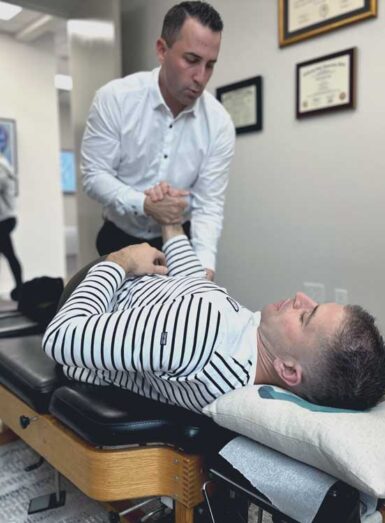
Corrective spinal care aims to address why the pattern exists in the first place. That may involve imaging, postural analysis, range-of-motion testing, and a personalized plan based on what your body actually needs. At Mōtus Chiropractic, that kind of objective testing matters because it replaces guesswork with measurable change.
What spinal alignment benefits do not mean
Alignment is powerful, but it is not a shortcut. It does not mean one adjustment fixes years of stress, injury, compensation, and postural habits. It also does not mean every person needs the same care plan. Bodies adapt differently, and the right approach depends on your history, goals, and current function.
There is also a difference between feeling better and being corrected. Relief can happen quickly. Structural change usually takes time, repetition, and follow-through. That includes consistency with care, movement recommendations, and daily habits that support the correction instead of undoing it.
For active adults, this is good news. If your body created these patterns over time, it can also change over time. The process just needs to be specific.
How to know if alignment may be part of your problem
You do not need severe pain to have a spinal issue worth addressing. Sometimes the clues are more subtle. Maybe your neck and shoulders are always tight. Maybe one hip feels jammed. Maybe headaches keep creeping in after workdays. Maybe your workouts are fine, but recovery is not. Or maybe you are tired of looking fit but feeling limited.
Those signs do not prove spinal misalignment on their own, but they do point to a body that may not be moving well. This is where comprehensive assessment matters. A real evaluation should look at structure, motion, posture, and how your body performs under load - not just where it hurts today.
That level of care tends to resonate with people who want answers, not generic treatment. If that is you, trust that instinct. Your body is not asking for another temporary patch. It is asking for a better plan.
Real change starts when you stop normalizing dysfunction and start respecting structure. When your spine is aligned and moving the way it was designed to, everything built on top of it has a better chance to thrive.
Mōtus Chiropractic is a top-rated chiropractor located in Austin, TX. Dr. Mike Isseks offers more than 15 years experience helping his patients alleviate pain and Move Consciously. To schedule a visit, click here.
RECLAIM YOUR LIFE
Rebuild your body and reduce your pain with our progressive technology, proven alternative methods of care, and integrative chiropractic experience.

“Dr. Mike improved the mobility of my spine measurably. The whole team is incredibly flexible and helpful to work with. Everything is fast and easy.”

Author, biohacker, and founder of Bulletproof Nutrition

“Dr. Mike and the team at Mōtus are top notch. The adjustments are specific and the analysis is beyond thorough. If you’re in Austin, this is the spot for high-level Chiropractic care.”
– Adrian Grenier
Actor and Film Producer

ABOUT DR. MIKE ISSEKS
Dr. Mike has been a practicing chiropractor for more than 15 years. He is a graduate of California State University at Chico and received his Doctor of Chiropractic degree from Life Chiropractic College West. He specializes in corrective care chiropractic, improving posture, as well as optimizing spinal motion to help uncover the best version of those he serves.
STAY IN THE KNOW
Get cutting-edge health tips, updates, and event notifications...
By entering your email above and clicking “Sign-Up,” you agree to receive occasional emails from Mōtus Chiropractic.
VISIT US
Trio at Menchaca Business Park
Ample free parking in the front lot
HOURS
Monday, Tuesday, Thursday
8:30 am – 12 pm
2:30 pm – 6 pm
Wednesday
12 pm – 5 pm
REACH US
(512) 777-2680
hello@motusatx.com
STAY IN THE KNOW
Get cutting-edge health tips, updates, and event notifications...
By entering your email above and clicking “Sign-Up,” you agree to receive occasional emails from Mōtus Chiropractic.
Copyright 2022, Mōtus Chiropractic. All rights reserved.