
THE MŌTUS BLOG
July 23, 2026
Chiropractic or Physical Therapy for Your Body
Pain that returns every few weeks is not a normal price of an active life. Neither is accepting a stiff neck after a workday, a back that tightens during deadlifts, or headaches that make you less present with the people and work that matter. When deciding between chiropractic or physical therapy, the better question is not which profession is universally best. It is which approach matches what your body needs now - and whether your care plan is built for a temporary reduction in symptoms or a meaningful change in how you move.
For many active adults, the answer is not an either-or decision. Chiropractic and physical therapy can be complementary. Each brings a different lens to pain, mobility, strength, and recovery. The key is understanding where they differ, what a thorough evaluation should reveal, and why generic care rarely produces lasting results.
Chiropractic or Physical Therapy: Start With the Goal
Physical therapy is typically centered on restoring function after injury, surgery, pain flare-ups, or movement limitations. A physical therapist may assess gait, strength, balance, joint range of motion, and the way you perform specific movements. Treatment often includes progressive exercise, hands-on therapy, education, and a home program designed to rebuild capacity.
Chiropractic care focuses more directly on the relationship between spinal alignment, joint motion, posture, and the nervous system. A chiropractor may use adjustments and other manual techniques to address restricted spinal or joint movement, postural compensation, and mechanical stress patterns that can contribute to discomfort and reduced mobility.
Those descriptions overlap because the body is not divided into neat professional categories. A shoulder problem can involve poor thoracic movement. Persistent low-back pain may be influenced by hip mobility, core control, prolonged sitting, old injuries, training volume, and the way the spine is loading over time. The most effective care recognizes that complexity instead of reducing you to one sore spot.
The central distinction is often the starting point. Physical therapy commonly asks, How can we improve your ability to perform this movement or activity? Corrective chiropractic care commonly asks, What is interfering with healthy spinal motion and alignment, and how is that affecting the rest of your movement pattern? Both questions can be valuable.
When Physical Therapy May Be the Better First Move
Physical therapy is often an excellent choice when you need structured rehabilitation. That may include recovery after a surgery, a significant acute injury, a tendon issue, a sports-specific return-to-play plan, or weakness and instability that require progressive loading.
If you tore an ACL, recently had a joint replacement, or are working through a rotator cuff repair, rehabilitation exercises and carefully measured progression are essential. Manual care alone does not restore strength, confidence under load, or tolerance for the demands of sport and life. A skilled physical therapist can help you build those qualities methodically.
Physical therapy can also be especially useful when the primary limitation is motor control. Maybe your knee collapses inward during a squat, your ankle lacks stability after repeated sprains, or your shoulder becomes painful only when you press overhead. In these cases, targeted exercise, coaching, and progressive exposure to the activity can be the missing piece.
That said, exercise does not always resolve the reason a movement pattern developed in the first place. If spinal stiffness, postural distortion, or restricted joint motion is limiting your mechanics, you may need to address those barriers alongside strength work. Otherwise, you can become stronger around a compensation without fully correcting it.
When Chiropractic Care May Be the Better First Move
Chiropractic may be a strong starting point when pain, stiffness, posture changes, or reduced range of motion seem connected to spinal or joint dysfunction. This can include recurring neck and back pain, tension-related headaches, a rib or mid-back restriction that affects breathing and training, or a body that simply does not move the way it once did.
For the Austin professional who spends long hours at a laptop and then tries to train hard at night, the pattern is familiar: forward-head posture, a rounded upper back, restricted neck rotation, tight hips, and low-back tension. The symptoms may appear in different places, but the underlying movement system is often asking for a more complete assessment.
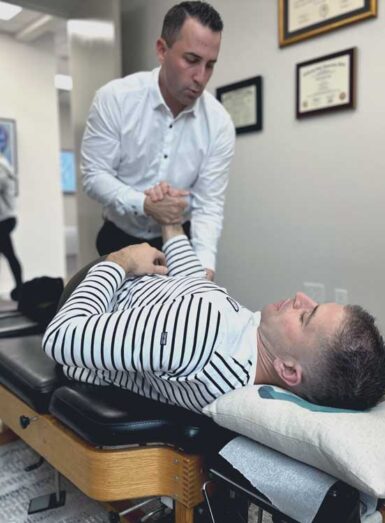
At Mōtus Chiropractic, that assessment is designed to go beyond a quick adjustment and a vague instruction to come back when it hurts. Corrective care can include advanced range-of-motion testing, posture analysis, and, when clinically appropriate, pre- and post-motion X-ray studies to evaluate how the spine moves. The goal is to identify measurable restrictions and structural patterns, then create a personalized plan to address them.
This approach is particularly relevant when you are tired of the cycle of feeling better for a few days, then returning to the same tension, pain, or limitation. An adjustment can offer relief, but lasting progress usually requires a plan that considers frequency of care, mobility, corrective exercises, posture habits, recovery, and the demands you put on your body.
The Difference Between Symptom Relief and Corrective Care
Not all chiropractic care is the same, just as not all physical therapy is the same. A five-minute visit that only chases the place that hurts may have a role during a flare-up, but it is not the same as a corrective strategy. Likewise, a handout of generic stretches is not the same as a progressive rehabilitation plan built around your actual limitations.
Corrective care begins with evidence. What is your current spinal range of motion? Which movements reproduce symptoms? Where is posture breaking down? Are there asymmetries or joint restrictions that are changing the way you load your body? When appropriate, objective testing gives you a baseline, so progress is not based solely on whether today feels a little better than yesterday.
This matters because pain is information, not always a complete diagnosis. You can have less pain while continuing to move poorly. You can also feel sore while making meaningful progress as your body adapts to new patterns. A provider should help you interpret both, not simply promise instant relief.
The Best Care Plan May Include Both
For many people, combining chiropractic care with physical therapy principles creates the most complete path forward. Chiropractic can help improve joint motion and reduce mechanical restrictions that make movement difficult. Physical therapy-style rehabilitation can build the strength, control, and endurance needed to hold onto those gains.
Think of it this way: mobility without stability can leave you feeling loose but unsupported. Strength without adequate mobility can reinforce the shortcuts your body already uses. The objective is not to choose a camp. It is to restore movement quality, then build the capacity to use it.
A thoughtful provider may coordinate with other clinicians when that serves your outcome. There is no prize for forcing every problem into one treatment method. If you need a referral for orthopedic evaluation, advanced imaging, physical therapy, or another level of care, you deserve a clinician who recognizes that quickly and acts in your best interest.
How to Choose the Right Provider
Credentials matter, but the quality of the evaluation and the plan matter just as much. Before committing to chiropractic or physical therapy, pay attention to whether the provider listens closely, examines how you move, and explains what they found in terms you can understand.
Ask how they will measure progress. Ask what the plan is intended to change, how long it may take, and what your role will be outside the office. Be cautious of anyone who guarantees a cure, dismisses your goals, or treats every patient with the same protocol. Your body, injury history, work demands, and training goals are not generic.
You should also know when to seek urgent medical evaluation instead of routine musculoskeletal care. New bowel or bladder changes, significant weakness, numbness in the groin area, unexplained fever, severe trauma, chest pain, or a sudden severe headache require prompt medical attention. The right provider takes these red flags seriously.
Choose Care That Raises Your Standard
You do not have to settle for care that only helps you survive until the next flare-up. If you need post-surgical rehab, sport-specific loading, or progressive strength restoration, physical therapy may lead the way. If spinal restriction, posture, joint motion, and recurring mechanical stress are holding you back, corrective chiropractic care may be the foundation. And if your body needs both, choose a plan that respects the full picture.
Your next step is not to pick a label. It is to find care that measures what matters, explains the root pattern, and gives you a clear path to move, train, work, and live with greater confidence.
Mōtus Chiropractic is a top-rated chiropractor located in Austin, TX. Dr. Mike Isseks offers more than 15 years experience helping his patients alleviate pain and Move Consciously. To schedule a visit, click here.
RECLAIM YOUR LIFE
Rebuild your body and reduce your pain with our progressive technology, proven alternative methods of care, and integrative chiropractic experience.
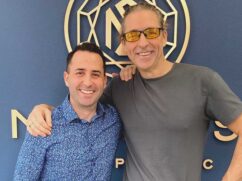
“Dr. Mike improved the mobility of my spine measurably. The whole team is incredibly flexible and helpful to work with. Everything is fast and easy.”

Author, biohacker, and founder of Bulletproof Nutrition

“Dr. Mike and the team at Mōtus are top notch. The adjustments are specific and the analysis is beyond thorough. If you’re in Austin, this is the spot for high-level Chiropractic care.”
– Adrian Grenier
Actor and Film Producer

ABOUT DR. MIKE ISSEKS
Dr. Mike has been a practicing chiropractor for more than 15 years. He is a graduate of California State University at Chico and received his Doctor of Chiropractic degree from Life Chiropractic College West. He specializes in corrective care chiropractic, improving posture, as well as optimizing spinal motion to help uncover the best version of those he serves.
STAY IN THE KNOW
Get cutting-edge health tips, updates, and event notifications...
By entering your email above and clicking “Sign-Up,” you agree to receive occasional emails from Mōtus Chiropractic.
VISIT US
Trio at Menchaca Business Park
Ample free parking in the front lot
HOURS
Monday, Tuesday, Thursday
8:30 am – 12 pm
2:30 pm – 6 pm
Wednesday
12 pm – 5 pm
REACH US
(512) 777-2680
hello@motusatx.com
STAY IN THE KNOW
Get cutting-edge health tips, updates, and event notifications...
By entering your email above and clicking “Sign-Up,” you agree to receive occasional emails from Mōtus Chiropractic.
Copyright 2022, Mōtus Chiropractic. All rights reserved.