
THE MŌTUS BLOG
July 20, 2026
Best Chiropractic for Active Adults That Lasts
Your body is not a machine you can run hard, patch quickly, and expect to perform forever. Yet that is exactly how many active adults are treated when neck pain, low back tightness, headaches, or stubborn mobility losses finally interrupt training and work. The best chiropractic for active adults looks beyond the painful area. It asks why your body started compensating, what movement has been lost, and what must change so you can return to the life you expect from yourself.
A quick adjustment may feel good. For some people, it is a useful part of care. But if the same restriction, posture pattern, or pain cycle keeps returning, temporary relief is not the standard. You need a clear explanation, objective measurement, and a plan built around durable function.
What the best Chiropractic Care for Active Adults Looks Like
Active adults place real demands on their bodies. You may lift before work, spend eight hours at a desk, run the trail on weekends, carry kids, travel, and still expect to show up fully for the next challenge. A body that is repeatedly forced to work around restricted spinal motion or poor alignment eventually makes that cost visible through pain, fatigue, stiffness, altered movement, or declining performance.
The right chiropractor does not reduce your story to a single painful spot. They examine how the spine, posture, nervous system, and movement patterns work together. A shoulder issue may have a cervical and postural component. Recurring low back tightness may be connected to limited hip movement, altered pelvic mechanics, or the way your spine is handling load. The point is not to blame every symptom on one structure. The point is to investigate instead of guessing.
Corrective chiropractic care is especially relevant when you are tired of the cycle of flare-up, treatment, short-lived relief, and relapse. Its goal is to address structural and functional contributors to the problem, not simply chase the loudest symptom of the week.
Start With Evidence, Not Assumptions
A premium level of care starts with a thorough assessment. That means listening carefully to your health history, training demands, work setup, prior injuries, goals, and the exact pattern of your symptoms. It also means testing what can be tested.
Range-of-motion evaluation can reveal where movement is limited and whether the restriction matches what you feel. Postural assessment can identify adaptations that have become normal to you but are still asking your muscles and joints to work overtime. When clinically appropriate, pre- and post-motion X-ray studies can provide a more detailed picture of spinal alignment and joint motion.
Imaging should never be used as a sales prop or ordered without a reason. It can be valuable when the clinical picture calls for it, while many cases can be responsibly evaluated without it. A trustworthy provider explains what each test is designed to show, what its limitations are, and how the findings will influence your plan.
This level of specificity matters because active people often have a high tolerance for discomfort. You can compensate impressively for a long time. By the time performance drops, your body may have been adapting around a restriction for months or years. Measurements establish a baseline, so progress is more than a vague feeling after an appointment.
Look for a Plan That Matches Your Goal
There is no single best schedule, technique, or care plan for every active adult. The right plan depends on your examination, your health history, your response to care, and what you are trying to return to. Training for a marathon, recovering your golf swing, sitting through a demanding workday without headaches, and rebuilding after years of poor posture are different goals.
Still, a strong corrective-care plan should answer a few direct questions: What appears to be driving the dysfunction? What will we work on first? How will progress be measured? When will we reassess? What role do you play outside the office?
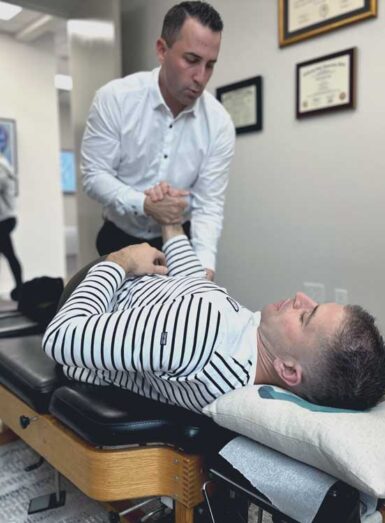
Care may include chiropractic adjustments to improve restricted spinal joint motion, targeted posture correction, mobility work, movement guidance, and lifestyle recommendations that support recovery. The best plans are active, not passive. They give you a role in your own progress without pretending that a sheet of generic exercises is a complete solution.
Be cautious of two extremes. One is the provider who promises to fix everything in a handful of visits before they have enough information. The other is the provider who recommends indefinite care with no measurable milestones or reevaluations. Your care should have a purpose, a rationale, and checkpoints that make sense.
Choose Clinical Confidence Over Convenience
Convenience matters. A practice near your home or office makes it easier to stay consistent, and consistency can matter when addressing long-standing movement patterns. But location, a quick appointment slot, or a discounted first visit should not be the deciding factor when your ability to work, train, and live pain-free is on the line.
Ask how the chiropractor determines what is wrong. Ask whether they perform functional and neurological assessments, how they track change, and how they adapt the plan if you are not progressing as expected. Ask what they want you to understand about your own body.
A skilled chiropractor should be direct about scope, too. Chiropractic care is not a substitute for emergency evaluation or medical treatment when it is needed. New weakness, loss of bowel or bladder control, severe trauma, fever with significant back pain, unexplained weight loss, or a sudden severe headache requires prompt medical attention. A clinician who knows when to refer is protecting your health, not diminishing their expertise.
Your Lifestyle Has to Be Part of the Conversation
An adjustment cannot outwork the position you hold for ten hours a day, the recovery you repeatedly skip, or the training load you increase faster than your body can tolerate. That does not mean you need a perfect wellness routine. It means your plan has to be honest about the inputs shaping your body every day.
For a busy Austin professional, that may mean changing how you transition from desk work to evening training. For a CrossFit athlete, it may mean restoring thoracic motion and refining load tolerance instead of pushing through recurring shoulder irritation. For a parent who runs and lifts, it may mean building a recovery strategy that works in real life rather than an idealized schedule.
This is where customization becomes more than a marketing word. Your care should reflect your actual training, work, sleep, stress, mobility, and priorities. The goal is not to make you dependent on appointments. It is to help your body move with more capacity and give you the knowledge to protect that progress.
Why Corrective Care Is Worth Considering
If your goal is merely to get through a painful week, symptom-focused care may be enough for the moment. There is no shame in wanting relief. But if you want to stay active for decades, recurring symptoms deserve a deeper look.
Corrective care asks for more commitment up front because lasting changes in movement, posture, and load tolerance rarely happen through one isolated intervention. The trade-off is that you have a chance to build a stronger foundation instead of continually managing the consequences of the same underlying pattern.
At Mōtus Chiropractic, the focus is not on selling a generic adjustment schedule. It is on identifying measurable limitations, restoring healthier spinal motion and alignment, and building a personalized path toward the activities that make you feel most like yourself.
Stop settling for care that only helps you survive the next workout or workweek. Choose a provider who respects your ambition enough to assess thoroughly, explain clearly, and challenge the pattern behind the pain. Your body has carried you this far. Give it care built for where you are going next.
Mōtus Chiropractic is a top-rated chiropractor located in Austin, TX. Dr. Mike Isseks offers more than 15 years experience helping his patients alleviate pain and Move Consciously. To schedule a visit, click here.
RECLAIM YOUR LIFE
Rebuild your body and reduce your pain with our progressive technology, proven alternative methods of care, and integrative chiropractic experience.
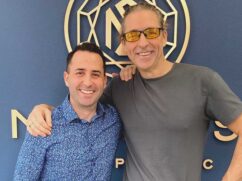
“Dr. Mike improved the mobility of my spine measurably. The whole team is incredibly flexible and helpful to work with. Everything is fast and easy.”

Author, biohacker, and founder of Bulletproof Nutrition

“Dr. Mike and the team at Mōtus are top notch. The adjustments are specific and the analysis is beyond thorough. If you’re in Austin, this is the spot for high-level Chiropractic care.”
– Adrian Grenier
Actor and Film Producer

ABOUT DR. MIKE ISSEKS
Dr. Mike has been a practicing chiropractor for more than 15 years. He is a graduate of California State University at Chico and received his Doctor of Chiropractic degree from Life Chiropractic College West. He specializes in corrective care chiropractic, improving posture, as well as optimizing spinal motion to help uncover the best version of those he serves.
STAY IN THE KNOW
Get cutting-edge health tips, updates, and event notifications...
By entering your email above and clicking “Sign-Up,” you agree to receive occasional emails from Mōtus Chiropractic.

VISIT US
Trio at Menchaca Business Park
Ample free parking in the front lot
HOURS
Monday, Tuesday, Thursday
8:30 am – 12 pm
2:30 pm – 6 pm
Wednesday
12 pm – 5 pm
REACH US
(512) 777-2680
hello@motusatx.com
STAY IN THE KNOW
Get cutting-edge health tips, updates, and event notifications...
By entering your email above and clicking “Sign-Up,” you agree to receive occasional emails from Mōtus Chiropractic.
Copyright 2022, Mōtus Chiropractic. All rights reserved.