
THE MŌTUS BLOG
June 18, 2026
A Real Guide to Corrective Spinal Care
You can stretch every morning, lift with perfect form, buy the standing desk, and still feel your neck tighten by noon. That is exactly why a real guide to corrective spinal care matters. If your spine is misaligned, restricted, and compensating under stress, more willpower is not the answer. You do not need another temporary fix. You need a plan that addresses the structure driving the symptoms.
Corrective spinal care is different from chasing pain. It is not about getting cracked once, feeling looser for a day, and repeating that cycle for months or years. It is a focused, measurable process designed to restore alignment, improve motion, reduce nerve interference, and help the body function the way it was built to function. For active adults who expect more from their body and their healthcare, that difference is everything.
What corrective spinal care actually means
Corrective spinal care is a long-game approach to spinal health. Instead of treating discomfort as an isolated event, it looks at how posture, movement patterns, spinal curves, joint restriction, and nervous system stress work together. The goal is to correct underlying dysfunction, not simply manage flare-ups.
That distinction matters because pain is often the last thing to show up and the first thing to leave. You can feel better while the mechanical problem is still there. A stiff neck may calm down, but if your cervical spine still lacks proper curve or your thoracic spine still moves poorly, the pattern usually returns. That is why so many people feel stuck in a loop of short-term relief.
A corrective approach asks harder questions. Is the spine moving the way it should? Are specific segments fixated or unstable? Has posture shifted enough to change loading through the neck, low back, or hips? Is reduced mobility forcing other areas to overwork? Those are not minor details. They are often the real story.
Why symptom relief is not the same as healing
Mainstream care tends to focus on suppression. Pain medication, muscle relaxers, general exercise advice, and occasional adjustments can all have a place, but they do not automatically create structural change. If your spine is under chronic stress, the body will keep adapting around that stress until something breaks down enough to get your attention.
That breakdown does not always look dramatic. Sometimes it is headaches that show up three afternoons a week. Sometimes it is losing rotation in your golf swing, waking up with numb hands, or feeling your lower back lock up after sitting through meetings. Sometimes it is not pain at all. It is fatigue, tension, shallow breathing, or the sense that your body is working harder than it should.
Healing is different from relief because healing requires change. Tissues need time. Movement patterns need retraining. Posture needs support. Spinal mechanics need objective follow-up, not guesswork. If you want lasting results, you have to stop settling for care that only reacts when things get bad.
A guide to corrective spinal care starts with testing, not assumptions
The fastest way to waste time in healthcare is to start treatment before getting clear on the problem. High-quality corrective care begins with a detailed evaluation that looks beyond where it hurts.
That usually includes posture analysis, range-of-motion testing, orthopedic and neurological examination, and when clinically appropriate, imaging that shows what the spine is doing under load. Pre- and post-motion X-ray studies can be especially valuable because they provide something most patients rarely get: objective evidence. You are not relying on vague impressions. You are tracking structure and movement with actual data.
For a motivated patient, that matters. You want to know what is wrong, how severe it is, what can improve, and how progress will be measured. A premium corrective model respects that. It does not ask you to blindly trust the process. It shows you the baseline.
What a corrective care plan should include
Once the findings are clear, the plan should be personalized. Not generic. Not built around a standard number of visits with no explanation. A real corrective plan is based on your spine, your mobility, your stress patterns, and your goals.
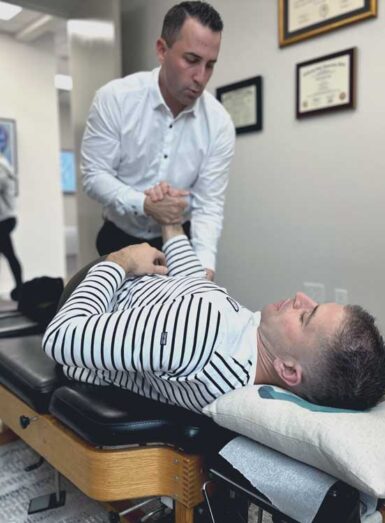
Adjustments are usually part of the process, but they are not the whole process. Specific chiropractic adjustments can help restore motion to restricted joints and reduce neurological stress. The key word is specific. Not every area needs force, and not every patient needs the same style of care.
Most people also need some combination of postural retraining, targeted mobility work, and support for stabilizing weak or underperforming patterns. If your head posture is forward, your pelvis is tilted, or your thoracic spine barely extends, your body needs more than occasional passive treatment. It needs guided correction.
There is also a time element people often underestimate. The spine adapts over years. Correcting those changes takes consistency. That does not mean endless treatment. It means enough repetition to create a real shift in structure and function. If someone promises permanent change after one or two visits, be skeptical.
Who corrective spinal care tends to help most
This type of care is a strong fit for people who are tired of managing the same problems on repeat. That includes adults dealing with chronic neck or back pain, recurring headaches, poor posture, reduced athletic performance, stiffness after desk work, or mobility loss that is starting to affect training and energy.
It also tends to help people who are still functioning at a high level but know they are compensating. They are getting through workouts, workdays, and family demands, but not cleanly. They feel tension where there should be ease. They feel limit where there should be range. Those are early warning signs worth paying attention to.
That said, corrective care is not magic, and it is not a fit for every situation. Some cases require co-management with other providers. Some people need additional rehab, imaging, or medical workup depending on their history. And some patients are looking for quick pain relief with no interest in changing habits, posture, or consistency. Corrective care works best when the patient is ready to participate.
The trade-off: fast relief versus lasting change
Here is the truth many practices avoid saying out loud: lasting change usually asks more of you than temporary relief. It asks for time, follow-through, and a willingness to address the cause instead of negotiating with the symptoms.
That can feel demanding, especially if you are used to quick fixes. But the payoff is bigger. Better spinal alignment can improve how you move, train, breathe, recover, and carry stress. Better motion can reduce wear and tear on the rest of the body. Better posture can change how you feel at the end of the day, not just how you look in a mirror.
For the right person, this is not extra effort. It is a smarter investment.
How to choose the right provider for corrective spinal care
If you are serious about results, do not choose based on convenience alone. Ask how the provider evaluates spinal function. Ask whether they use objective measurements. Ask how they determine progress. Ask what happens between visits. If the answer is vague, keep looking.
A strong corrective office should be able to explain the difference between symptom-based care and structural care in plain English. They should show you what they found, why it matters, and how the plan is designed around your goals. They should also be honest about timelines, limitations, and your role in the process.
In Austin, that level of care matters because the people seeking it are not trying to coast. They want to train hard, work hard, sleep better, move freely, and stay in the game for decades. Mōtus Chiropractic speaks to that standard by building care around measurable change, not generic maintenance.
What progress can look like
Progress is not always dramatic at first. Sometimes it starts with fewer headaches, easier neck rotation, or less mid-back tension after a long day. Sometimes sleep improves before pain fully resolves. Sometimes posture changes are visible before you feel stronger. Those shifts count because they signal that the body is adapting.
Over time, the bigger wins tend to show up in capacity. You sit longer without stiffness. You recover faster after training. You stop bracing through daily movement. Your workouts feel cleaner. Your energy is more stable because your body is not spending so much effort managing compensation.
That is the real point of corrective care. Not just to hurt less, but to function better.
If you have been cycling through temporary fixes, stop settling. The spine influences far more than pain, and when you correct the foundation, the whole system has a better chance to heal. Choose care that respects your goals, measures what matters, and asks your body to rise to a higher standard. Mōtus is your go-to South Austin Chiropractor.
Mōtus Chiropractic is a top-rated chiropractor located in Austin, TX. Dr. Mike Isseks offers more than 15 years experience helping his patients alleviate pain and Move Consciously. To schedule a visit, click here.
RECLAIM YOUR LIFE
Rebuild your body and reduce your pain with our progressive technology, proven alternative methods of care, and integrative chiropractic experience.
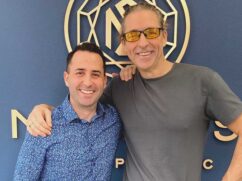
“Dr. Mike improved the mobility of my spine measurably. The whole team is incredibly flexible and helpful to work with. Everything is fast and easy.”

Author, biohacker, and founder of Bulletproof Nutrition

“Dr. Mike and the team at Mōtus are top notch. The adjustments are specific and the analysis is beyond thorough. If you’re in Austin, this is the spot for high-level Chiropractic care.”
– Adrian Grenier
Actor and Film Producer

ABOUT DR. MIKE ISSEKS
Dr. Mike has been a practicing chiropractor for more than 15 years. He is a graduate of California State University at Chico and received his Doctor of Chiropractic degree from Life Chiropractic College West. He specializes in corrective care chiropractic, improving posture, as well as optimizing spinal motion to help uncover the best version of those he serves.
STAY IN THE KNOW
Get cutting-edge health tips, updates, and event notifications...
By entering your email above and clicking “Sign-Up,” you agree to receive occasional emails from Mōtus Chiropractic.

VISIT US
Trio at Menchaca Business Park
Ample free parking in the front lot
HOURS
Monday, Tuesday, Thursday
8:30 am – 12 pm
2:30 pm – 6 pm
Wednesday
12 pm – 5 pm
REACH US
(512) 777-2680
hello@motusatx.com
STAY IN THE KNOW
Get cutting-edge health tips, updates, and event notifications...
By entering your email above and clicking “Sign-Up,” you agree to receive occasional emails from Mōtus Chiropractic.
Copyright 2022, Mōtus Chiropractic. All rights reserved.