
THE MŌTUS BLOG
August 9, 2026
A Practical Guide to Spinal Alignment Testing
Your body adapts brilliantly - until the adaptations start costing you. The forward head posture that began at a laptop, the hip shift you barely notice while standing, or the neck stiffness you push through after training can gradually change how your spine moves and carries load. A guide to spinal alignment testing should do more than tell you whether something looks “off.” It should explain how a thorough assessment identifies patterns, measures function, and creates a clear path toward lasting correction.
For active adults, spinal alignment is not about chasing a perfectly symmetrical silhouette. It is about whether your body can move, stabilize, and recover without constantly compensating. When alignment and motion break down, pain may be the first signal - but reduced performance, recurring tightness, headaches, poor sleep, and lower energy can show up first.
What Spinal Alignment Testing Actually Measures
Spinal alignment testing is a structured evaluation of your posture, spinal curves, joint motion, muscle balance, and neurological function. The purpose is to determine whether structural or movement-based imbalances may be contributing to your symptoms and limitations.
A quick glance at posture can be useful, but it is not a complete assessment. Two people may both have rounded shoulders, for example, while one has a stiff upper back and the other has a mobility restriction in the neck, ribs, or shoulders. Their corrective strategies should not be identical.
A meaningful evaluation connects the visible pattern to the functional reason behind it. It asks: Where is motion restricted? Where is the body overworking? Which areas are unstable? Is a spinal segment moving poorly, or is the body protecting it because another region is not doing its job?
This matters because symptoms do not always point directly to the source. Low back pain can be shaped by hip mobility, pelvic mechanics, or an old ankle injury. Frequent neck tension can be influenced by thoracic stiffness, breathing patterns, screen habits, or a loss of normal cervical movement. Testing helps move the conversation beyond “where does it hurt?” to “why is your body compensating this way?”
A Guide to Spinal Alignment Testing: What to Expect
The best assessments combine clinical observation with objective measurements. There is no single test that tells the whole story. A quality process layers information until a pattern becomes clear.
Health History and Goal Setting
A strong evaluation starts with a real conversation. Your provider should ask about current symptoms, previous injuries, training demands, work setup, sleep, stress, medical history, and what you want your body to do better.
That last piece is often overlooked. A recreational runner preparing for a half marathon, a parent who wants to lift their child without fear, and a founder who spends ten hours a day at a desk may have similar imaging findings but different functional goals. Corrective care should be built around the life you intend to live, not a generic protocol.
Static Postural Analysis
Postural testing looks at how your body organizes itself while standing still. A clinician may observe head position, shoulder height, rib cage position, spinal curves, pelvic tilt, knee alignment, and how weight is distributed through the feet.
This can reveal common compensation patterns, including a forward head carriage, uneven shoulders, a shifted pelvis, or excessive rounding through the upper back. But posture is a starting point, not a verdict. Human bodies are not manufactured to be perfectly even, and small asymmetries are normal. The question is whether an asymmetry is paired with pain, restricted motion, reduced control, or a pattern that is worsening over time.
Range-of-Motion Testing
Range-of-motion testing measures how far and how well you can move through key motions. This may include neck rotation, bending, and extension; spinal flexion and extension; trunk rotation; hip movement; and shoulder mobility.
The number matters, but so does the quality of movement. Can you rotate your neck evenly in both directions? Does one side feel blocked, pinchy, or unstable? Does your lower back move excessively because your hips or upper back are limited? A person can appear flexible while still moving through compensation rather than controlled, useful mobility.
At Mōtus Chiropractic, advanced motion diagnostics can help establish a more specific baseline. That gives patients something better than a vague promise to “see how you feel.” It creates measurable reference points for a corrective plan and future progress checks.
Neurological and Orthopedic Screening
Because the spine protects the nervous system, a comprehensive evaluation may also include neurological and orthopedic testing. Depending on your history and symptoms, this can involve reflexes, sensation, muscle strength, balance, coordination, and tests designed to reproduce or rule out certain movement-related pain patterns.
These tests do not exist to create alarm. They help determine whether your presentation is appropriate for conservative chiropractic care, whether another provider should be involved, and which tissues or movements deserve closer attention. Good care is never about forcing every problem into the same treatment model.
X-Rays and Motion Imaging When Clinically Appropriate
X-rays are not necessary for every patient, and they should not be ordered simply to sell a care plan. When there is a clinical reason, however, imaging can provide crucial structural information that an external postural exam cannot.
Pre- and post-motion X-ray studies may help evaluate spinal curves, vertebral alignment, segmental motion, degenerative changes, instability concerns, or the effects of previous injury. This can be especially valuable when symptoms are persistent, movement is significantly restricted, trauma is involved, or a provider needs a clearer picture before recommending a corrective approach.
Imaging also has limits. An X-ray does not show every soft-tissue issue, and an image alone cannot explain your entire pain experience. The strongest clinical decisions come from matching imaging findings with your examination, movement testing, symptoms, and goals.
Why Objective Baselines Change the Care Conversation
Too many people receive care based on a cycle of temporary relief: something hurts, an adjustment or treatment helps briefly, then the same issue returns. Relief matters, but it should not be the finish line when the underlying mechanics remain unchanged.
Objective spinal alignment testing gives you a baseline. It lets you see where restrictions, postural shifts, and movement deficits exist before beginning care. From there, a corrective plan can target the specific combination of spinal adjustment, mobility work, posture retraining, strength, recovery habits, and lifestyle changes that fit your body.
Retesting is just as valuable. If you are investing time, attention, and money into your health, you deserve more than reassurance. You deserve evidence that your mobility, posture, functional capacity, or structural markers are improving where measurable change is expected.
That said, progress is rarely linear. Long-standing patterns take time to change, particularly when they are reinforced by demanding workdays, travel, training volume, stress, or old injuries. A plan that respects this reality is more likely to produce durable results than a quick-fix promise.
Preparing for Your Assessment
Show up ready to give an accurate picture of your life, not an edited version of it. Bring relevant imaging or medical records if you have them. Be candid about past accidents, surgeries, numbness or tingling, medication use, training routines, and what makes symptoms better or worse.
Wear clothing that allows comfortable movement. You do not need to arrive already “stretched out” or in less pain. In fact, testing is most useful when it reflects your usual state. If your neck always gets tight after a day at your desk or your back flares after deadlifts, say so clearly.
You should also expect to ask questions. What findings are most relevant to my goals? Which restrictions are likely driving compensation? What will we measure again? How will we know the plan is working? A provider who can explain the why behind your care gives you a more active role in your recovery.
When to Seek Medical Attention Promptly
Spinal alignment testing is valuable for mechanical pain, posture concerns, mobility limitations, and performance-focused care. It is not a substitute for urgent medical evaluation. Seek prompt medical attention for severe pain after significant trauma, new bowel or bladder changes, unexplained fever, progressive weakness, numbness in the groin area, unexplained weight loss, or symptoms that are rapidly worsening.
These signs do not automatically mean something serious is happening, but they deserve timely evaluation. Responsible care starts with knowing when chiropractic assessment is appropriate and when another level of medical support is needed.
Your spine is not asking for more random interventions. It is asking for attention, precision, and a plan built around how you actually move. Stop settling for temporary relief when your body is signaling a deeper pattern. The right assessment can give you the clarity to reclaim stronger movement, greater confidence, and a body that supports the life you are building.
Mōtus Chiropractic is a top-rated chiropractor located in Austin, TX. Dr. Mike Isseks offers more than 15 years experience helping his patients alleviate pain and Move Consciously. To schedule a visit, click here.
RECLAIM YOUR LIFE
Rebuild your body and reduce your pain with our progressive technology, proven alternative methods of care, and integrative chiropractic experience.
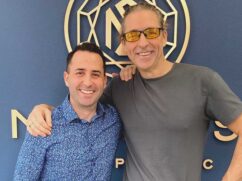
“Dr. Mike improved the mobility of my spine measurably. The whole team is incredibly flexible and helpful to work with. Everything is fast and easy.”

Author, biohacker, and founder of Bulletproof Nutrition

“Dr. Mike and the team at Mōtus are top notch. The adjustments are specific and the analysis is beyond thorough. If you’re in Austin, this is the spot for high-level Chiropractic care.”
– Adrian Grenier
Actor and Film Producer

ABOUT DR. MIKE ISSEKS
Dr. Mike has been a practicing chiropractor for more than 15 years. He is a graduate of California State University at Chico and received his Doctor of Chiropractic degree from Life Chiropractic College West. He specializes in corrective care chiropractic, improving posture, as well as optimizing spinal motion to help uncover the best version of those he serves.
STAY IN THE KNOW
Get cutting-edge health tips, updates, and event notifications...
By entering your email above and clicking “Sign-Up,” you agree to receive occasional emails from Mōtus Chiropractic.
VISIT US
Trio at Menchaca Business Park
Ample free parking in the front lot
HOURS
Monday, Tuesday, Thursday
8:30 am – 12 pm
2:30 pm – 6 pm
Wednesday
12 pm – 5 pm
REACH US
(512) 777-2680
hello@motusatx.com
STAY IN THE KNOW
Get cutting-edge health tips, updates, and event notifications...
By entering your email above and clicking “Sign-Up,” you agree to receive occasional emails from Mōtus Chiropractic.
Copyright 2022, Mōtus Chiropractic. All rights reserved.